Firenze 1966 – 2016. La bellezza salvata


Medici Riccardi 2   Medici Riccardi 3


Firenze, Palazzo Medici Riccardi, 1 dicembre 2016 – 26 marzo 2017

Di Caterina Zaru (Università degli Studi di Firenze)

In occasione della ricorrenza della tragica alluvione che il 4 novembre 1966 colpì Firenze, devastando il Patrimonio artistico e architettonico soprattutto della città, ma anche del territorio limitrofo, si è inaugurata la mostra Firenze 1966 – 2016. La bellezza salvata, curata da Cristina Acidini e Elena Capretti e visitabile fino al 26 marzo 2017.

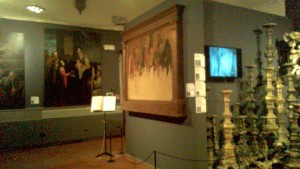
L’esposizione di 150 pezzi, fra dipinti, sculture, libri, documenti, oggetti d’arte applicata, strumenti musicali e scientifici, vuol mettere l’accento su quella che fu la risposta dei fiorentini e del mondo intero alla tragedia. Così, protagonisti principali di tutta la mostra sono proprio i risultati tecnici e le innovazioni scientifiche ottenuti nel campo del restauro e che hanno permesso, e permettono ancora, di salvare le opere, i manufatti e i monumenti dalla forza distruttrice dell’acqua, del fango e della nafta.

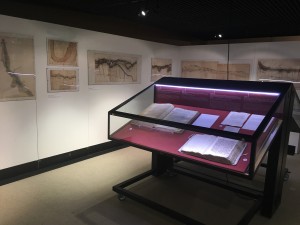
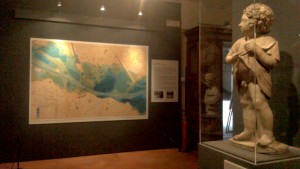
In una mostra che risulta molto ben curata in ogni sua parte, non è lasciata al caso neanche la scelta della sua sede: Palazzo Medici Riccardi, che al momento dell’alluvione era sede del Museo Mediceo, uno dei luoghi di Firenze tra i più colpiti dalla catastrofe. E proprio a proposito dei luoghi colpiti, particolarmente interessante è la riproduzione della bella pianta di Firenze, il cui originale è conservato presso l’Istituto Geografico Militare di Firenze. Essa esposta nella prima sala indica chiaramente i vari livelli raggiunti dall’acqua dopo l’esondazione dell’Arno. Da sottolineare come particolarmente positiva, è anche la scelta di dedicare intere sale espositive a quei luoghi, un po’ meno celebri rispetto alla Biblioteca Nazionale o al complesso di Santa Croce, ma che ugualmente subirono ingenti danni, come la Sinagoga e il Museo Archeologico, il Museo Bardini e il Museo della Fondazione Horne. Con lo stesso principio si è deciso di esporre anche quei nuclei collezionistici che da poco tempo sono entrati a far parte del Patrimonio culturale, e che di solito, quando si parla di alluvione, non si prendono neanche in considerazione. Stiamo parlando degli strumenti scientifici e musicali, che, come spiega il video che ne accompagna l’esposizione, sono tra i pezzi più difficili da restaurare, perché essenziale è ripristinarne il corretto funzionamento. Altri “sconosciuti” al grande pubblico, sono gli “ultimi”, così chiamati dagli stessi curatori, e cioè quelle opere che ancora attendono di essere restaurate e che rischiano addirittura di essere dimenticate, se il processo di recupero, giunto ormai ad altissimi livelli tecnici, non si appresta a concludersi anche per esse. L’intento di mostrarle in questa sede sembra essere, quindi, quello di incoraggiare adeguati finanziamenti e interventi.

Di notevole interesse sono le fotografie storiche riprodotte nei pannelli esplicativi e che ben documentano i danni e gli interventi di recupero. Tutto l’apparato didascalico risulta ben concepito ai fini di rendere più chiaro l’intento generale della mostra e fornire utili strumenti alla comprensione di quanto esposto. Peccato che il tutto sia stato realizzato nella sola lingua italiana. La mancanza di un’apertura a livello internazionale in questo senso, non rende merito alla qualità dell’intera iniziativa. Inoltre, stona ancora di più se pensiamo a quanta risonanza, a livello internazionale appunto, l’alluvione ebbe a suo tempo, con volontari che, da tutto il mondo, arrivarono a Firenze per dare il proprio contributo nel mettere in salvo una grande fetta del Patrimonio dell’Umanità che rischiava di andare distrutta.


Florence 1966-2016: The Rescued Beauty
Translation by Rachyl Grussing (Istituto Lorenzo de’ Medici)

For the occasion of the anniversary of the tragic flood that hit Florence on the 4th of November 1966, devastating the artistic and cultural heritage of the city especially, and also the surrounding area, the inauguration of the exhibition Florence 1966-2016, The Rescued Beauty, curated by Cristina Acidini and Elena Capretti and is available until March 26, 2017.

The exhibition is 150 pieces between paintings, sculptures, books, documents, and objects of applied art, scientific and musical instruments, and wants to put the emphasis on what was the Florentines and the whole world’s response to the tragedy. Thus, the principal protagonist of the entire show is the technical result and scientific innovation obtained in the field of restoration and which allowed, and still allows, the salvation of works from the destructive force of the water, mud, and the oil.

In this show the result is very well maintained in its entirety, nothing left to chance, even the choice of the headquarters: Palazzo Medici Riccardi, that at the moment of the flood was the headquarters for the Medici Museum, which was one of the principle areas of destruction. And about the affected areas, of particular interest is the reproduction of the beautiful plant of Florence, the original of which is kept in the Institute of Military Geography of Florence. Exhibited clearly in the first room is the various levels reached by the Arno after the flooding. A choice which is positively emphasized is the choice to dedicate an entire room to the less famous places than the National Library or the complex of Santa Croce, but that equally suffered considerable damages, like the Synagogue, the Archaeology Museum, the Bardini Museum and the Horne Museum. By that same principle it was decided to exhibit the collectable nuclei that have only recently entered into the cultural heritage, and that usually, when there is flooding, is not taken into consideration at all. We are talking about scientific and musical instruments, that, which as is explained in the accompanying video, are among the most difficult pieces to restore, because it is essential to restore its correct function. Other “unknowns” to the general public are the “last”, called so by the curators, are namely the works still waiting to be restored and that even risk being forgotten, through the process of recovery, but it is not about to be completed for them. The intent of the show seems to be, therefore, to encourage adequate funding and interventions.

Of particular interest are the historical photographs reproduced on explanatory panels and the well-documented damages and recovery interventions. All the didactic elements are well thought out in order to clarify the general aim and provide useful tools for understanding the exhibition. It is too bad that the show has been realized in Italian only. The lack of an opening into the international level in this sense, does not do justice to the entire initiative. Furthermore, it is even more out of place if we think of how much resonance, at just the international level, the flood had at the time, with volunteers from around the world, arrived in Florence to make its own contribution to rescue a large swath of world heritage that risked being destroyed.
 

Arno: fonte di prosperità, fonte di distruzione. Storia del fiume e del territorio nelle carte d’archivio

Archivio di Stato di Firenze
9 ottobre 2016 – 4 febbraio 2017

Di Tania Mio Bertolo (Università degli Studi di Firenze)


A cinquant’anni dalla disastrosa alluvione dell’Arno Firenze e le sue Istituzioni ricordano questo doloroso episodio della recente storia cittadina attraverso convegni, conferenze e mostre. Una di queste trova spazio in alcuni ambienti espositivi del piano terreno dell’Archivio di Stato che, attraverso il contributo di altri enti e istituti scientifici, coglie l’occasione per ripercorrere con ampio sguardo la storia e la geografia del fiume toscano.

L’esposizione si articola in tre grandi sezioni: principia con un percorso storico inerente l’Arno, il suo rapporto con il territorio e con gli uomini, il suo contributo alla vita economica, sociale ed ambientale; prosegue con una raccolta di testimonianze eterogenee circa le inondazioni del fiume dal 1177 al ventesimo secolo; e si conclude con un approfondimento sull’alluvione del 1966 e su quelle che successivamente hanno colpito le aree percorse dal fiume. Si tratta dunque di un obiettivo museologico e formativo di ampio respiro, perseguito attraverso il consistente utilizzo di materiale d’archivio come cartografie e volumi manoscritti, messo esso stesso in mostra con il fine e di valorizzare l’utilizzo delle fonti, e di esporre attraverso testimonianze concrete gli irrecuperabili danni causati dalle violente acque che inondarono nel ’66 le quaranta sale conservative degli Uffizi.

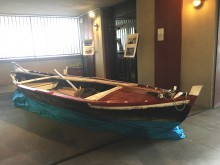
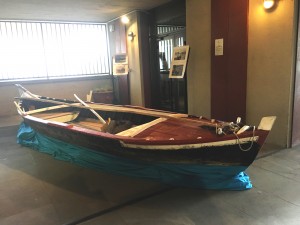
Una mostra francamente non facile da seguire e da capire, proprio per tale preponderante uso di materiale archivistico. Probabilmente pensate per facilitare il godimento dell’esposizione da parte del visitatore, testimonianze di carattere eterogeneo come fotografie, dipinti, filmati, modellini architettonici, locandine di teatro, acqueforti e litografie arricchiscono il percorso espositivo. Purtroppo l’effetto raggiunto è quello di un pentolone pieno d’ogni cosa. Già all’ingresso, nella sottosezione dedicata agli omaggi letterari e artistici all’Arno, tra gli altri oggetti in mostra si trovano pannelli che riportano citazioni di Dante e altri poeti estrapolate e stampate come slogan pubblicitari. Una scelta discutibile, se si pensa che la maggior parte degli oggetti esposti è composta da carte e fogli manoscritti originali. A chiudere la prima sezione è posta la ristampa in grande formato di una fotografia che ritrae i fuochi d’artificio esplosi sopra Ponte Vecchio, immagine che starebbe d’incanto nelle cartoline turistiche. L’ultima sezione si snoda in un lungo corridoio e, ahimè, anche qui pare di giocare a “chi più ne ha, più ne metta”. Mentre sulla parete sinistra si succedono teche entro le quali sono esposti alcuni tra i volumi manoscritti irrecuperabilmente danneggiati dall’alluvione del 1966, i quali rappresentano importanti testimonianze storiche e motivo di riflessione per il visitatore, sulla parete destra invece si alternano, tra le altre, grandi ristampe e collage su cartoncino chiaro di fotografie di piccolo formato. A chiudere la mostra è posta un’autentica barca in legno, già usata per percorrere l’Arno.

Pare proprio di dover dar ragione a chi dice che “il troppo stroppia”. Apprezzabile è la volontà di mostrare ai più l’enorme vastità del materiale archivistico fortunamente sopraggiunto oggigiorno, e sottolinearne il valore e le infinite potenzialità, utili come in questo caso per ricostruire la storia dell’Arno. Ed è comprensibile la necessità di diversificare il percorso espositivo con l’inserimento di una varietà di oggetti museali. Ma gli oggetti in mostra dovrebbero effettivamente essere selezionati per qualità formativa ed informativa, non per finalità numeriche e scenografiche.


Archivio di Stato di Firenze
October 9, 2016 – February 4, 2017

Translation by Rachyl Grussing (Istituto Lorenzo de’ Medici)


Fifty years since the disastrous flood of the Arno River in Florence, and the city’s institutions remembered this painful episode of recent history through meetings, conferences, and exhibitions. One of these is found in the exhibition space on the first floor of the State Archives, through the contributions of scientific institutions and other establishments, and the occasion captures, with wide eyes, the history and geography of the Tuscan river.

The exhibition is articulated in three grand sections: the first through the history inherent in the Arno, his relationship with the territory and with the people, his contribution to the economy and the social and environmental life; it continues with a collection of heterogenous testimonies about the flooding of the river from 1177 to the twentieth century; and it concludes with a study of the flood in the 1966 and what subsequently hit the area traversed by the river. Therefore, it handles an educational museological target, pursued through the consistent use of archival materials such as maps and volume manuscripts; the archives put itself on display with the intention of utilizing the sources, to expose through concrete materials the irrevocable damage caused by the violent waters in ‘66 to the forty conservation halls of the Uffizi.

Frankly, it is not an easy show to follow and to understand because of the predominate use of archival material. It probably thinks to facilitate the enjoyment of the exhibition on the part of the visitor, evidenced by the heterogenous nature of the photographs, paintings, films, architectural models, theater posters, etchings and lithographs that enrich the exhibition. Unfortunately, the effect achieved is that of a pot full of everything. Already at the entrance, in the subsection dedicated to the literary and artistic gifts of the Arno, between the other objects of the show we find panels that quote Dante, and other poets extrapolated, printed as advertizing slogans. A questionable choice, if you think about the larger portion of the exhibition which consists of card sheets and original manuscripts. To close the first section is grand reprinting of a photograph of fireworks exploding over the Ponte Vecchio, an image that would look charming on postcards. The last sections runs in a long corridor and, alas, here it also seems to play ‘and so on and so forth’. While on the left wall are showcases displaying within some of the manuscripts irrevocably damaged by the flood of 1966, which represent important historical testimonies and motive for reflection for the visitor; the right wall instead has alternate large reprints and collage on light cardboard of small format photographs. The end of the exhibition is placed in a large boat, used in crossing the Arno.

It seems to agree with those who say that ‘the good things too’. Appreciable is the will to show the enormous vastness of the archival material which fortunately came to the archives, and highlight the value and infinite potential, useful as in this case, to reconstruct the history of the Arno. It is understandable the necessity to diversify the exhibition with the inclusion of various museological objects. But the objects in the exhibition should be selected for the quality and type of information, rather than for scenic and numeric value.


Gaetano Pesce. Maestà Tradita. 1956 – 2016

Museo del Novecento
21 ottobre 2016 – 7 febbraio 2017

Di Tania Mio Bertolo ed Elena Zinanni (Università degli Studi di Firenze)


Cos’è la “Maestà Tradita”?

È la donna umiliata, mortificata e sottomessa dai suoi stessi figli. È il trionfo del femmineo.

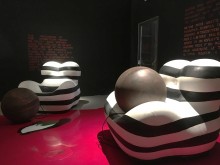
È quella scultura dalle tinte rosee e dalle forme morbide e tondeggianti che campeggia da qualche mese in Piazza Santa Maria Novella a Firenze. Si tratta di fatto di un’installazione site-specific pensata e realizzata dall’artista Gaetano Pesce, e che trova naturale compimento nella mostra allestita presso il vicino Museo del Novecento. Qui una porta in vetro scorrevole rivestita ai lati da panni stracci, e sopra la quale campeggia a caratteri cubitali il titolo della mostra ci conduce all’interno dell’esposizione. Un ingresso non sobrio, trionfale ed avvilente allo stesso tempo. Ed è proprio sull’equilibrio instabile di questa ed altre contraddizioni che si regge l’intera mostra: dal suo significato intrinseco, al suo allestimento, al titolo stesso.

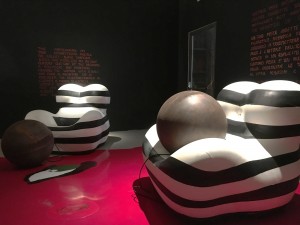
Gaetano Pesce emerge nella scena artistica internazionale come designer, noto soprattutto per la Serie Up: sette modelli di poltrone delle quali la più celebre è la UP5. Modellata sulle morbide forme delle paleolitiche icone divine della fertilità, la UP5 è oggigiorno uno dei simboli del design italiano ed è presente in diversi musei internazionali. La Maestà Tradita in Piazza Santa Maria Novella e la Libertà Tradita esposta nella sala principale della mostra nascono proprio come evoluzione e delle forme e dei significati simbolici dell’unione delle UP5 e UP6 (il poggiapiedi).

L’allestimento della mostra si sviluppa in tre sale, delle quali una, l’ambiente più grande, funge da fulcro principale e le altre due da corollario, funzionali a spiegare per immagini e parole le fasi di progettazione e i modelli artistici che hanno ispirato la grande installazione, nonché a veicolare ulteriormente le stratificazioni del messaggio che l’artista ha voluto trasmettere. L’arte contemporanea, sempre più frequentemente criptica ed autoreferenziale, non mi è mai apparsa tanto chiara ed esaustiva. L’artista ed i curatori sono riusciti attraverso le molteplici vie che l’arte offre ad esplicitare il messaggio. E difatti l’allestimento della mostra è un felice connubio delle discipline artistiche: pittura, scultura, disegno, architettura, poesia. Un’esplosione di colori, materiali e tecniche artistiche usati con genialità e sensibilità per creare un allestimento in cui ogni elemento è di forte impatto sia scenico che simbolico. Il visitatore, catapultato in una quinta teatrale nella quale solo le uscite d’emergenza mantengono un legame con la realtà, è al contempo spettatore ed attore: come attore egli può sedersi nelle UP5 e sentire l’odore delle “fatiche femminili”, come spettatore può leggere le scritte sulle pareti e comprendere a pieno il significato della mostra.

Intendo insistere su quest’ultimo punto. Spesso le esposizioni di arte contemporanea peccano di poca empatia e chiarezza. Nel caso di questa mostra, invece, il messaggio è limpido ed arriva al visitatore con immediatezza ed originalità. Le utili didascalie ed i filmati esplicativi sono qui sostituiti da colorati graffiti sui muri ed interessanti disegni progettuali, oltre che da oggetti artistici di carattere ludico ed interattivo. Ed anche l’installazione in Piazza Santa Maria Novella, scultura che benchè si dichiari site-specific apparentemente sembra non avere nessun legame con il luogo in cui è collocata, trova comprensione attraverso la lettura della targhetta posta nel piedistallo: un omaggio alle maestranze artistiche attive nella Firenze medioevale, come d’altronde sono anche le opere in mostra nella Cappella interna del percorso espositivo.

Il cerchio si chiude e i nodi contraddittori insiti nella mostra si sciolgono per diventare rappresentazione a tutto tondo dell’arte e della condizione umana, contraddittoria per natura.


Museo del Novecento
October 21, 2016 – February 7, 2017

Translated by Rachyl Grussing (Istituto Lorenzo de’ Medici)


What is the “Majesty Betrayed”?

She is a woman humiliated, mortified and subdued by her own children. She is a triumph of the feminine.

It is the sculpture of rosy hues with soft and rounded shapes that will stand for some months in the Santa Maria Novella square in Florence. It was made and designed as a site specific installation by Gaetano Pesce, and it naturally finds fulfillment in the exhibition at the nearby Twentieth Century Museum. Here, sliding glass doors lined on the sides with cloth rags, and on top of which stands, in large letters, the title of the exhibition, leading into the exhibition. An understated entrance, triumphant and daunting at the same time. And it is an unstable balance of this and other contradictions that hold the entire show, from the intrinsic meaning, to the construction, to the title itself.

Gaetano Pesce emerged into the international art scene as a designer, best known for his Up Series: seven armchair models of which the most famous is UP5. Modeled on the soft forms of the Paleolithic divine fertility icons, UP5 is one of the symbols of Italian design and is present in diverse international museums. The Majesty Betrayed in Santa Maria Novella Square and the Liberty Betrayed displayed in the main hall of the exhibition are born of evolution, like the forms and meanings of symbolic union between UP5 and UP6 (the footrest).

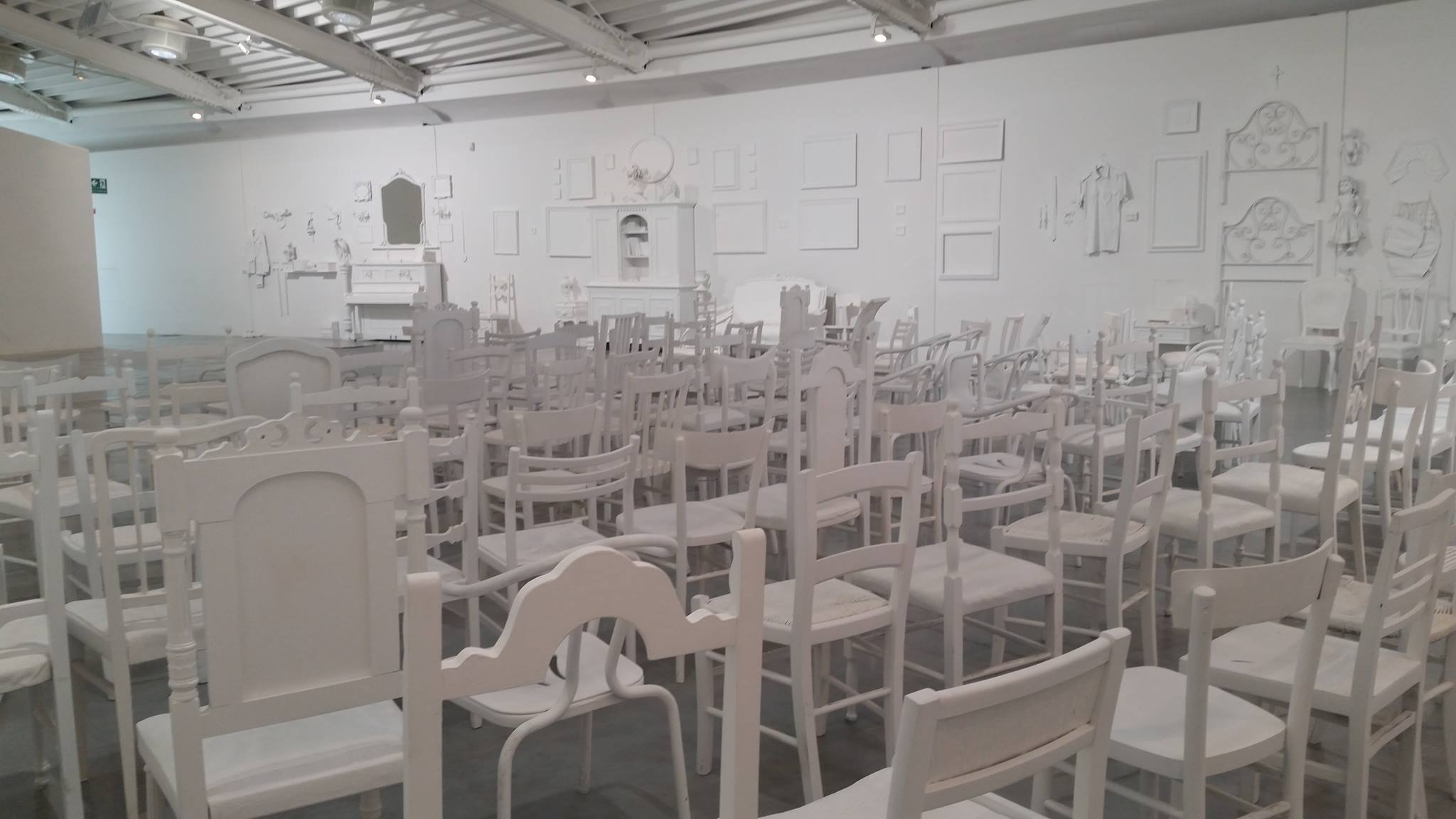
The exhibition is divided into three rooms, one of which, the larger environment, serves as the main hub for the other two by corollary, functional words and images explain the stages of design and artistic models that inspired the exhibition, as well as to further convey the stratification of the message that artist wanted to convey. Contemporary art, increasingly cryptic and self-referential, has never seemed so clear and exhaustive. The artist and the curators have managed, through many ways, to create art that spells out the message. And, in fact, the layout of the exhibition is a happy blend of artistic disciplines: painting, sculpture, architecture, poetry. The explosion of color, materials, and artistic techniques used with genius and sensitivity to create a setting in which each element has both a strong scenic and symbolic impact. The visitor, catapulted into a theatrical setting, in which the emergency exit signs are the only link with reality, is both spectator and actor: as an actor he can sit in UP5 and smell of ‘female labor’, and as a spectator he can read the writing on the wall, to fully understand the significance of the exhibition.

I intend to insist on the last point. Often contemporary exhibitions are guilty of little empathy and clarity. In the case of this exhibition, however, the message is clear and gets to the visitor with immediacy and originality. Useful captioning and explanatory films are here replaced by colorful graffiti on the walls and interestingly designed drawings, as well as artistic objects of fun and interactive character. Also, the installation in Santa Maria Novella, declared to be a site-specific sculpture, it apparently has no connection with the place in which it is located, and is only understood through reading the tag placed on the pedestal: a tribute to active artistic works in medieval Florence, as indeed are the works on display in the inner Chapel of the exhibition.

The circle closes and contradictory knots inherent in the exhibition melt to become a well-rounded representation of art and the human nature, contradictory by nature.


The End of the World


Centro Pecci
October 16, 2016 – March 19, 2017

By Katherine Reaume (Istituto Lorenzo de’ Medici)


The Centro Pecci museum in Prato, recently reopened in October,  is holding its first exhibition The End of the World, curated by the director Fabio Cavallucci, which brings together a collection of over 50 international artists to make connections between multiple disciplines, including art, including music, theatre, cinema, architecture, and dance.  In conjunction with this exhibit, a series of conferences, debates, and performances are taking place to expand on the various themes held within the exhibition.

The exhibition, held solely on the top floor, begins with instant immersion into modern art with what looks like the ceiling was split open and is spewing packaging supplies. Combined with large maps, photographs of water, and other instillation works, within the first few steps into the gallery space multiple forms of art are bought together.

Continuing through the gallery visitors have the ability to enter and walk through the instillation Transcorredor by artist Henrique Oliveira. This unique experience starts out with a warning that there are some low ceilings ahead. Walking through the change of materials used is subtle, and the path winds back and forth, trying to make the visitor forget that they are in a gallery. Upon seeing the light at the end of the tunnel, coming to the realization that you walked through a work of art, you are left without a clear notion of who created this work. A basic white label is located on the corresponding wall close to the beginning of the instillation when viewed from the outside.

Walking through the rest of the exhibition, the labels corresponding to the works displayed vary, some have little to no information like the Transcorredor, while others offer some insight into the piece displayed. Though not all of the labels offer the same information, they are all written in both Italian and English and are clearly readable. The signs and labels written also provide valuable information to those who wish to avoid some of the more graphic works housed within the space.

The combination of multiple art forms throughout the different gallery spaces helps to explore scientific, philosophical, and literary aspects, things that the exhibition aimed to bring together. The gallery space being in the round contributes to this connection even when some of the different spaces abruptly change from one subject to another. Shifting not only subject matter but also between well-known Modern artists to Contemporary artists, this exhibition challenges the visitor to find an overall link between the works, which may only exist in its disorientation of them.


Centro Pecci
16 October 2016 – 19 Marzo 2017

Traduzione di Tania Mio Bertolo (Università degli Studi di Firenze)


Il Centro Pecci di Prato ospita in questi giorni la mostra “La fine del mondo”, la prima allestita a seguito della recente riapertura del museo. Curata dal direttore Fabio Cavallucci, l’esposizione riunisce opere di oltre 50 artisti internazionali creando così connessioni tra diverse discipline quali l’arte, la musica, il teatro, il cinema, l’architettura e la danza. Inoltre una serie di conferenze, dibattiti e spettacoli è stata organizzata per ampliare ed approfondire i temi trattati dalla mostra stessa.

Ospitato nell’ultimo piano dell’edificio, il percorso espositivo ha inizio con un’immersione immediata nel mondo dell’arte contemporanea: una sorta di soffitto squarciato dal quale fuoriescono viveri imballati. Sin dal primo ingresso nello spazio della galleria le molteplici forme dell’arte si fondono l’una nell’altra attraverso la combinazione di grandi mappe, fotografie di acqua ed opere di installazione.

Proseguendo lungo la mostra il visitatore ha la possibilità di entrare fisicamente e camminare all’interno dell’installazione Transcorredor realizzata dall’artista Henrique Oliveira. Prima di avventurarsi in questa esperienza unica, il visitatore viene informato della presenza di soffitti bassi. Avanzare attraverso i diversi materiali usati è indefinibile, e l’andamento serpentino del percorso concorre a far dimenticare al visitatore di trovarsi all’interno di uno spazio museale. Solo intravedendo la luce alla fine del tunnel il visitatore può realizzare di aver camminato in un’opera d’arte, dalla quale però esce senza una chiara comprensione di chi ne sia l’autore. Solo una scarna bianca targhetta didascalica è collocata in una parete in prossimità della parte iniziale esterna dell’installazione.

Seguitando nel percorso espositivo si nota che le targhette didascaliche relative alle opere appaiono diversificate: alcune sono quasi senza informazioni come quella di Transcorredor, altre invece offrono spiegazioni inerenti le opere. Benchè non forniscano gli stessi dati, tutte le didascalie sono compilate sia in italiano che in inglese e sono facilmente leggibili. Cartelli e pannelli scritti inoltre danno utili informazioni a coloro che vogliano evitare altre opere grafiche ospitate all’interno dello spazio.

La fusione di molteplici forme artistiche nei differenti spazi del percorso espositivo favorisce l’indagine degli aspetti scientifici, filosofici e letterari che la mostra si propone di riunire. Lo spazio circolare della galleria contribuisce a questa commistione, anche quando in alcuni di questi spazi si passi brutalmente da un soggetto all’altro. Unendo trasversalmente non soltanto argomenti diversi tra loro, ma artisti noti con altri emergenti, la mostra invita il visitatore a cercare un filo conduttore tra le varie opere, le quali possono esistere solo in questo disorientamento di loro stesse.


Museo Degli Innocenti


By Vanessa Campoli (Istituto Lorenzo de’ Medici)


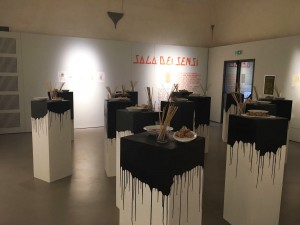
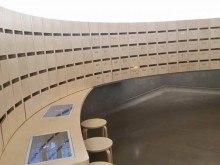
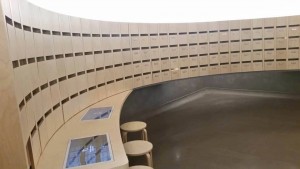
In 2008 Museo Degli Innocenti took the initiative to create a more interactive museum experience. After an eight year restoration, costing 12.8 million euro, the museum reopened its doors to the public on June 23, 2016. This restoration project allowed for new technology to be added and adapted for the needs of the museum.  One of the most notable exhibitions is the display of 140 segni, or marks, on the bottom floor. The segni are objects left behind on children who were abandoned at the once hospital in hopes that a parent may later be able to identify their child. This large space is shaped as a semi-circle and contains the restored and catalogued items in drawers that can be opened and explored. It has four touchscreens with chairs on either side of the wall display. These touchscreens encourage the visitor to sit and give attention to the touchscreen in front of them, instead of glancing at individual labels. Each visitor is encouraged to have a personal connection with one of the abandoned children by choosing a name on the screen and reading the story of the child that was left at the hospital. These stories have corresponding drawers that allow the visitor to connect the story of a child with the object.

The touchscreens are thought to enhance visitor interactivity by connecting the museum visitor with one of the orphan children. While the fundamental basis of the concept is there, this display lacks organization. The segni and the stories do not always correspond, and, due to the fact that there is no real organization of the named boxes, the ones that do have both segni and displayed story are often hard to find. While it is interesting to read the stories of the children who were left behind, knowing if they have a segni would be very helpful to the user. By not making it clear, the user only gets to have half of the experience, especially if the name chosen solely tells a story. It would be easier to divide the stories in different areas or on separate touchscreens that would allow for a distinction between those with segni and those without.  By doing this, the museum would allow a continuation of the history of the building, as well as create a more fluid transition from spaces for the visitor.

While Museo Degli Innocenti has made strides in creating a more interactive atmosphere for its visitors, there is potential for improvement. By using their new technology to create fluidity from exhibition space to exhibition space, the museum could greatly benefit, with better traffic flow of the visitor as well as with a more complete understanding and appreciation for the museum from the view of the audience. These personal connections that the Innocenti strives to create could ultimately distinguish it amongst its peers in Florence and could easily top the list of tourists so long as the distribution of technology and interactive exhibits create a complete museum experience.


Traduzione di Tania Mio Bertolo (Università degli Studi di Firenze)


Risale al 2008 la decisione di creare presso il Museo degli Innocenti un percorso espositivo di carattere interattivo. A seguito di un restauro di otto anni, del valore di 12.8 milioni di euro, il 23 giugno 2016 il museo ha riaperto le sue porte al pubblico. Il progetto di restauro e riallestimento ha previsto l’inserimento di innovativi strumenti tecnologici per migliorare il percorso espositivo ed adeguarlo alle nuove esigenze dei musei. Uno degli esempi più significativi si trova al piano seminterrato ed è la parete dei 140 segni, ovvero di quegli oggetti personali che i genitori lasciavano ai bambini al momento dell’abbandono come segni distintivi per poterli riconoscere un domani. La parete delimita uno spazio semicircolare, ed in essa gli stessi segni restaurati e catalogati sono conservati in piccoli cassetti che il visitatore può aprire ed esplorare. Quattro touchscreen ed alcune sedie sono distribuiti su entrambe le estremità della parete, invitando così il visitatore a sedersi ed interagire con gli schermi tattili, invece che leggere una ad una le targhette dei 140 cassettini. Il visitatore è incoraggiato ad instaurare un legame personale con uno o più tra i bambini abbandonati scegliendo un nome sullo schermo e leggendone la storia. A ciascuna storia corrisponde un cassetto, a ciascun orfano corrisponde un oggetto.

I touchscreen sono pensati per coinvolgere attivamente il visitatore, invitandolo a creare un legame con uno tra i bambini. Benchè l’idea sia valida e l’intenzione interattiva manifesta, la sua concretizzazione risulta incompleta a causa della disorganizzazione del software dei touchscreen. I segni e le storie non sempre corrispondono in maniera univoca, ed inoltre non sempre è facile trovare il cassetto associato ad una delle storie narrate poiché le vicende riportate negli schermi non esauriscono il totale dei contenitori. Venire a conoscenza delle storie di questi orfanelli è tanto interessante per il visitatore quanto lo è il capire se con loro era stato abbandonato qualche oggetto identificativo. In questo modo l’interazione tra il visitatore ed il percorso espositivo viene espletata solo a metà. Sarebbe forse stato più utile dedicare alcuni touchscreen solo alle vicende di quei bambini ai quali appartenevano i segni, ed altri esclusivamente alle storie degli orfanelli abbandonati senza oggetti identificativi. In questo modo il museo avrebbe scelto la via più semplice per tramandare e far rivivere la storia dell’istituto, ed inoltre avrebbe reso più fluido il percorso espositivo.

Sebbene il Museo degli Innocenti abbia fatto passi da gigante nell’allestimento di un percorso interattivo, ci sono ancora molti aspetti da migliorare. Il museo potrebbe trarre grandi vantaggi dall’utilizzo di questi innovativi strumenti tecnologici per rendere ancor più agili i passaggi tra i vari spazi espositivi, migliorando la gestione del flusso dei visitatori ed immedesimandosi nel punto di vista di quest’ultimo per la percezione del museo stesso. Le succitate connessioni che il Museo degli Innocenti cerca di stimolare tra il visitatore e le storie degli orfanelli, potrebbero costituire la cifra distintiva di questo museo. E magari, se è vero che l’uso della tecnologia e l’esperienza interattiva in uno spazio espositivo rendono più completa la visita stessa, permettere al Museo degli Innocenti di essere annoverato tra i preferiti dei turisti.