Museo Galileo

By Mackenzie Constantinou (Lorenzo de’ Medici)


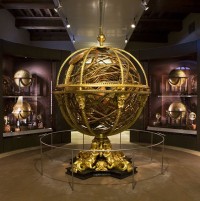
The Museo Galileo located near the Arno and the Uffizi Gallery, houses one of the largest Renaissance scientific instrument collections.  The Museum re-opened after a two-year closure for redesigning in 2010 and now it is one of the leading museums within Florence for education.  As the majority of the museums within the historical center of Florence keep a historical display of their objects, the Museo Galileo caters towards the contemporary visitor and aims to educate the public about scientific inventions and advancements.

The objects within the museum are clearly divided into two collections, the Lorraine and the Medici.  Through this display the institution aims to present a historical and cultural distinction between the objects, which can convey the original collection of the families.  The entire museum focuses on the mathematical and scientific advancements and tells the story of the evolution of scientific instruments.  The objects are displayed in a chronological order that allows the visitors to see the change in the objects.  Both the Lorraine and Medici collections, housed on separate floors, offer the visitors aesthetically pleasing and historically important objects, which are transformed into educational tools.  This is done so through the extensive use of labels for individual objects and wall labels with background information on the families and historical information.

Each object within the Museo Galileo has a label in English and Italian that identifies the object, which collection it belongs to, and the date. Though the labels tend not to explain the importance or the usage of that particular object.  In the past the museum used to offer pamphlets to visitors in several languages to provide them with supplementary information about the history.  Now, the pamphlets are now digitized and are available to visitors on the Museo Galileo website.  This creates a problem because the museum does not advertise this service and the museum does not have Wifi for visitors to use to download the Mini-Guide once at the museum.  These guides are in several languages (French, German, Spanish, English, Italian, Russian, Japanese, and Chinese) and are extremely informative offering guests a room-by-room map and guide through the museum, but the institution could do a better job at advertising this resource.

At the museum, there is an entire room dedicated to didactic education.  The last few rooms of the museum are filled with copies of scientific tools that are accompanied with explanatory panels in English and Italian that allow visitors to touch and learn from the past inventions.  These vital rooms within the museum demonstrate the institutions focus on public education.  Furthermore, they offer guided tours from an actor dressed up as Galileo himself, which provides visitors with a unique experience when viewing the scientist’s inventions.

Overall, this institution provides historically important collections of the Medici and the Lorraine families, which are displayed in a chronological manner in order to illustrate the change in scientific advancements.  Furthermore, the institution’s educational tools allow visitors to understand, learn, and touch past instruments.  This museum is unique within Florence, with its 21st century design and emphasis on the visitor’s educational experience.  Prior to visiting the museum see the website for more information: http://www.museogalileo.it/


Museo Galileo

Il museo Galileo è situato vicino l’Arno e la Galleria degli Uffizi e conserva una delle più grandi collezioni di strumenti scientifici rinascimentali. L’istituzione ha riaperto dopo una chiusura di due anni nel 2010 per essere rinnovato e ora è uno dei musei più importanti a Firenze per l’istruzione.

Come la maggior parte dei musei nel centro storico di Firenze presenta un allestimento storico degli oggetti, il Museo Galileo  si rivolge al visitatore contemporaneo e ha l’obbiettivo di educare il pubblico sulle invenzioni scientifiche e i progressi della scienza.

Gli oggetti sono chiaramente divisi in due collezioni; la Lorenese e la Medici. Attraverso questa disposizione l’istituzione vuole sottolineare la distinzione storica e culturale degli strumenti e illustrare l’originale collezione delle famiglie.

L’intero museo si concentra sui progressi matematici e scientifici e mostra la storia dell’evoluzione degli strumenti scientifici.

Gli strumenti sono esposti seguendo l’ordine cronologico per aiutare lo spettatore a notare i cambiamenti negli oggetti. Sia la Lorenese che la Medici, esposte in due piani separati, offrono ai visitatori oggetti esteticamente gradevoli e storicamente importanti, che vengono trasformati in strumenti didattici. Ciò è reso possibile da il largo uso di pannelli per i singoli oggetti e pannelli esplicativi con informazioni sulle famiglie e sulla storia degli oggetti.

Ogni manufatto del Museo Galileo è illustrato da un pannello, sia in Inglese che in Italiano, che identifica l’oggetto, la collezione dalla quale proviene e la data. Sebbene le etichette non tendono a spiegare l’importanza o l’utilizzo di quel particolare strumento. In passato il museo era solito fornire ai visitatori  dei pamphlets in diverse lingue con ulteriori informazioni sulla storia. Adesso i pamphlets sono digitalizzati e disponibili per i visitatori sul sito del museo. Questo crea un problema perché il museo non avverte di questo servizio e non ha la Wifi che permetterebbe di scaricare la Mini-Guida una volta sul posto. Queste guide sono in varie lingue (Francese, Tedesco, Spagnolo, Italiano, Russo, Giapponese e Cinese) e molto utili poiché offrono una mappa delle sale e una guida attraverso il museo ma l’istituzione potrebbe migliorare il servizio avvertendo dell’esistenza di questa risorsa.

Nel museo c’è un intera stanza dedicata alle attività didattiche. Le ultime sale sono ricche di copie di strumenti scientifici accompagnati da pannelli esplicativi in Italiano e Inglese che invitano lo spettatore a toccare ed imparare dalle invenzioni del passato. Queste sale fondamentali dimostrano che l’istituzione è focalizzata sull’educazione del pubblico.

Inoltre propongono visite guidate da un attore vestito come Galileo, che offre ai visitatori un’esperienza unica mentre guardano le invenzioni dello scienziato.

Nel complesso, questa istituzione propone collezioni dei Medici e dei Lorena storicamente importanti esposte con criterio cronologico per illustrare i cambiamenti  nei progressi scientifici. Inoltre gli strumenti educativi forniti consentono ai visitatori di capire, imparare, e toccare gli strumenti del passato. Questo museo è unico all’interno di Firenze, con il suo design del 21 ° secolo e l’accento sulla esperienza educativa del visitatore.

Prima di visitare il museo si veda il sito per ulteriori informazioni: http://www.museogalileo.it/
Museo Stibbert

by Mackenzie Constantinou (Lorenzo de’ Medici)


The Stibbert Museum, located just outside of the historical city center of Florence, houses the collection of Frederick Stibbert.  Stibbert (1836-1906) inherited the estate, the present day museum, from his grandfather who was the commander in chief for the British East India Company and therefore supplied the family with its tremendous wealth.  During Frederick Stibbert’s life he was fascinated with different cultures and their costumes, and aimed to create a collection that displayed the variety of clothing, objects, and people from around the world.  Upon his death he requested that his collection stay displayed together; presently curators and the director of the museum have aimed to recreate Stibbert’s original display of the objects while trying to please a contemporary audience.

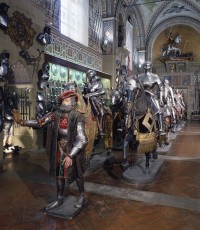
The museum was created originally by Frederick Stibbert to house his vast collection of historical objects which illustrate the change in dress from around the world.  Upon request, he welcomed scholars and visitors to his house museum and aimed to educate them through his illustrative library of works.  Currently, it is necessary for visitors to join a guided group tour of the museum which start every hour. These groups are lead through the house museum by a guard, who does not offer a tour or any background information for visitors.  Upon entering the first room the visitor is transported back in time, due to the historical display of the works, which illustrates the grandiose, luxurious, and spectacular environment that Stibbert would have wanted his guests to feel upon seeing his collection.  The first room demonstrates his curiosity in costumes throughout time as it houses a large collection of several portraits and numerous coats of armor.  These objects illustrate the change in dress throughout time and Stibbert’s interest and fascination with these garments effectively creates the theme for visitors.  It would be helpful if the museum provided more information on the background of Stibbert’s collection and his interest in different cultures and costumes, in order to provide visitors with the correct mindset upon entering the institution.  Regardless, his collection acts as a library for historical garments and presents them to the public via anatomically correct mannequins.

Throughout several rooms Stibbert fashioned figurines, which are adorned with ornate and decorative clothing.  These models, though dated, illustrate the people, culture, and life that these clothes would have been created for.  Though, these are without any supplementary information.  There are only a couple instances of labels of the top floor of the museum, but the labels are only in Italian and are in a small font size.  While, in the first room there are signs that visitors can read to see what the corresponding works are but yet again they are only in Italian and they are placed so that when the visitor is reading the sign he cannot simultaneously view the work of art.  The educational space allows for visitors to wear copies of these historical costumes, which is an interesting addition to the museum space because it allows for the publics engagement and tactile understanding of the objects.

In conclusion it is an extremely interesting museum, because it houses works from throughout the world and displays it a historic 19th century manner, as Stibbert would have.  Due to the unchanged display, there is a disconnect that is formed between modernizing and keeping to Stibbert’s wishes.  If the museum would utilize more educational tools and labels, it would help clarify the importance of the collection and collector.  Overall it is an expansive collection that is housed within an intriguing architectural space, which in combination with the historical significance of the collection, creates a unique experience for visitors.


Museo Stibbert

Il Museo Stibbert, situato appena fuori dal centro storico di Firenze, ospita la collezione di Frederick Stibbert. Stibbert (1836-1906) ereditò la proprietà, l’attuale museo, dal nonno che era il comandante in capo della British East India Company e quindi lasciò alla sua famiglia un enorme ricchezza. Nel corso della vita Frederick Stibbert fu affascinato dalle diverse culture e dai loro costumi e volle creare una collezione che mostrasse la varietà di vestiti, oggetti e persone da tutto il mondo. Alla sua morte chiese che la sua collezione restasse esposta unita; attualmente i curatori e il direttore del museo hanno deciso di ricreare la disposizione originale degli oggetti di Stibbert cercando nello stesso tempo di soddisfare un pubblico contemporaneo.

Il museo venne fondato originariamente da Frederick Stibbert per conservare la sua vasta collezione di manufatti storici che mostravano i cambiamenti dei costumi di tutto il mondo. Su richiesta accoglieva studenti e visitatori nella sua casa museo con l’obiettivo di educarli attraverso la sua biblioteca illustrativa di opere. Attualmente è necessario per i visitatori partecipare a un tour guidato a gruppi che parte ogni ora. I gruppi sono guidati attraverso il museo da una guardia che non offre una vera e propria visita o informazioni di base ai visitatori. Il visitatore, una volta entrato nella prima stanza, è trasportato indietro nel tempo grazie ad una disposizione storica delle opere che esaltano l’ambiente grandioso, lussuoso, e spettacolare così come Stibbert avrebbe voluto che i suoi ospiti si sentissero davanti alla propria collezione. La prima stanza illustra la sua curiosità per i costumi attraverso le epoche in quanto ospita una grande collezione di diversi ritratti e numerose armature. Questi oggetti mostrano il cambiamento dei costumi nel tempo e l’interesse di Stibbert, il fascino di questi indumenti crea efficacemente un tema per i visitatori. Sarebbe d’aiuto se il museo fornisse più informazioni sul background della collezione e sugli interessi del proprietario per le diverse culture e costumi al fine di fornire ai visitatori la giusta preparazione per vedere il museo. Indipendentemente da ciò, la collezione si comporta come una biblioteca dedicata ai costumi storici che viene presentata al pubblico con manichini anatomicamente corretti.

Attraverso le diverse sale dello Stibbert si incontrano i figurini abbigliati, che sono decorati con abiti ornati e decorativi.

Questi modelli, anche se datati, illustrano i popoli , le culture e le vite per cui furono creati questi abiti, anche senza alcuna informazione supplementare. Ci sono solo un paio di pannelli esplicativi al piano superiore del museo ma sono solamente in italiano e in caratteri piccoli.

Sebbene nella prima sala ci siano dei cartellini che i visitatori possono leggere per vedere a quale opera corrispondono, sono di nuovo solo in italiano e collocati in maniera che mentre si legge non si può guardare l’opera d’arte.

Lo spazio educativo permette ai visitatori di indossare le copie di questi costumi, addizione interessante allo spazio del museo perché consente il coinvolgimento del pubblico e una comprensione tattile degli oggetti.

In conclusione è un museo molto interessante perché conserva manufatti di tutto il mondo e mostra un allestimento storico del XIX secolo come lo aveva pensato Stibbert. A causa della disposizione che non è cambiata nel tempo c’è una disconnessione tra il tentativo di modernizzazione e il mantenimento dei desideri di Stibbert. Se il museo fornisse un maggior numero di strumenti didattici e pannelli esplicativi si comprenderebbe meglio l’importanza della collezione e del collezionista. Nel complesso si tratta di una vasta collezione che è stata conservata in un intrigante spazio architettonico che, in combinazione con il significato storico della collezione, crea un’esperienza unica per i visitatori.


Massimo Bartolini, Museo Marino Marini

By Mackenzie Constantinou (Lorenzo de’ Medici)


11 January 2015- 8 March 2015

The figure of Massimo Bartolini, curated by Alberto Salvadori, was opened January at the Museo Marino Marini.

The artist, born in Cecina in 1962, offers a series of major works, which were thought of specifically for this exhibition.  The objective is to create a comparison with the sculpture of Marino Marini and guide visitors through the exhibition via a path free of signs, which can allow individuals to partake in a constant dialogue with the exhibition space.

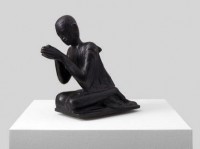
Beginning the visit of Rucellai Chapel the first work is ‘Revolutionary Monk’ a Burmese monk carved in a particular position that indicates that the one who is between religion and secularism, and who wants to create a link with the intellectual world of Albeti.  In the same environment ‘Airplane’, the cast of a paper airplane was taken from an earlier work of the artist.  This work is placed upon the top of a column of white marble to emphasize that even a heavy material can have the lightness needed to fly.

The rest of the exhibition takes place on the lower floor, on the stairs that descends and meets a photograph by the author in extremis.  This is an image of the beach of Cecina where trucks create a circular shape that recalls the structure of the crypt of San Pancrazio, which created the want to display Bartolini on within the exhibtion.

Downstairs the viewer is greeted by a performance: two people read ‘Sculpture dead Language’ by Arturo Martini one aloud, the other in his head.  ‘The Juggler’ is a large wall in the center of the space, which will include a series of numbers that reassemble a machine clueless sculpture ‘The Juggler’ the Florentine master.  The coordinates are called ‘Clouds of Numbers’, are also superimposed to ‘Study of Clouds’ of Constable, which emphasizes the reproducibility and the mechanical nature.  These themes are compared with the uniqueness of the creative gesture.

Behind the wall, in the dark, the viewer is invited to experience a personal and exclusive work ‘Petites esquises d’erbres’ where sounds were created by recording the wind in the trees.  Each of which is assigned a note, the music that results is then punctuated by French singer, which inspired the title of the work.

The last two works are among the few not made specifically for the exhibition, ‘38’ is a mirrored surface that looks around from a distance but is actually a 38 sided polygon in which the artist created for the thirty-eighth birthday of his partner.  With this, Bartolini wanted to establish a relationship between subjective and personal work through the recipient of it.  The last sculpture, resting on the stone stairs to the chapel, is a mountain that is part of a series of works in which the artist has carved mountains inspired paintings fifteenth.


Massimo Bartolini, Museo Marino Marini

By Carolina Caverni (Università di Firenze)

11 Gennaio – 8 Marzo

La personale di Massimo Bartolini, curata da Alberto Salvadori, è stata inaugurata il 10 Gennaio al Museo Marino Marini.

L’artista, nato a Cecina nel 1962, propone una serie di opere la maggior parte delle quali sono state pensate appositamente per questa esposizione. L’obbiettivo è quello di creare un confronto con le sculture di Marino Marini e, attraverso un un percorso privo di segnaletica che può essere liberamente fruito dal visitatore, un dialogo costante con lo spazio espositivo.

Incominciando la visita dalla cappella Rucellai la prima opera è “Revolutionary Monk” un monaco birmano scolpito in una particolare posizione che indica colui che sta tra religione e laicità e che  vuole creare un legame con l’opera intellettuale dell’Alberti.

Nello stesso ambiente “Airplane”, il calco di un aeroplanino di carta, ripreso da un’opera precedente dell’artista, è sulla sommità di una colonna in marmo bianco a sottolineare come anche un materiale pesante possa avere la leggerezza necessaria per volare.

Il resto dell’esposizione si svolge al piano inferiore, sulle scale che scendono si incontra una fotografia aggiunta dall’autore in extremis, un’immagine della spiaggia di Cecina in cui dei tronchi creano una forma circolare che richiama la struttura della cripta di San Pancrazio e che quindi Bartolini ha voluto esporre in mostra.

Al piano inferiore lo spettatore viene accolto da una performance; due persone leggono una ad alta voce, l’altra nella propria mente il testo “Scultura lingua morta” di Arturo Martini, predecessore di Marini alla cattedra di scultura di Monza, di nuovo un rimando all’artista che diventa ancora più esplicito nell’opera “Il giocoliere” un grande muro al centro dello spazio sul quale sono riportati una serie di numeri che se ricomposti in un apposito macchinario ricreerebbero la scultura “Il giocoliere” del maestro fiorentino. Le coordinate, che in gergo vengono chiamate “nuvole di numeri”, sono inoltre sovrapposte a “studio di nuvole” di Constable, la riproducibilità e la meccanicità sono dunque i temi che vengono messi a confronto con l’unicità del gesto creatore.

Dietro “il muro”, nell’oscurità, lo spettatore è invitato a vivere una personale ed esclusiva esperienza dell’opera “Petites esquises d’erbres” un audio creato registrando il vento tra gli alberi ad ognuno dei quali è stata assegnata una nota, la musica che ne deriva è stata poi intervallata dalla sonata francese alla quale è ispirato il titolo dell’opera.

Le ultime due opere sono tra le poche non realizzate appositamente per la mostra, “38” è una superficie specchiata che appare rotonda da lontano ma è in realtà un poligono a 38 lati che l’artista ha creato per il trentottesimo compleanno della compagna, con questa operazione Bartolini vuole  instaurare un rapporto del tutto personale e soggettivo tra opera e destinatario di essa. L’ultima scultura, appoggiata sulla pietra serena della scala d’accesso al sacello, è una montagna che fa parte di una serie di lavori in cui l’artista ha scolpito montagne ispirate a dipinti quattrocenteschi.

The Collection of Russian Icons at the Uffizi Gallery

By Mackenzie Constantinou (Lorenzo de’ Medici)


The Uffizi Gallery presents never before seen works in an exhibition dedicated to the grand ducal collection of Russian icons

The 1761 inventory of Palazz Pitti is what established the major part of the acquisition of the grand ducal icon collection.  These were arranged in the ‘Cabinet of Ancient Paintings’ during the reorganization of the Uffizi organized by Lanzi.

The works, from around the 1800’s, were especially icons from one school in central Russia active in the second quarter of the XVII century until 1796 and remained in the Uffizi exhibited along with other paintings by Italian artists and Pre-Renaissance Tuscan artists.

The exhibition has free entrance and begins with three explanatory labels, which are in Italian and in English, which introduce the visitors to the general sense of the exhibition.  The brief information provides the public with a history of the icons and information on the main styles taught in schools.

The criterion selected by the curators, Valentina Conticelli, Vincenzo Gobbo, and Daniela Parenti, assisted in creating a route in which the works are divided in four sections each accompanied by an explanatory panel.

The great room, Sala delle Poste Reali, is characterized by the usage of soft light within the display cases, which help to preserve the paintings.  These are then illuminated so as to put even more of an emphasis on the gold, precious materials, and bright colors of the sacred images.  The works are not only of liturgical value, but act as an intermediary between the material and the transcendent.  This is made known to the visitor with the first section of works dedicated to Christ.  The introductory panel explains what was original and traditional iconography of Christ “Acheropita” whose image was miraculously imprinted on a cloth.

Exposed tables of various dimensions represent the most common iconography.  Christ the ‘Pantocrater’ and ‘Savior’ and images of Christianity with the Tree of Jesse, with the genealogy of Christ, and the history of the New Testament.

The second group of works is dedicated to the image of Mary, which in this case explains the traditional link to this religion and exposes both Marian episodes. The main types of iconography of the Madonna are: ‘Odrighitria’, ‘Eleusa’, the Majesty, and the Mother of God as a sign.

The third major icon collects the tablets more linked to popular devotion and icons of archangels, saints and blessed martyrs and their lives and miracles.

Finally the last works are on display in the center of the room in a structure reminiscent of the chapel of a church.  This last section is titled ‘Cabinet of Ancient Paintings’ and offers the viewers the idea of exposing Lanzi.  Through the comparison of Russian paintings and artists such as Giovanni del Ponte, Bermardino Gaddi, and the presumed Beato Angelico, and together with the icons and the Pre-Renaissance painters this can be done.


La collezione delle icone russe agli Uffizi, Galleria degli Uffizi, Sala delle Reali Poste

By Carolina Caverni (University of Florence)

La Galleria degli Uffizi presenta per il ciclo “i mai visti” una mostra dedicata alla collezione granducale di icone russe.

L’inventario del 1761 di Palazzo Pitti è il termine che stabilisce l’acquisizione della maggior parte delle icone nelle raccolte granducali che verranno sistemate nel “Gabinetto delle pitture antiche” durante il riordino degli Uffizi curato dal Lanzi.

Le opere, un ottantina circa, sono soprattutto icone provenienti da una scuola della Russia centrale attiva nel secondo quarto del XVIII secolo che fino al 1796 rimasero agli Uffizi esposte insieme ad altre pitture di artisti italiani e toscani prerinascimentali.

L’ esposizione, ad ingresso gratuito, ha inizio con tre cartelloni esplicativi, sia in italiano che in inglese, che introducono il visitatore al senso generale della mostra e informano in breve sulla storia delle icone e quelli che erano i principali stili e scuole.

Il criterio scelto dai curatori, Valentina Conticelli, Vincenzo Gobbo e Daniela Parenti, è quello di creare un percorso in cui le opere sono divise in quattro sezioni ognuna corredata dal proprio pannello esplicativo.

Il grande ambiente della Sala delle Poste Reali è caratterizzato da luci soffuse mentre le teche che conservano le pitture sono illuminate così da mettere ancor più in risalto l’oro, i materiali preziosi e i colori vivi delle immagini sacre. Il loro valore non solo di oggetti liturgici ma di veri e propri tramiti tra il materiale e il trascendente viene reso noto allo spettatore con la prima sezione di opere dedicate a Cristo. Il pannello introduttivo spiega come ha avuto origine la tradizione iconografica del Cristo “Acheropita” la cui immagine venne impressa miracolosamente su un telo.

Le tavole esposte, di varie dimensioni, rappresentano le iconografie più comuni; il Cristo “Pantocrator” e il  “Salvatore” e alte immagini di tema cristologico come l’Albero di Jesse, con la genealogia di Cristo,  e le storie del Nuovo Testamento.

Il secondo gruppo di opere è dedicato all’immagine di Maria, anche in questo caso viene spiegata la tradizione legata a questo culto e sono esposti sia episodi mariani che le principali tipologie iconografiche di Madonne, la “Odrighitria”, la “Eleusa”, la “Maestà” e la “Madre di Dio in segno”.

Il terzo nucleo di icone raccoglie le tavole più legate ad una devozione popolare e dunque ad icone di arcangeli, santi martiri e beati e alle loro vite e miracoli.

Infine le ultime opere sono esposte al centro della sala in una struttura che ricorda la cappella di una chiesa, questa ultima sezione è intitolata “Gabinetto delle pitture antiche” e propone allo spettatore quell’idea del Lanzi di esporre insieme icone e pittori prerinascimentali attraverso il confronto tra le pitture russe e artisti come Giovanni del Ponte, Bernardino Gaddi e un presunto Beato Angelico.