Scoperte e Massacri: Ardengo Soffici e le Avanguardie a Firenze

Galleria degli Uffizi, dal 27 settembre all’8 gennaio 2017.

Di Maria Eletta Benedetti (Università di Firenze)


Allestita nelle sale per esposizioni temporanee della Galleria degli Uffizi la mostra dedicata alla poliedrica figura di Soffici (1879-1964) si apre a sua volta con la mostra la Festa dell’Arte e dei Fiori del 1896-1897, che colpì il giovane Ardengo. Questa seconda mostra (nella mostra) introduce in un viaggio nel tempo e in un’Italia in trasformazione a cavallo tra la fine dell’Ottocento e la Grande Guerra.

Sin dalla prima sala, così come in tutto il percorso successivo, è come se Soffici prendesse per mano e conducesse il visitatore alla scoperta degli artisti e dei luoghi che lo hanno colpito e interessato nella sua esperienza di letterato, pittore e intellettuale. Nei pannelli infatti la didascalia dell’opera è accompagnata da un commento storico-critico e dalle parole di Soffici recuperate dai suoi saggi, lettere e articoli. I suoi giudizi e le sue descrizioni risuonano protagoniste insieme alle numerose opere esposte di molti altri artisti oltre a quelle di Soffici, che il visitatore può osservare da un punto di vista originale e personale, accompagnato cioè dai commenti e dalle spiegazioni nei pannelli della poliedrica figura dello stesso Ardengo. Le opere esposte aiutano quindi a ripercorrere visivamente il percorso artistico di Soffici e proprio per questo motivo non sono presenti solo opere del protagonista, ma insieme a lui come co-protagonisti le grandi personalità di fine Ottocento- inizi Novecento.

L’illuminazione è ben pensata e focalizza l’attenzione dell’osservatore sui quadri e sulle sculture esposte all’interno delle sale di colore scuro. I pannelli esplicativi, posti all’ingresso di ogni ambiente, sono brevi ma utili per contestualizzare la peculiarità delle varie sale.

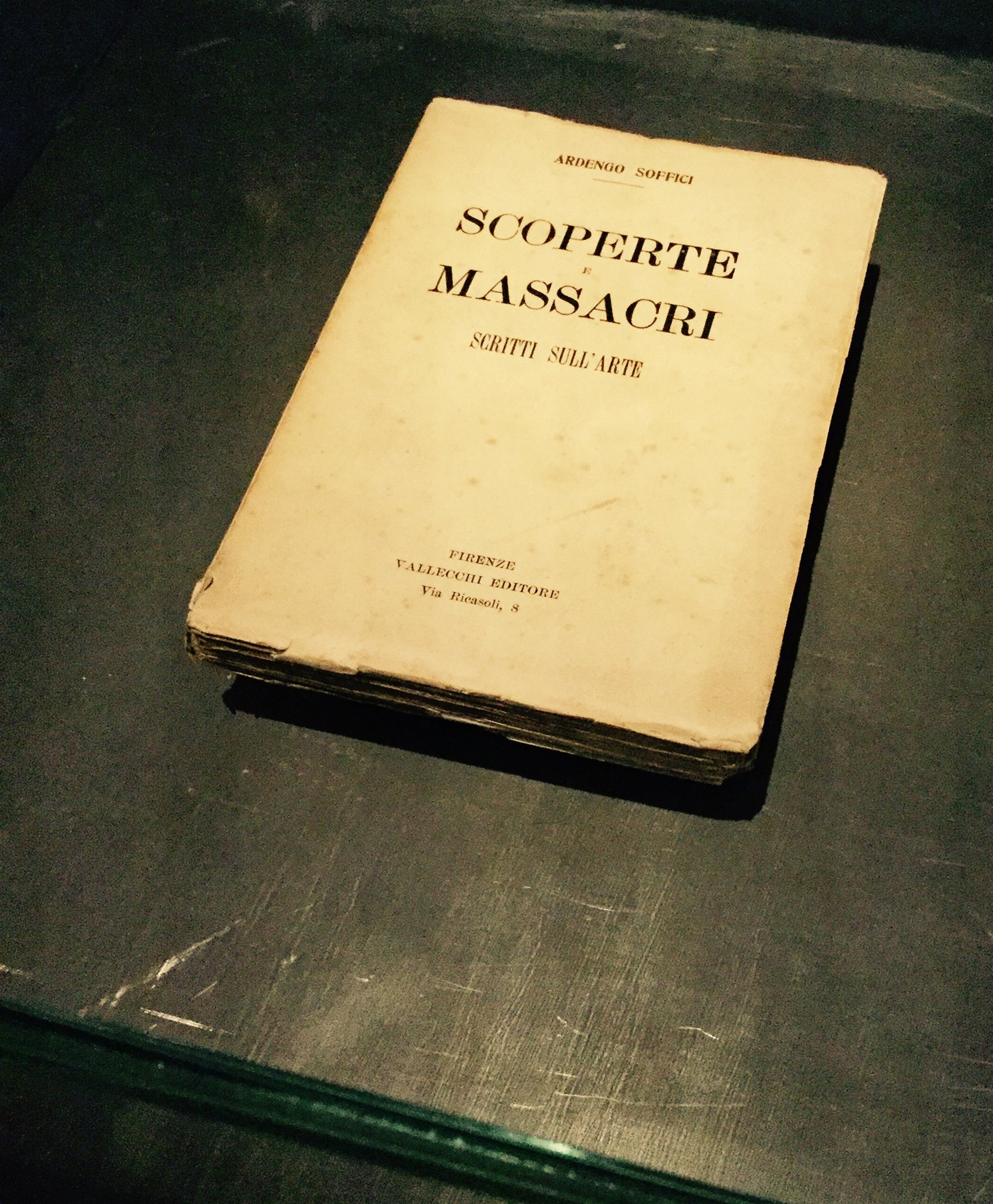
Il viaggio inizia con Segantini e termina con l’autoritratto di Soffici del 1949. Questo quadro è più che mai importante dal momento che, donato dagli eredi alla Galleria degli Uffizi, è stato il pretesto e l’occasione della mostra. Al volto maturo di Soffici è affiancato Scoperte e massacri, scritti sull’arte (1919), il saggio dell’autore che è stato in parte guida per la realizzazione della mostra e ne ha ispirato il titolo. Gli interessi così come i “massacri” di Soffici sono mostrati con la stessa criticità dell’intellettuale, maturata nel tempo dopo un viaggio a Parigi nel 1900. Soffici scopre i grandi artisti a lui contemporanei e li racconta in questa mostra, nella quale si possono incontrare tele di Cézanne e Henri Rousseau, sculture di Medardo Rosso, provocazioni dei Futuristi, quadri dei maggiori esponenti della rivoluzione cubista, primo tra tutti Picasso, amico di Soffici. Le esperienze artistiche che Soffici conosce vengono raccontate da lui stesso ne La Voce, rivista fondata nel 1908 da Prezzolini e da Papini, poi nel periodico Lacerba e dopo la Prima Guerra Mondiale in Valori Plastici. Esposti agli Uffizi sono presenti anche quadri dello stesso Soffici, che narra e sperimenta con il pennello le amicizie e gli stili dei grandi pittori d’avanguardia del Primo Novecento, che influenzarono non solo il protagonista della mostra ma anche la cultura italiana del tempo.

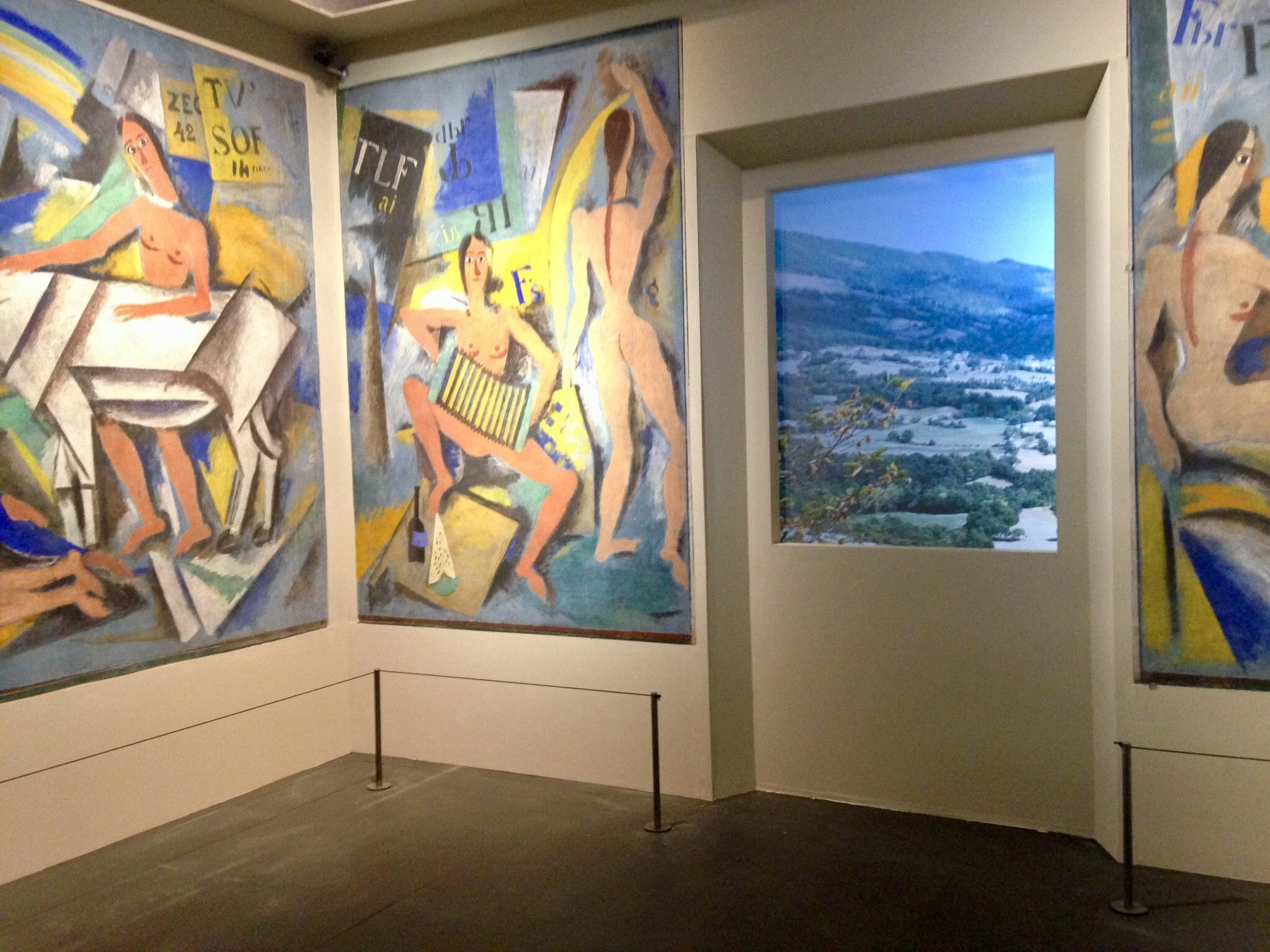
Spartiacque nella vita e nello stile di Soffici è la guerra, che lo vede in prima linea come promotore e soldato volontario, ma anche come narratore insieme a De Chirico e Carrà. A metà del percorso espositivo il visitatore si ferma e può guardare un video che riassumendo le sale appena visitate introduce, con le parole dello stesso letterato, alle ultime sale dedicate appunto al cambiamento di Soffici di ritorno dalla Grande Guerra. Nella sala affianco alla proiezione è assai interessante la ricostruzione dei pannelli decorativi per la “stanza dei manichini” per la casa di Papini a Bulciano.

Dopo la guerra Ardengo Soffici è cambiato, così come l’Italia. Dopo le sperimentazioni avanguardiste Soffici cerca una nuova “scoperta”, un nuovo punto da cui ripartire artisticamente (come si può vedere dall’ultima sala con alcune Nature morte). E così anche Soffici, come molti altri artisti del tempo, fa “ritorno all’ordine”.

Lo scopo della mostra è quello di spiegare attraverso il percorso artistico di Soffici il cambiamento d’epoca che porterà alle novità artistiche del XX secolo. Grazie a questa scelta espositiva il visitatore può rivivere i fermenti culturali delle Avanguardie Storiche e l’esperienza sofficiana tanto da poter lasciare la Galleria degli Uffizi conoscendo un po’ di più l’uomo autoritratto alla fine della mostra.
 

Galleria degli Uffizi, 27 September 2016 to 8 January 2017 

Translation by Rachyl Grussing


Staged in the temporary exhibition rooms of the Uffizi Gallery is a show dedicated to the multifaceted figure of Ardengo Soffici (1879-1964). The show opens with The Festival of Flowers,1896-1897, which struck the young Ardengo. The second show in the exhibition introduces themes of a journey in time and an Italy in transformation, situated in between the end of the 19th century and the Great War.

From the first room, as well as all rooms throughout, it is as if Soffici takes the hand of the visitor to discover the artists and the places that have affected and interested his experience as writer, painter and intellectual. In fact, the work of the panels is accompanied by a historical-critical commentary and words of Soffici, recovered from his essays, letters, and articles. His judgements and his descriptions resonate together with numerous provocative works exhibited by many other artists, as well as those by Soffici. Visitors can observe from an original and personal point of view that is accompanied by commentary and explanations in the panels by the multifaceted figure of Soffici. The exhibited works help to visually retrace the path of the artist and, for this reason, not only are works of other artists present, but together with Soffici being co-artist of the great personalities of the late Nineteenth and early Twentieth centuries.

The lighting is well thought out and focuses the attention of the observer on the paintings and the sculptures displayed in the dark colored rooms. The explanatory panels, placed at the entrance of each room, are short but useful to contextualize the peculiarities in the various rooms.

The journey begins with Segantini and finishes with the self-portrait of Soffici from 1949. This painting is more important than ever since its donation to the Uffizi Gallery by his heirs was the pretext and occasion for the exhibition. The mature face of Soffici accompanies Discoveries and Massacres, writings of the artist (1919), the artists essays that were in part a guide for the realization of the show and the inspiration for the title. The interests and the ‘massacres’ of Soffici are shown with the same intellectual criticality, matured over time after a trip to Paris in 1900. Soffici discovered the great artists of his time and recounts them in this exhibition, where you can meet paintings by Cezanne and Henri Rousseau, sculptures by Medardo Rosso, provocations by the Futurists, Cubist paintings by the major representatives, and first of all the works by Picasso, a friend of Soffici. The artistic experiences that Soffici knew are told by himself in The Voice, a magazine founded in 1908 by Prezzolini and Papini, then periodically in Lacerba, and after the first World War in Plastic Valor. Exhibited at the Uffizi are also paintings by Soffici narrating friendships and experimenting with the brush the styles of the great avant garde painters of the Nineteenth century, who influenced not only the main protagonist of the exhibition, but all Italian culture during the time.

A watershed moment in the life and style of Soffici is the war, in which he is at the forefront as promoter and volunteer soldier, but also as a storyteller with De Chirico and Carra. Halfway through the exhibition the visitor can stop and watch a video summarizing and introducing the halls just visited, with the same words and letters. The last rooms are dedicated to the change within Soffici and his return from the Great War. In the room next to the presentation is a very interesting reconstruction of the decorative panels for the ‘Mannequin Room’ for the house of Papini and Bulciano.

After the war Ardengo Soffici was changed, as was Italy. After the experimentation with avant garde, Soffici searched for a new ‘discovery’, a new point from which to start artistically (as you can see from the last room with the Still Life). And so even Soffici, like many other artists of the time, does a ‘return to order’.

The purpose of the exhibition is to explain, through the artistic career of Soffici, the change of era which will bring the new art of the 20th century. Thanks to this choice of exhibition, the visitor can relive the cultural fermentation of the avant garde history as experience by Soffici, enough to leave the Uffizi Gallery knowing a little more about the man in the final self-portrait of the exhibition.


Ad usum fratris: Miniatures in the Laurentian Manuscripts of the Holy Cross X-XIII at San Lorenzo Church


By: Rachyl Grussing


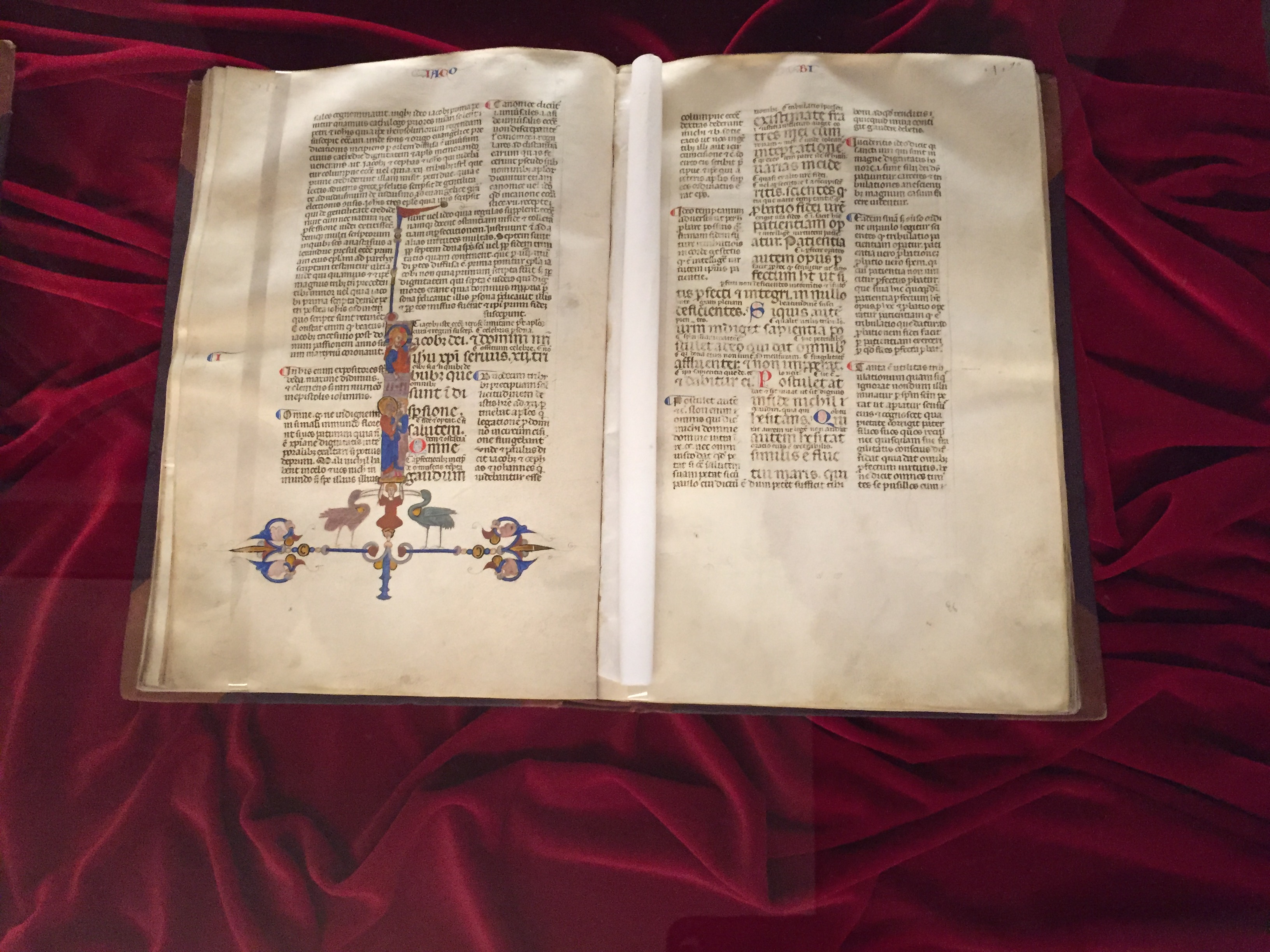
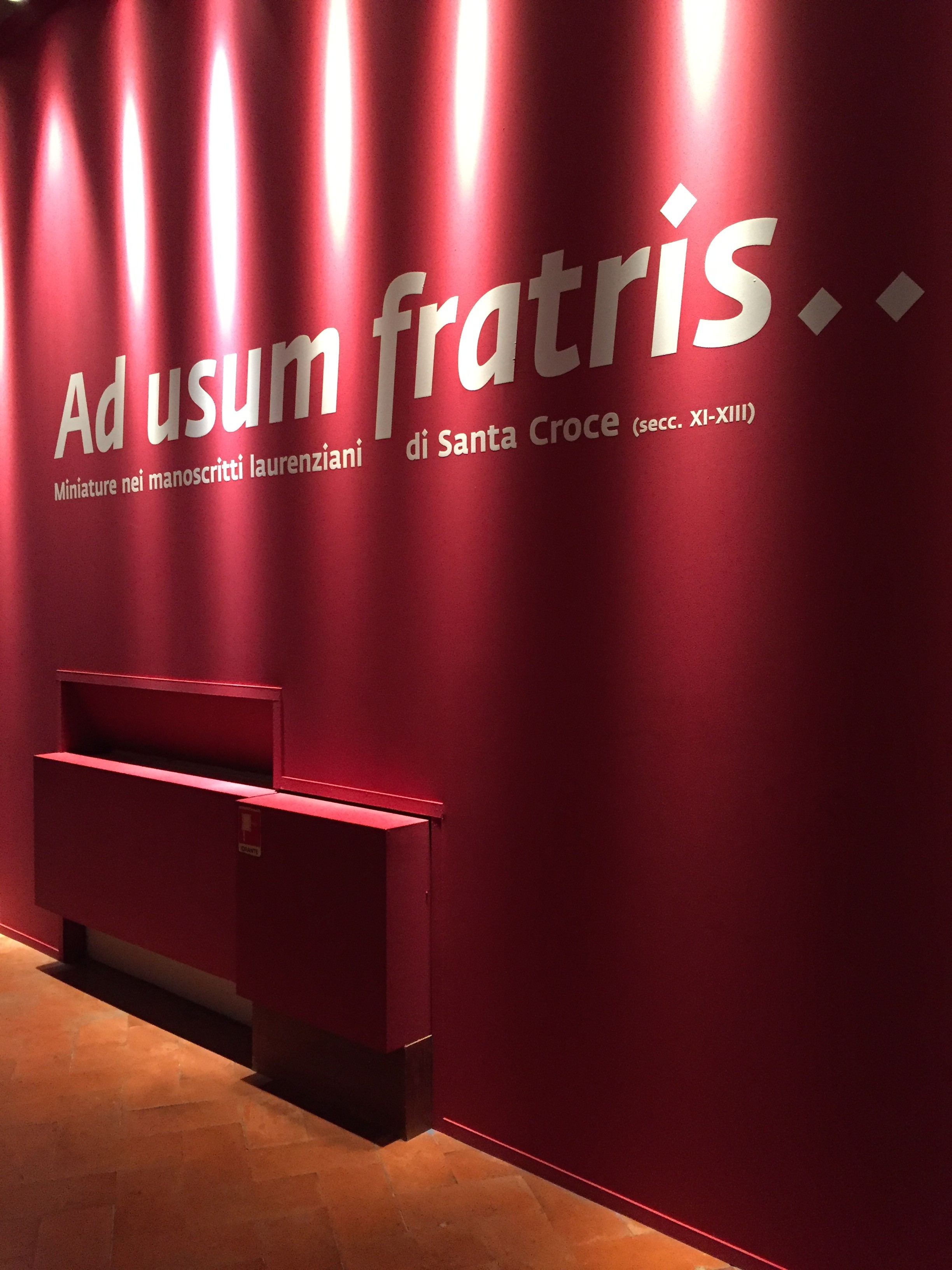
The Laurentian Library, located inside the Church of San Lorenzo, contains much of the collected learning of the Medici family. The library, designed by Michelangelo in 1534 and completed by Ammanati, has previously hosted exhibitions on the manuscripts found in the collection; the most current exhibition is in a similar vein. Entitled ‘ad usum fratris: Miniatures in the Laurentian Manuscripts of the Holy Cross X-XIII’, the exhibit, with the help of technology, focuses on about 53 illuminated manuscripts relating to ecclesiastical subjects and some manuscripts of a more pagan nature. These tomes are originally from the library of the Church of Santa Croce located across the city from San Lorenzo. The books were transferred to the Laurentian Library under the Grand Duke of Tuscany, Peter Leopold, in 1766, thus creating a collection of over ten thousand manuscripts.

The Library has made a herculean effort to include technology in this exhibition, and done an excellent job. Museums all over Italy have moved to integrate modern technology to make their collections more accessible to visitors. For example, Palazzo Blu in Pisa has included in their coin room a touch screen option to explore both sides of the coins visually and learn more about the coins and their history. Milan’s National Science and Technology Museum thrives on the inclusion of technology in their exhibits. Their newest exhibit about CERN includes electronic games, sounds, and touch screens to allow visitors different ways to fully grasp the concept of the particle. In Florence, the new Museum of the Duomo integrates videos into their experience as a way to give information to visitors about the Duomo, how it was made, and the making of this newer museum, rather than using the traditional reading of panel and exhibit text. This inclusion of technology to disseminate information is seen by many as the future of museums.

The exhibit in San Lorenzo uses scenes projected onto screens in the first room. These are close up photos of the illuminations on the manuscripts and aerial views of the city of Florence. However, the first thing that strikes the viewer upon entrance to the exhibit is the faint hymnal music playing. It is fitting; the first room houses biblical texts of the Medici family. The light is dim in the exhibition rooms for the sake of preserving these delicate manuscripts, and it enhances the air of age and importance of the texts. Dim lighting continues throughout all three rooms of the exhibition, although there is only music in the first room.

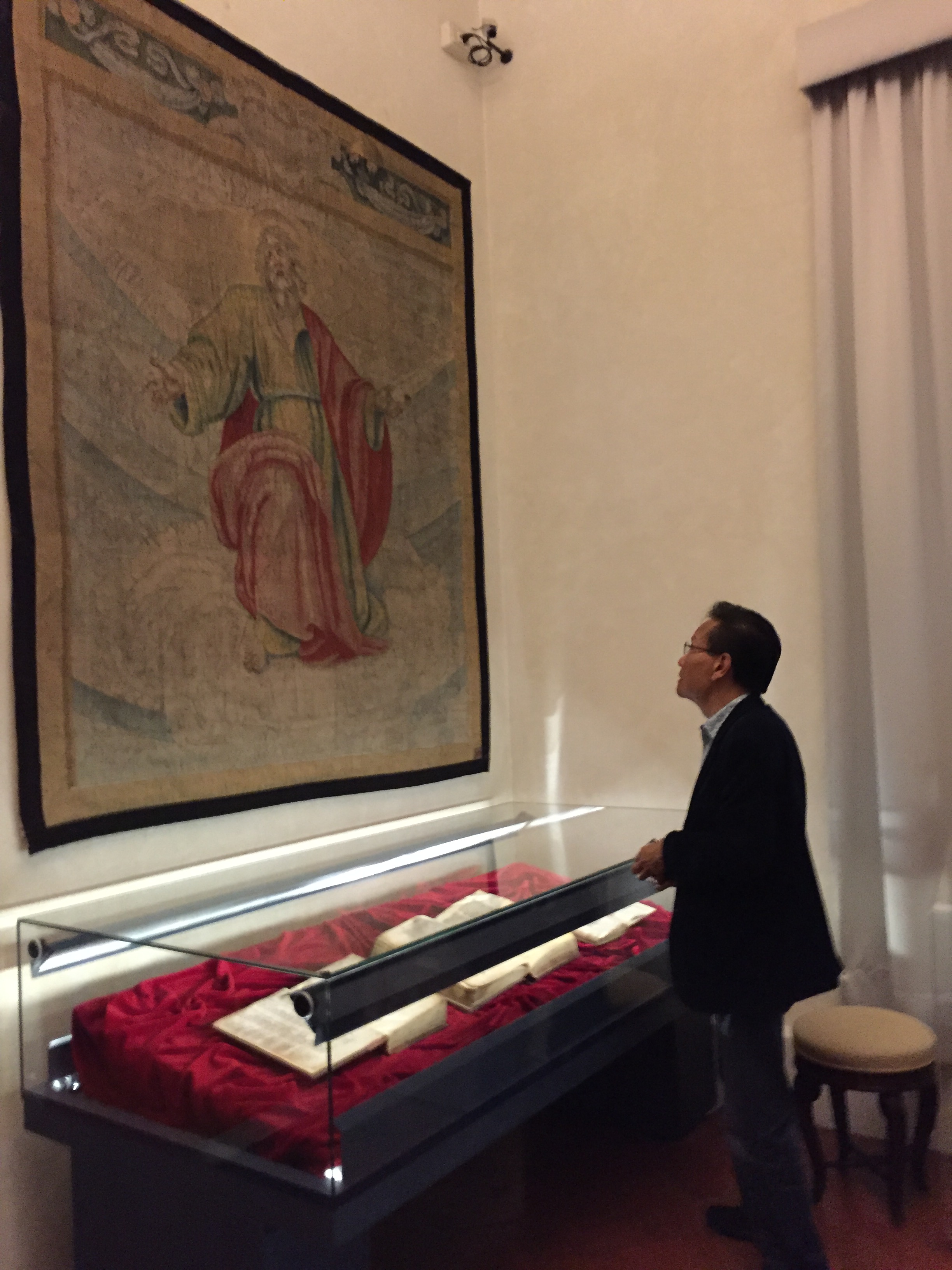
The labels identifying the manuscripts are small backlit paper labels, making them fairly easy to read. These backlit labels include only the bare minimum of information which leaves the visitor with more questions than answers. It seems as though the visitor is supposed to focus exclusively on the illuminations as pictures rather than learning about the importance of the manuscripts. The books themselves lay in clear glass cases, situated on what looks like lush red velvet. Extra information about the books comes in the form of a screen in the corner of the room, which features scrolling text about the books and their illuminations, but only in the most general of terms. It is hard to follow the text if one comes upon it while it is mid-scroll and the academic subject matter does not invite a guest to linger. If the text were a tad slower and the text easier to follow, it would enhance the visitor experience tenfold.

Not limiting itself to just rolling text, the exhibit has also two touch screens that allow the visitor more in-depth access to the manuscripts. The first screen gives a selection of categories, then allows you to zoom in on the illuminations on the manuscripts. The second touch screen in the exhibit has a larger selection of manuscripts to zoom in on, but the mechanisms are harder to use. It is possible to ‘flip’ through the book and read, but most of the texts are in Latin and there has been no attempt to translate the works for the visitors who do not know this language. There is no textual context for the illuminations, it simply allows an up close and personal experience with the delicate and fantastic drawings. If the curators had selected a few texts and gone in depth with what the text was and why the illuminations were important it would have enhanced the experience.

All in all, the exhibit seems to be an attempt to forge together the past and the present. The manuscripts themselves are beautifully illuminated and presented, and the technology integration is good, but the information provided via technology has missed the mark. The visitor leaves the exhibit having learned nothing about illuminations in manuscripts, which seems a shame. While an excellent idea, merely having the technology in place does nothing if it does not enhance the museum visit. A better use for the technology in the exhibit would be to explain why these illuminations in these particular manuscripts were chosen and answer some questions: Are they particularly good illuminations? Are the manuscripts themselves valuable? How do these illuminations relate to the text? With the technology already in place answers to those questions could have been used to educate the visitor in the mechanisms behind these manuscripts, rather than having the visitor to focus on the ‘pretty pictures’.


Traduzione di Tania Mio Bertolo


Nel complesso monumentale di San Lorenzo a Firenze, e precisamente negli ambienti della Biblioteca Laurenziana, sono ancor oggi conservati i codici miniati appartenuti alla famiglia dei Medici. Proprio in questi giorni la detta Biblioteca, l’edificazione della quale fu progettata ed avviata da Michelangelo e poi ultimata dall’Ammannati, ospita una mostra dedicata, come già in passato avvenne, ad alcuni volumi ivi raccolti. L’esposizione “Ad usum fratris: Miniature nei manoscritti laurenziani di Santa Croce (secc. XI-XIII)”, l’allestimento della quale si serve dell’aiuto di strumenti tecnologici, presenta una selezione di 53 codici miniati di argomento religioso e pagano, già appartenuti alle raccolte della Basilica di Santa Croce e trasferiti per volere di Pietro Leopoldo nel 1776 nella Biblioteca Laurenziana, dove ad oggi è conservata una collezione di oltre dieci mila esemplari.

Ai curatori va riconosciuto il notevole sforzo compiuto per includere apporti tecnologici nell’allestimento, ottenendo così un ottimo risultato. Difatti i musei italiani stanno oggigiorno progressivamente integrando i loro percorsi espositivi con strumenti multimediali finalizzati a rendere le proprie collezioni maggiormente accessibili: ne è un esempio il chiosco interattivo allestito nella Sala del Monetiere di Palazzo Blu a Pisa, un sistema digitale touch-screen che permette sia di visualizzare le monete da entrambi i lati, sia di ricercarne informazioni. Anche il Museo Nazionale della Scienza e della Tecnologia di Milano sta incrementando l’utilizzo di sistemi multimediali: l’allestimento della sua nuova esposizione permanente, realizzata in collaborazione con il CERN, fa ampio uso di giochi elettronici, suoni e schermi digitali che offrono l’opportunità di un approccio più diretto allo studio delle particelle, oggetto della mostra. A Firenze inoltre, nel nuovo allestimento del Museo dell’Opera del Duomo, documentari filmati inerenti la cattedrale, la sua storia e la recentissima messa in opera dello stesso museo, hanno preso il posto dei tradizionali pannelli informativi.

Per quanto concerne la mostra ospitata alla Laurenziana, l’allestimento della prima sala propone una proiezione di foto relative sia alle miniature dei codici, sia alle vedute della città di Firenze. Ciò che però colpisce maggiormente all’ingresso è il sottofondo musicale in armonia con i testi biblici di antica appartenenza medicea qui esposti. Pertinente è anche la scelta dell’utilizzo di una luce soffusa, utile sia a salvaguardare questi stessi delicati manoscritti, sia a sottolinearne l’antichità ed il pregio storico. La medesima illuminazione soffusa prosegue nelle successive tre sale, la musica invece si ferma al primo ambiente.

Le targhette identificative sono piccole ma retroilluminate, facilmente leggibili. Tuttavia esse riportano poche informazioni, non sufficienti per saziare la curiosità del visitatore. Anzi, sembrano quasi invitarlo a soffermarsi maggiormente sull’aspetto visivo delle miniature piuttosto che su quello storico o tecnico, appunto scarsamente esplicitato nelle targhette stesse. I manoscritti sono esposti all’interno di teche di vetro, e sono appoggiati su drappi di velluto rosso. Nozioni aggiuntive vengono fornite attraverso uno schermo collocato in uno degli angoli della stanza nel quale un testo scorrevole spiega, purtroppo solo in termini generici, le peculiarità dei volumi e delle miniature. Trattandosi appunto di un testo scorrevole che perlopiù tratta un argomento estremamente accademico, il visitatore accostatosi allo schermo a proiezione già avviata può trovare difficoltà nella comprensione del discorso. Uno scorrimento più lento della proiezione e un testo più accessibile faciliterebbero l’approccio e renderebbero la visita più piacevole.

Oltre allo schermo con testo scorrevole, l’allestimento prevede anche due touch-screen utili a comprendere più a fondo l’arte miniata: uno offre una selezione di categorie per ingrandire le immagini delle miniature; l’altro, che usa un sistema non facilmente comprensibile, permette invece di visionare in modo ravvicinato un più ampio ventaglio di manoscritti. Per mezzo di esso il visitatore può selezionare a suo piacimento le carte da osservare e i brani da leggere, ma non è fornito nessun supporto a chi non conosce il latino, lingua con la quale furono compilati questi manoscritti. Manca anche una contestualizzazione testuale degli esemplari visionabili tramite questi schermi, strumenti che in definitiva garantiscono soltanto un più alto livello di personalizzazione dell’esperienza del visitatore. Se i curatori avessero selezionato un numero inferiore di testi ma avessero fornito maggiori informazioni storiche e tecniche su di essi, motivando anche il criterio di selezione delle miniature esposte, la visita sarebbe più piacevole.

Per concludere, la mostra sembra essere un tentativo di unire insieme passato e presente. Da un punto di vista museografico, valide sono le scelte di illuminazione e di presentazione degli esemplari. Ben pensato è anche l’apporto multimediale, ma le informazioni fornite sono scarse e incomplete: il visitatore esce dalla mostra avendo appreso ben poco sulle miniature. Purtroppo gli strumenti tecnologici, quando non sono funzionali, non arricchiscono il percorso museale. Essi, se fossero stati usati intelligentemente, avrebbero spiegato i motivi e le finalità della mostra, e avrebbero risposto a domande circa il reale valore delle miniature selezionate, il pregio dei manoscritti esposti, le connessioni tra le miniature ed i codici. Se il visitatore avesse potuto trovare risposta a tali quesiti durante la visita stessa, se cioè gli strumenti tecnologici avessero realmente fornito un supporto informativo aggiunto, egli avrebbe effettivamente compreso e capito, e non solo guardato queste “piacevoli immagini”.


Real Time and the Time of Reality: Clock of the Pitti Palace from the 18th to the 20th centuries’.


By Rachyl Grussing


Leonardo da Vinci once said, ‘Time stays long enough for anyone willing to use it’. For those who are willing, the Modern Art Gallery at the top of the Pitti Palace has a new exhibit entitled ‘Real Time and the Time of Reality: Clocks of the Pitti Palace from the 18th to 20th centuries’. It features over 60 of the 200 clocks that reside in the Pitti’s collection. The idea of the exhibition, as stated by the exhibition, is to draw parallels between the arts and the sciences at this time. Artworks and artifacts from the Medici collection and items borrowed from the Galileo and Stibbert museums are displayed alongside the clocks to give them historical context. Featured in the exhibit is a tall grandfather clock to small brooch watches, a gilded and engraved weight-driven clock, and a replica of Galileo’s astrolabe.

Clocks were intricate machines that required years of training to create and lended credence to the prestige of their owners, yet at the same time, their evolution into pieces of art went hand in hand with the artisan nature of their creation. The grand 1821 Viennese Orchestrion in comparison with ‘Brooch Clock’ of 1902 show the advance of technology in a way that is hard to explain with only words. The exhibit gives the visitor an inside look at the clocks and the science behind their mechanisms, going so far as to have a glossary of clock parts on one of the walls. Thankfully, the importance of the mechanisms inside has not diminished over the centuries. The clocks have been handled by experts trained in the maintenance of clocks, and therefore are seen in the fullness in which they were made.

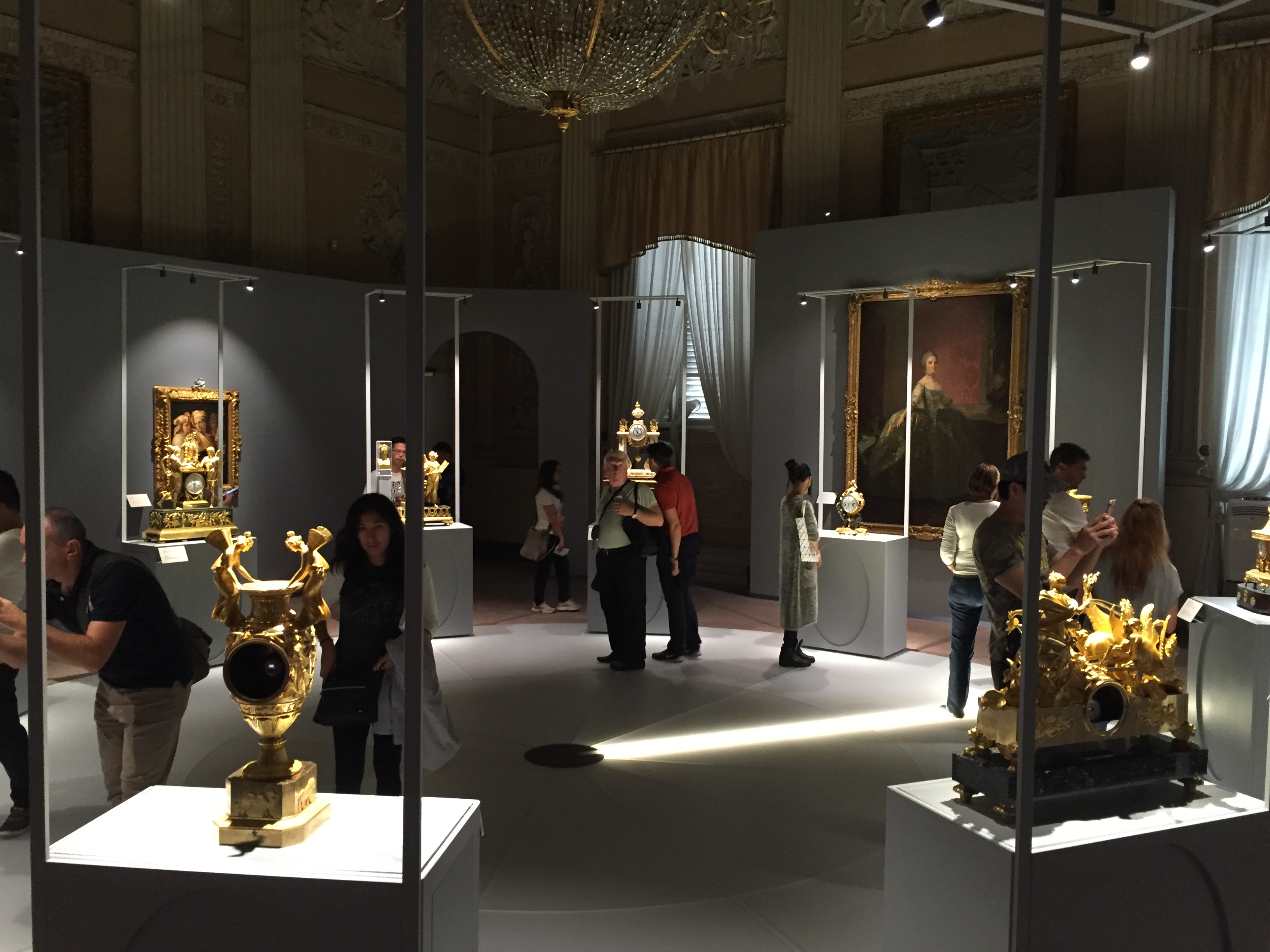
The exhibit starts with a film giving a backstage look into the gears and pins that make up the interior mechanism of the clock. The video is mesmerizing, all whirling gears and tinkling chimes, giving the sense that the machines within have not only served as silent witnesses to the passing of time, but lived the endless ages as well. The sense continues into into the gallery, where there is a slightly raised platform of pale purple. While the stated purpose was the follow science and art hand in hand, the focus of the exhibit seems to be on the passage of time. Every five seconds a shaft of light inlaid in the platform ‘ticks’, mimicking the hour hand of a clock. This continuous circling of light gives the impression that time is its own master in these rooms. The clocks themselves are set onto pedestals, of the same pale purple as the floor, on the edge of the lighted platform, which give the viewer a chance to see them from every angle, something the original makers and owners probably did not intend. It gives a sense of importance to the clocks, and indeed, the intricate carvings and metalwork inlaid on the wood warrants a closer look.

To help situate the clocks in context there are paintings from the Pitti collection that roughly correspond to the age of the clocks in the room. Most of the clocks are from about the 1700s, like the ‘Mantel Clock’ from a parisian workshop is dated 1776. However, most artworks are from earlier dates. Giorgione, a painter of the Venetian school, painted a work entitled ‘Three Ages of Man’ which hangs in the same space as the ‘Mantel Clock’. Perhaps the viewer is encouraged to draw connections between the ages of the men in the painting and the three dynasties that the clocks in the collection have overseen; Medici, Hapsburg-Lorraine, and Savoy. The paintings are there to help the viewer imagine the richness of the original setting of the clock.The pale purple backdrop that has been erected around the clocks and works of art help to focus the visitor on what they are supposed to be seeing; that is, the idea of time in the exhibit and the majesty of these regal clocks.

Atmospherically, ‘Real Time and the Time of Reality’ is alive with musical chimes. It enhances the feeling that time is all that matters in this exhibition, not necessarily the science behind the clocks. Each one is set to a different time, and each has a unique chime. As one walks through the rooms, the chimes of different clocks create a musical backdrop in which to contemplate the machines. The sounds function as a lullaby or soundtrack. When the chimes happen in the same room as a person it is a little jarring, shocking the visitor out of their reverie to find which clock is suddenly making the noise, but overall the effect is a good one.

The visitors travel in time with the technology behind the clocks, watching them get smaller and smaller, but the exhibition itself gives off a magical aura. As opposed to focusing on the progression of science and art, it seems to focus on the time the clocks have overseen and the time spent in making the machines. As one walks through the exhibition there is no obvious layout of the show, the visitor seems encouraged to wander at will. This leads to some confusion, as the rooms with the items on loan from the Galileo and Stibbert museums are in a room off to the side, and not in the main flow of the exhibit. Other than becoming a little lost, the exhibit is beautifully done and the concept seems well thought out and executed.


Traduzione di Tania Mio Bertolo


Leonardo da Vinci disse: “La vita ben spesa lunga è”. Per coloro che intendono mettere in pratica questa massima, la mostra “Tempo reale e tempo della realtà. Gli orologi di Palazzo Pitti dal XVIII al XX secolo”, aperta in questi giorni nella Galleria d’Arte Moderna di Firenze, espone più di 60 esemplari tra i 200 orologi legati storicamente alla residenza di Palazzo Pitti. Coerentemente con il dichiarato scopo della mostra, che mira a mettere in luce i parallelismi tra arte e scienza, e concorrendo inoltre a contestualizzare attraverso immagini i manufatti orologieri esposti, alcune opere d’arte provenienti dalle collezioni medicee e dai musei Galileo e Stibbert affiancano i segnatempo, veri protagonisti della mostra. Molteplici sono le opere esposte: da un alto pendolo a colonna ad alcuni piccoli segnatempo a spilla, da un orologio dorato a peso con incisioni ad una replica dell’astrolabio di Galileo.

Gli orologi, intesi come delicati e complessi meccanismi che richiedevano lunga dedizione per la loro messa in opera, testimoniavano in passato il prestigio dei loro proprietari. Al contempo però, grazie al crescente valore artigianale a loro riconosciuto, divennero essi stessi preziosi oggetti artistici. Arduo è esprimere in parole l’effetto creato dal confronto tra il superbo Orchestrion viennese del 1821 ed un orologio a spilla del 1902, esemplari che testimoniano lo sviluppo tecnologico dell’arte orologiera in meno di un secolo.  Ad aiutare il visitatore ad andare più a fondo e in parte ad interfacciarsi con l’aspetto più tecnico e scientifico di quest’arte è posto, su una delle pareti, un glossario che spiega le componenti intrinseche e meccaniche degli orologi. Già affidati ad un personale specializzato nella manutenzione dei meccanismi interni degli orologi, che fortunatamente si sono mantenuti quasi intatti nel tempo, tali manufatti sono qui osservabili nel dettaglio e con pienezza in tutte le singole parti di cui sono composti.

Il percorso museale principia con un filmato che coinvolge lo spettatore in un affascinante viaggio attraverso i perni, le rotelle e le molle che si aggrovigliano saggiamente nella struttura interna degli orologi: vorticosi ingranaggi e pendoli tintinnanti che invitano a pensare a tali oggetti non solo come silenziosi testimoni del tempo che passa, ma anche come esemplari che vivono ed esistono in un tempo senza fine. E questa sensazione continua lungo tutto il percorso, che prosegue successivamente in direzione di una piattaforma leggermente rialzata, di colore porpora pallido. Mentre l’obiettivo dichiarato è quello di indagare di pari passo arte e scienza, la chiave di lettura della mostra sembra essere il passare del tempo. Ogni cinque secondi un fascio di luce illumina il ticchettio della piattaforma, imitando così le lancette di un orologio. Questa ciclica e continuativa alternanza di luce ed ombra crea l’impressione che il tempo sia l’unico protagonista in queste stanze. Gli stessi orologi sono posizionati ai margini della piattaforma, su appositi piedistalli del medesimo colore porpora pallido. Tale scelta espositiva, che conferisce maestosa importanza agli esemplari in mostra, permette loro di poter essere osservati da ogni angolazione, aspetto che probabilmente supera di gran lunga le intenzioni dei loro artefici e antichi proprietari. Al contempo, va detto, la maestria e l’accuratezza degli intagli e delle incisioni che decorano tali manufatti garantiscono un’osservazione più attenta e ravvicinata.

L’allestimento è arricchito inoltre da alcuni dipinti che concorrono a ricreare il contesto dal quale provengono gli stessi segnatempo, la maggior parte dei quali risale al Settecento, come testimonia l’orologio da caminetto realizzato nel 1776 in un laboratorio parigino. Tuttavia la gran parte dei dipinti ha una datazione precedente: nella stesso spazio espositivo destinato al succitato orologio da caminetto, ad esempio, è posto il dipinto delle “Tre età dell’uomo” di Giorgione, quasi un invito a ricercare il confronto tra le età dei tre uomini raffigurati nel dipinto e le tre dinastie dei Medici, Asburgo-Lorena e Savoia intercorse nelle epoche dalle quali i segnatempo esposti provengono. I dipinti sono dunque stati scelti ed inseriti nell’allestimento della mostra per aiutare il visitatore ad immaginare la ricchezza del contesto d’origine degli orologi in esposizione. Tanto il drappo rosso dietro a questi ultimi, quanto le opere pittoriche in mostra concorrono a rendere manifesto il protagonista principale di questa esposizione: il concetto del tempo.

La visita è inoltre accompagnata dal suono dei carillon, altro elemento che rimanda al concetto del tempo che, come già detto, assume qui con ogni probabilità un’importanza maggiore rispetto ai meccanismi tecnici legati alla costruzione degli orologi stessi. Ognuno di questi esemplari è fermo in un proprio tempo, ed ognuno ha il proprio carillon. Questi molteplici suoni si fondono tra loro creando un unico sottofondo musicale che accompagna il visitatore lungo il percorso espositivo, quasi una ninnananna o una colonna sonora. Benchè l’effetto finale sia piacevole, va detto che la sovrapposizione un po’ stridente dei diversi suoni provenienti dai carillon risulta a tratti deconcentrante, incuriosendo il visitatore a ricollegare ciascun suono all’orologio a cui appartiene.

Dunque una mostra che da un lato non cela l’importanza dell’apporto scientifico, sottolineando il valore dello sviluppo tecnologico nell’arte orologiaria, evoluzione tecnica che d’altronde ha permesso di crerae nei secoli manufatti sempre più piccoli; ma dall’altro crea anche un’atmosfera magica contrapposta all’obiettivo di seguire parallelamente i progressi della scienza e dell’arte. Si ha quasi l’impressione che tali segnatempo siano sopravvissuti e al tempo della loro creazione, e al tempo successivo.

Va detto che il carattere non tradizionale del percorso espositivo il quale, per citare un esempio, prevede una posizione decentrata per la sala che conserva i manufatti provenienti dai musei Galileo e Stibbert, opere tra le più importanti in mostra, crea nel visitatore un leggero senso di disorientamento. Nonostante ciò, la mostra è ben pensata ed allestita.


Ai Weiwei. LIBERO.

ai-weiwei-libero

Palazzo Strozzi, dal 23 settembre 2016 al 22 gennaio 2017
di Lucrezia Caliani


Palazzo Strozzi ospita fino al prossimo 22 gennaio la più grande esposizione monografica, la prima italiana, dell’“artista più influente del mondo”, come lo ha nominato nel 2011 la rivista “Art Rew”: Ai Weiwei LIBERO.

Ai Weiwei (Pechino, 1957), figlio di uno dei maggiori poeti cinesi del secolo scorso Ai Qing, ha subito fin dalla nascita le ingiustizie e i soprusi di un regime oppressivo: esiliato con la famiglia da Pechino e deportato a Beidahuang, viene poi inviato in un campo di rieducazione militare a Shihezi e ancora isolato a vivere in una spelonca nel deserto del Gobi per anni. Solo nel 1976, quando il padre fu riabilitato, Ai Weiwei e la sua famiglia poterono finalmente tornare a Pechino.

Da quel momento ha inizio l’ostacolato e provocatorio percorso di Ai Weiwei come artista contemporaneo, una sorta di moderno artista rinascimentale: performer, pittore, fotografo, documentarista e regista, ma anche architetto, urbanista, designer, blogger e scrittore, impegnato contro ogni forma di censura, attivista in lotta per i diritti umani. Avendo denunciato la corruzione di stato e il mancato rispetto dei diritti umani in Cina, è stato arrestato, picchiato, segregato e privato delle libertà fondamentali, come il sequestro del passaporto, restituitogli soltanto un anno fa. Nominato “Ambassador of Conscience”da Amnesty International, Ai Weiwei, con la sua arte, e con questa mostra in particolare, intende rivolgersi all’umanità intera.

L’idea di questa esposizione nasce dalla volontà di Arturo Galansino, Direttore Generale della Fondazione Palazzo Strozzi, di portare a Firenze la grande arte contemporanea. Non sono coinvolte soltanto le sale sotterranee della Strozzina (le quali accolgono le testimonianze del periodo Newyorkese di Ai Weiwei), bensì tutti gli spazi di Palazzo Strozzi, a cominciare dalla più nota e controversa opera dell’intera esposizione, Reframe, che crea una nuova cornice alla facciata quattrocentesca e proseguendo con Refraction nel cortile, fino a tutte quante le sale del Piano Nobile.

Una mostra davvero fuori dall’ordinario sia per il numero di spazi coinvolti –oltre all’intero edificio di Palazzo Strozzi, l’esposizione prosegue anche al Museo degli Uffizi e al Mercato Centrale- e anche per l’insolito aspetto che ha donato al palazzo rinascimentale che ne ospita la sezione principale.

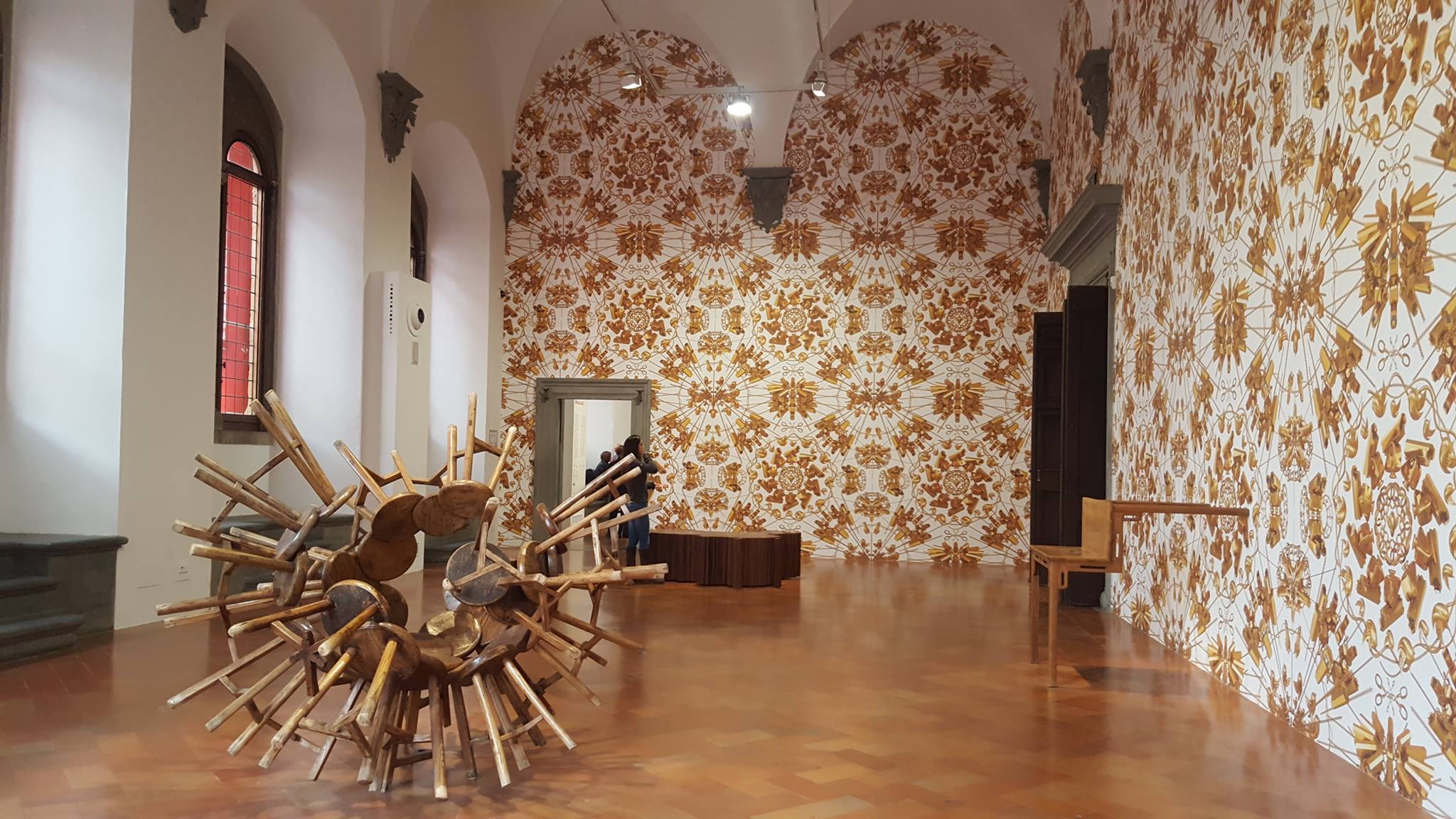
Infatti il palazzo è restituito alla sua forma più naturale, spogliato di tutti i pannelli e le strutture normalmente necessarie per le esposizioni, permettendo così al visitatore di osservare gli imponenti caminetti che regnano sovrani nelle sale, i capitelli e l‘affaccio sul cortile interno, solitamente nascosto. Complice la lunga esperienza di artista e architetto di Ai Weiwei, che gli ha permesso di capire e interpretare al meglio gli spazi, le opere esposte si integrano perfettamente con gli ambienti di Palazzo Strozzi, rendendone la visita davvero eccezionale.

A partire dall’estate del 2015, la riacquistata possibilità di viaggiare ha permesso all’artista cinese di allargare gli orizzonti circa temi che vanno oltre i confini cinesi. Il titolo quindi, Ai Weiwei LIBERO, non allude soltanto alla possibilità di godere di nuovo di tutti i suoi diritti, ma anche all’opportunità di confrontarsi con Palazzo Strozzi, stravolgendolo e utilizzandolo, per la prima volta, come un unicum, secondo le parole dello stesso Direttore Generale della Fondazione Palazzo Strozzi.

Il risultato è una grande retrospettiva che attraversa trent’anni di carriera dell’artista cinese e che vuole essere il più possibile esaustiva della sua produzione, dagli esordi fino alle ultime creazioni. La rassegna permette allo spettatore di seguire il rapporto ambivalente di Ai Weiwei con il suo paese, diviso tra senso di appartenenza e impulso alla ribellione, espresso con linguaggi, materiali e tecniche a cavallo tra Oriente e Occidente. Un’attenzione particolare è rivolta al Rinascimento, a Firenze e ai suo grandi dissidenti politici, Dante, Galileo, Savonarola e Filippo Strozzi; quattro personaggi che furono anch’essi, come Ai Weiwei oggi, censurati e allontanati dalla loro città, come a ricordarci il valore della libertà attraverso i secoli, in Oriente come in Occidente.


ai-weiwei-libero-3   ai-weiwei-libero-2

Palazzo Strozzi, 23 September 2016 to 22 January 2017
Translated by Rachyl Grussing


Palazzo Strozzi hosts until the 22nd of next January, the largest monographic exhibition, the first in Italy, of the “most influential artist in the world”, as he was nominated in 2011 by Art Review: Ai Weiwei LIBERO.

Ai Weiwei (Beijing 1957) is the son of one of the major Chinese poets during the last century, Ai Qing, and he has suffered since birth the injustices and abuses of an oppressive regime: exiled with his family from Beijing and deported to Beidahuang, they were then sent to a military re-education camp in Shihezi were then again isolated to live in a cave in the Gobi desert for one year. Only in 1976, when his father was rehabilitated, Ai Weiwei and his family could finally return to Beijing.

From that moment began the obstructed and provocative path of Ai Weiwei as a contemporary artist, a sort of modern Renaissance artist: performer, painter, photographer, documentarian and director, and also architect, city planner, blogger and writer, committed against all forms of censorship, an activist in the fight for human rights. Having denounced the corruption of the state and the failure to respect human rights in China, he was arrested, beaten, segregated and deprived of fundamental freedoms, such as the seizure of his passport, only returned to the US one year ago. Nominated ‘Ambassador of Conscience” by Amnesty International, Ai Weiwei, with his art, and with this show in particular, he aims to address all of humanity.

The idea for this exhibition was born from the will of Arturo Galansino, the Director General of the Palazzo Strozzi Foundation, to bring to Florence grand contemporary art. The exhibition not only involves the subterranean rooms of the Strozzina (which receives the testimony of the New York period of Ai Weiwei), but all the rooms of the Palazzo Strozzi. It begins with the most notable and controversial work in the exhibition, Reframe, which creates a new frame on the 15th century facade and continues with Refraction in the courtyard, finally ending in the rooms of the Piano Nobile.

Indeed, the show is outside the ordinary for the number of spaces involved – as well as the spaces in the Palazzo Strozzi, the exhibition continues at the Uffizi Museum and the Central Market – and also for the unusual appearance that he gave the Renaissance palace that houses the main exhibition.

In fact, the palace is restored to its natural form, naked of all the panels and structures normally necessary for the exhibitions, permitting the visitor to see the imposing fireplaces that reign supreme in the rooms, and the capitals overlooking the internal courtyard which are usually hidden. This is thanks to the long experience of the artist and architect Ai Weiwei, which has allowed him to better understand and interpret the space, the works on display are perfectly integrated with the environment of the Palazzo Strozzi, rendering the visitor really extraordinary.

Since the summer of 2015, the chance to travel again has allowed the Chinese artist to expand his horizons to topics that go beyond China’s borders. The title then, Ai Weiwei LIBERO, does not only refer to the possibility that he may again enjoy all of his rights, but also the opportunity to confront the Palazzo Strozzi, twisting and using it for the first time as a unit, according to the words of the Director General of the Palazzo Strozzi Foundation.

The result is a grand retrospective that crosses over three decades of the life of the Chinese artist, and he wants to be as exhaustive as possible in the production, from the beginning to the end of his career. The exhibition allows the viewer to follow Ai Weiwei’s ambivalent relationship with his country, torn between a sense of belonging and an impulse to rebellion, expressed with languages, materials, and techniques riding between East and West. Special attention is paid to the Renaissance in Florence and its great political dissidents; Dante, Galileo, Savonarola, and Filippo Strozzi. Four people that were also, like Ai Weiwei today, censured and turned away from their cities, to remind us of the value of freedom through the centuries, in the East as in the West.