Giovanni dal Ponte: Protagonist of Late Gothic Florentine Humanism


Galleria dell’Accademia
22 November 2016 – 12 March 2017

By Rachyl Grussing (Istituto Lorenzo de’ Medici)
 

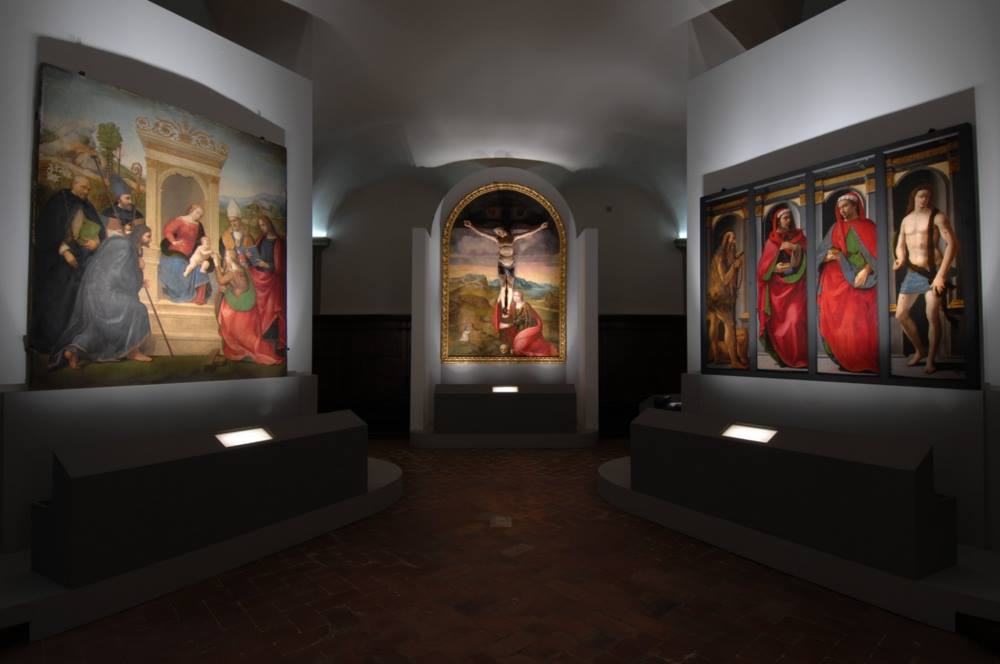
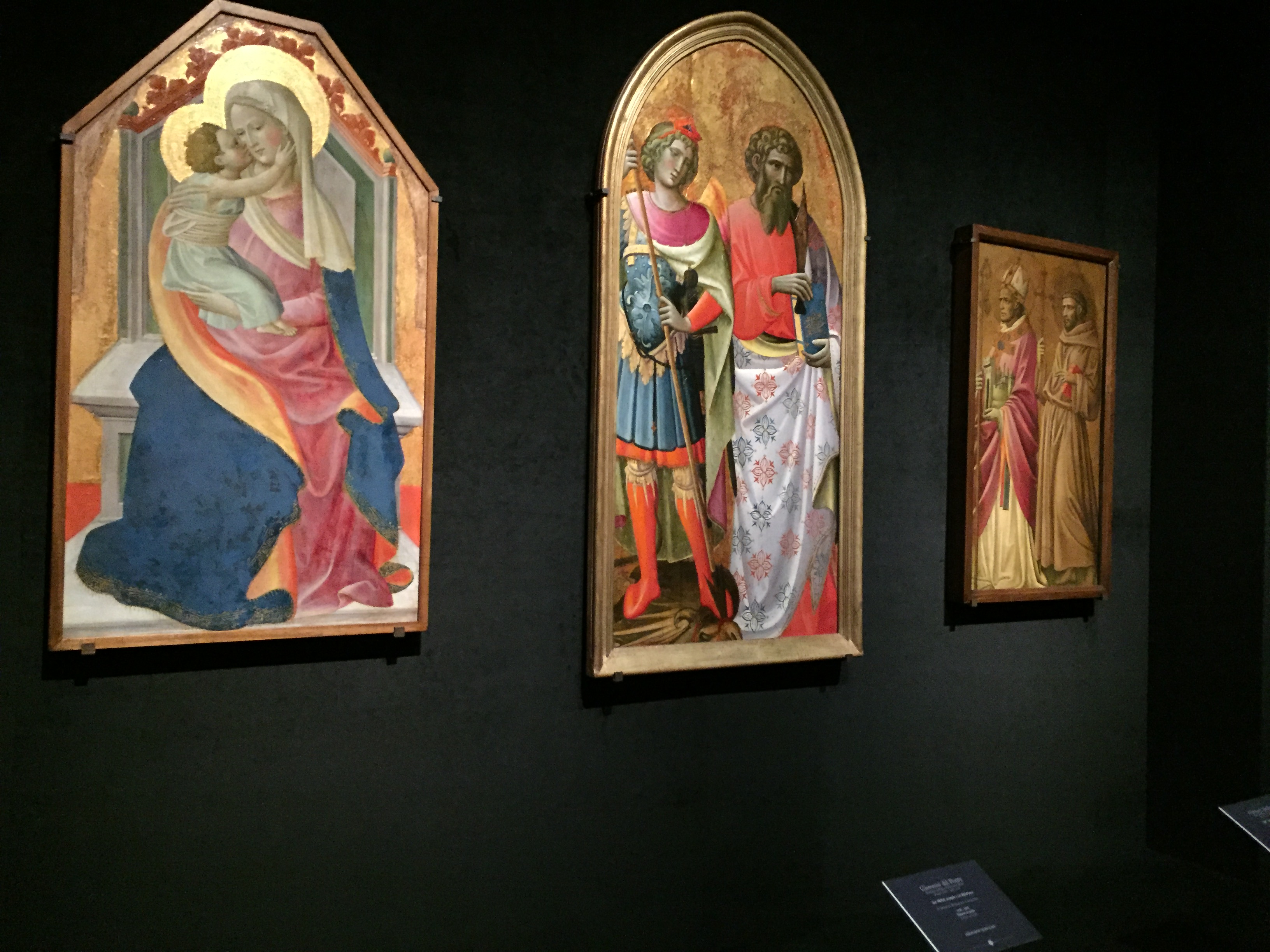
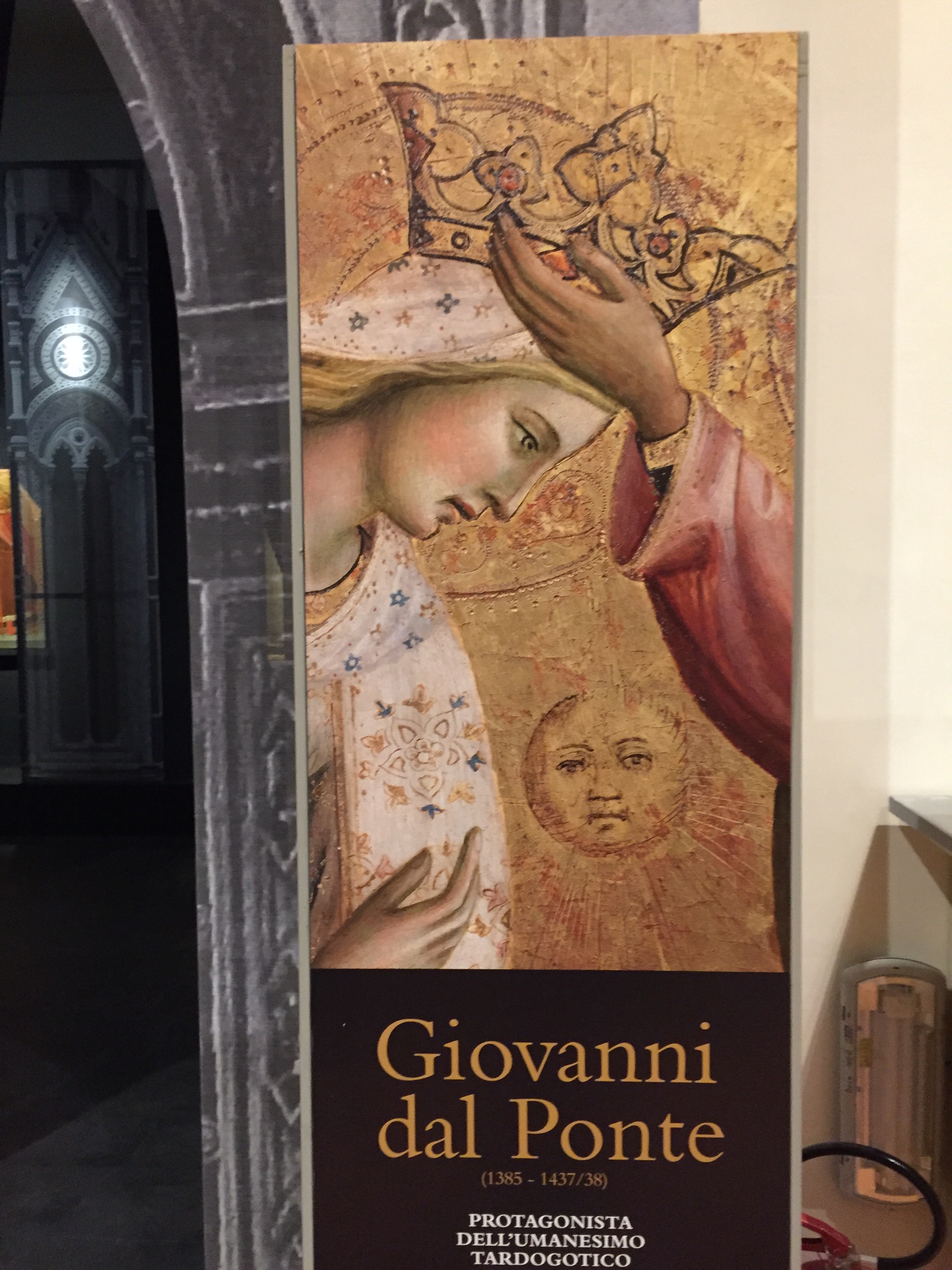
The first monographic exhibition dedicated to early Gothic Humanism painter Giovanni dal Ponte runs from 22 November 2016 to 12 March 2017 at the Galleria dell’Accademia. The exhibition is an attempt to situate dal Ponte’s work as an important step in the movement between the late Gothic method of painting to the early Renaissance style of art. Around 50 of dal Ponte’s works are on display, some having been specially restored for this exhibition, some having been generously lent from museums around the world, and some having been acquired by the museum in time for this particular exhibition.

Giovanni dal Ponte, who was born, raised, and buried in Florence, had tumultuous younger years, culminating in a short stint in a debtors prison. It is after this time in prison that he partners with Smeraldo di Giovanni, another Florentine artist, and opens his own studio, which is his first step in becoming a successful Florentine artist. In modern times his work exists all over the world, from the Church of Santa Trinita in Florence, to the Pinacoteca Vaticana, to the Fogg Art Museum in Cambridge, Massachusetts, but is centered around Florence.

While there is no clear exhibition path, the four rooms that make up the exhibition are beautifully done. Each room is dedicated to a different theme of dal Ponte’s life. The first room contains works from different artists who influenced dal Ponte, from Paolo Uccello to Masaccio and Lorenzo Ghiberti are some of the names on display. One room contains works from dal Ponte’s younger days, while other rooms contain works from his later career, and some of the last works of dal Ponte’s life. All the artworks are detailed in the comprehensive guidebook, over 200 pages, chronicling the artistic career of dal Ponte.

The works of art are most assuredly the centerpieces of this exhibition. With dark walls and dim lighting that only serves to highlight the spotlights on the artworks it is hard to not see the vibrant colors and delicate modeling in dal Ponte’s work. The colors seem to come alive on the panels and the mastery displayed by dal Ponte is easy to observe. Most of the works exhibited are triptychs, meant for church altars, but there are also some panels from cassoni, or marriage chests, that were common in Renaissance Florence, although these too tend to be of a religious nature.

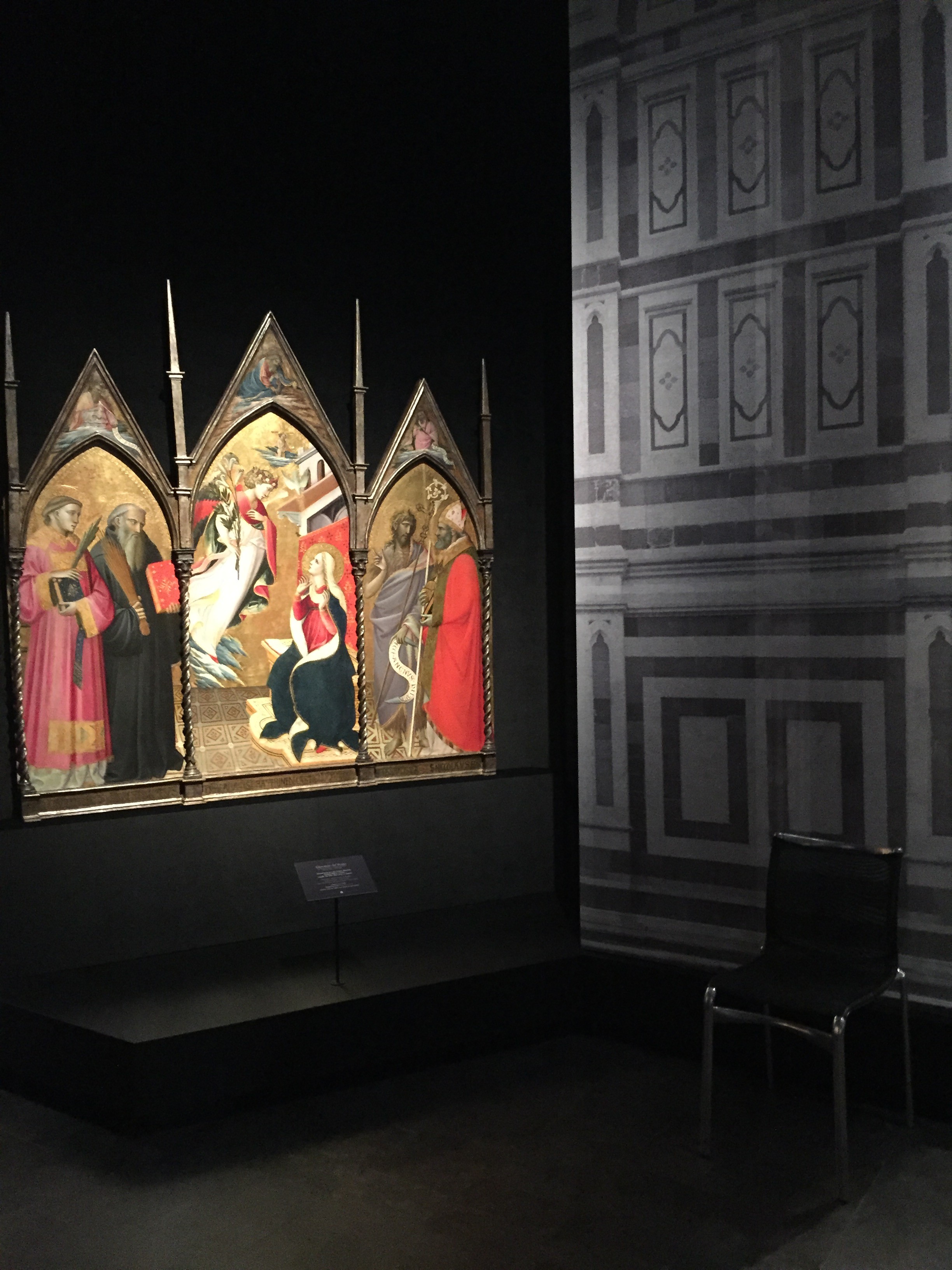
The walls of the gallery are covered in dark fabric, with soft lighting to underscore the brightness of the spotlights on the works of art. In between certain works and scattered throughout the exhibition are gray fabric panels that resemble a Gothic style church facade, very similar to the facade of Santa Maria del Fiore, a brilliant way of giving the visitors a break from the unending black, but also allowing the curators to highlight certain works by putting them in between these panels. The fabric panels also offer a way for text to be shown. Mounted on one such decorated panel is a timeline of dal Ponte’s life, and another speaks about the purpose of the exhibition and what works are in which rooms.

The exhibition as a whole is extremely well done. The panels are an interesting way to enliven the display area and create points of interest to the visitors. Despite a somewhat confusing layout, the work of dal Ponte readily speaks for itself. Viewers who leave this exhibition will no doubt understand the place that dal Ponte has in the history of art.


Traduzione di Tania Mio Bertolo (Università degli Studi di Firenze)


Inaugurata il 22 novembre 2016 presso la Galleria dell’Accademia, la prima monografica dedicata a Giovanni dal Ponte, giovane pittore dell’Umanesimo tardogotico, sarà aperta fino al 12 marzo 2017. La mostra si pone come tentativo di riconoscere all’operato del pittore un ruolo artistico fondamentale in quel periodo di passaggio dal tardogotico al nascente stile rinascimentale. È esposta circa una cinquantina di dipinti del pittore, alcuni dei quali restaurati proprio per la mostra, altri prestati generosamente da musei internazionali, ed altri ancora acquistati dalla Galleria dell’Accademia in occasione di questa esposizione.

Giovanni dal Ponte nacque, crebbe e morì a Firenze, e i suoi turbolenti anni giovanili culminarono con l’incarcerazione per morosità. Fu poco dopo il periodo di prigionia che aprì una propria bottega in società con il pittore fiorentino Smeraldo di Giovanni: episodio che rappresentò il primo importante passo  per la sua carriera di artista. Oggigiorno i suoi lavori sono conservati in tutto il mondo: dalla chiesa fiorentina di Santa Trinita, alla Pinacoteca Vaticana, al Fogg Art Museum di Cambridge nel Massachusetts. Ma la maggior parte delle sue opere si trovano nei dintorni del capoluogo toscano.

Benchè non vi sia un percorso espositivo chiaro e delineato, le quattro sale nelle quali si snoda la mostra sono ben allestite. Ogni sala è dedicata ad un diverso tema inerente la vita dell’artista. Il primo ambiente raccoglie dipinti eseguiti da diversi artisti che influenzarono Giovanni dal Ponte, tra i quali Paolo Uccello, Masaccio e Ghiberti. Una seconda sala ospita i lavori giovanili di dal Ponte, mentre nelle altre trovano spazio opere da lui eseguite nella fase più matura della sua carriera. Tutte le opere esposte sono dettagliatamente descritte nel catalogo della mostra, un volume di circa duecento pagine nel quale è anche ripercorsa la cronologia artistica di Giovanni dal Ponte.

Le opere d’arte sono certamente le protagoniste di tutta la mostra. Con pareti scure e luci tenui funzionali a mettere in risalto i riflettori puntati sui dipinti, non si può non notare i colori vibranti e la delicata modellatura delle opere di dal Ponte. I colori sembrano prendere vita propria e la maestria del pittore emerge con chiarezza. La maggior parte delle opere esposte sono trittici pensati per gli altari delle chiese, ma vi sono anche alcuni pannelli dipinti provenienti da cassoni e casse matrimoniali: oggetti casalinghi di natura religiosa molto comuni nella Firenze del Rinascimento.

Le pareti degli ambienti sono coperte da scuri tessuti, e le luci tenui risaltano la luminosità dei riflettori puntati sui dipinti. Sparsi nel percorso espositivo sono collocati alcuni pannelli di tessuto grigio, la cui fattezza ricorda lo stile gotico delle facciate di talune chiese quali ad esempio la cattedrale di Santa Maria del Fiore. Questo brillante espediente espositivo permette di interrompere a tratti la continuità del prevalente colore scuro, ed anche di conferire maggior risalto a quelle opere posizionate di fianco ai suddetti pannelli tessili nei quali campeggiano i brani di testo. In altri due supporti simili sono riportati la biografia del pittore ed alcuni testi che spiegano l’obiettivo della mostra e la distribuzione delle opere negli ambienti espositivi.

La mostra nel complesso è davvero ben fatta. I pannelli costituiscono un modo brillante per ravvivare l’area espositiva e creare punti di interesse per il visitatore. Nonostante la disposizione piuttosto confusa, i dipinti di Giovanni dal Ponte parlano da soli. I visitatori possono uscire dalla mostra avendo ben compreso il ruolo di questo pittore nella storia dell’arte.
 

Ai Weiwei. LIBERO


Palazzo Strozzi
Dal 23 settembre 2016 al 22 gennaio 2017

Di Caterina Zaru (Università degli Studi di Firenze)


La mostra offre la possibilità di conoscere una “star” dell’arte contemporanea: l’artista cinese Ai Weiwei. Vorremmo, qui presentarvela da un punto di vista, non strettamente museologico-museografico, bensì della didattica.

L’artista affronta temi importanti, su tutti, la libertà di espressione. Lo fa riprendendo tecniche tradizionali cinesi, creando opere ex novo, realizzate da abili artigiani, o utilizzando oggetti già esistenti ma dando loro nuova vita (sulla scia dei ready-made di Duchamp).

Come si fa a raccontare tutto questo a bambini o ragazzi che non hanno nozioni né di storia, tanto meno di politica, né di arte contemporanea? In che modo si potrebbe spiegare che un’opera d’arte può raccontare una storia, suscitare emozioni e provocare sensazioni senza utilizzare le parole, ma attraverso i colori, le forme e lo stile dell’artista? Ad esempio, i gommoni dell’installazione Reframe (Nuova Cornice), grazie al colore arancione attirano la nostra attenzione, ma ad uno sguardo più attento, ci accorgiamo che essi esaltano la forma delle finestre del piano nobile, ricalcandone le sagome, per dirci come le cose antiche sono connesse a quelle moderne. Le biciclette dell’installazione nella prima sala del percorso interno, Stacked (Impilate), ci obbligano a passarvi all’interno, dando la sensazione di non aver altra scelta, come negli anni ’50 i giovani cinesi non avevano altra scelta che acquistare una bicicletta per affermare il proprio status sociale, addirittura per sposarsi.  

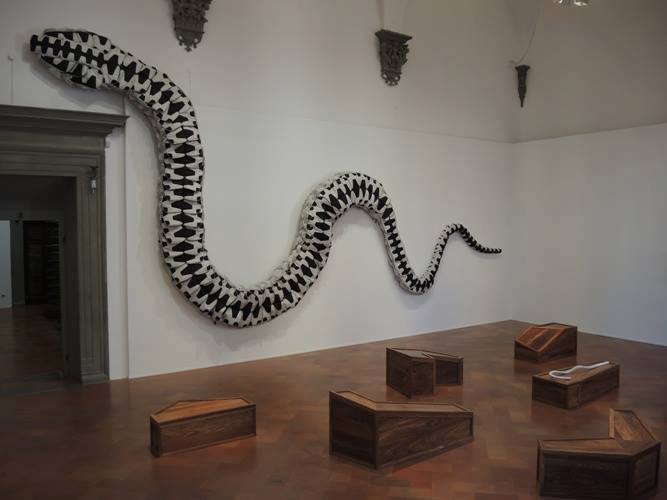
Andando avanti, troviamo opere difficili da spiegare, perché trattano temi molto delicati o irriverenti. La sala dedicata al terremoto del Sichuan raccoglie le opere nate dall’indagine condotta da Ai Weiwei per ridare un nome a quei bambini che nel terremoto hanno perso la vita e che il governo cinese ha dimenticato. I giovani spettatori della mostra riconosceranno immediatamente gli zainetti che formano il grande serpente appeso alla parete, cioè l’opera Snake Bag (Borsa serpente). Lo zaino è per loro un oggetto di uso quotidiano, come lo era per quei bambini. Con la sola differenza che gli zaini dei bambini occidentali sono tutti diversi tra loro, mentre quelli mostrati da Ai Weiwei sono tutti uguali. Questo perché se egli non avesse portato a termine la propria indagine, non sarebbe stato mai possibile ridare loro la dignità di persone che sono state. Nell’oblio sarebbero stati tutti uguali, come gli zainetti.

La serie di fotografie Study of Perspective (Studio Prospettico) pone un altro problema, se il pubblico è quello dei bambini, perché il gesto che ricorre in ogni immagine è, per come è stato loro insegnato, diseducativo. Dietro ad ogni dito è immortalato un luogo o un monumento storicamente o culturalmente rilevante. I quali Ai Weiwei manda a quel paese, perché simbolo di una società e di una cultura che egli contesta. Forse allora ai bambini e ai ragazzi bisognerebbe far capire che l’opera d’arte può essere lo spunto per una riflessione più ampia e profonda, cioè che le immagini richiamano alla nostra mente altri concetti e non solo ciò che rappresentano.

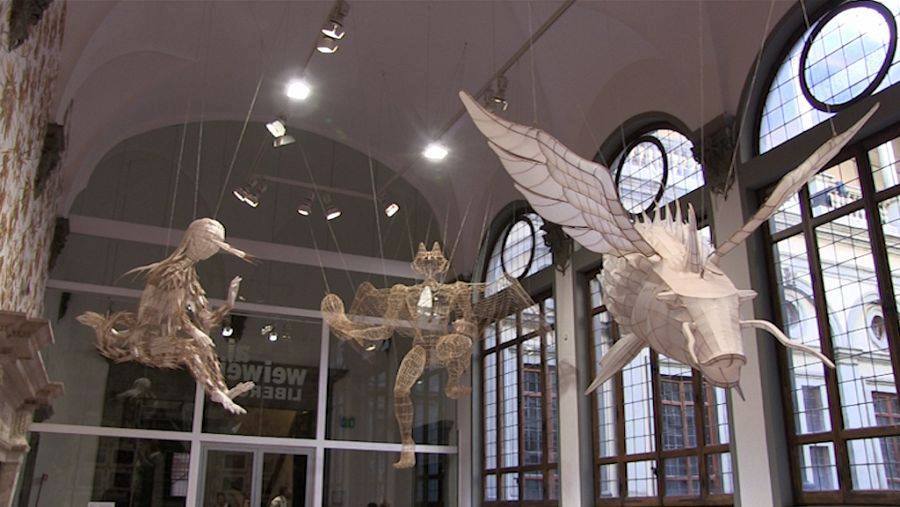
I grandi animali di bambù della sala intitolata Mythologies, infatti, offrono molteplici opportunità per sviluppare l’osservazione, l’ascolto di una narrazione meravigliosa e la rielaborazione attraverso il gioco e la fantasia. Queste strane creature sembrano uscite proprio da uno dei tanti libri della tradizione cinese che raccontano  di paesi lontani e luoghi misteriosi, popolati da esseri meravigliosi e straordinari. Raccontare una di quelle storie di fronte a queste opere, dimostrerebbe, una volta di più, ai nostri piccoli spettatori, quante cose meravigliose l’arte può evocare attraverso le immagini, le loro forme e i loro colori.


Translation by Rachyl Grussing


This exhibition offers the opportunity to know a ‘star’ of contemporary art: the Chinese artist Ai Weiwei. We would like to present here a point of view not necessarily museological but didactic.

The artist handles important topics, above all, the freedom of expression. He does this by using traditional Chinese techniques, creating new works, or by using existing objects but giving them new life (in the wake of Duchamp’s ready-made).

How do you explain all this to teenagers or children who have no knowledge of history, let alone politics or contemporary art? How can you explain that a work of art can tell a story, evoke emotions and provoke feelings without using words, through the colors, shapes, and style of the artist? For example, the rafts of the installation Reframe (Nuovo Cornice), thanks to the orange color, attracts our attention, but upon closer inspection we realize that they enhance the shape of the windows on the main floor by tracing their outlines, to tell us how old things are connected to the modern ones. The bicycle installation in the first room of the beginning of the exhibition path, Stacked (Impilate), forces one to pass through it, giving the feeling of having no choice, as those young Chinese in the 1950s were forced to buy a bicycle, or even to get married, to affirm their social status.

Moving forward, we find the works difficult to explain, because the subjects are very delicate or irreverent. The room dedicated to the Sichuan earthquake collects the works born from the survey that Ai Weiwei conducted to give name to the children who lost their lives, children the Chinese government has forgotten. The young audience of the show immediately recognizes the backpacks that form the grand serpent that hangs along the wall, the work Snake Bag (Borsa Serpente). For them, the backpack is an object of everyday use, as it was for those children in the earthquake. With the only difference being the Western children’s backpacks are all different from one another, while those shown by Ai Weiwei are identical. This is because if Ai Weiwei had not completed his investigation, it would not have been possible to give any dignity to those who were lost. Oblivion would be all the same, like the backpacks.

The series of photographs, Study of Perspective (Studio Prospettico), poses another problem if the audience is children, as the gesture that occurs in every image is one, as has been taught, morally destructive. Behind every image is immortalized a historical monument or culturally significant place. Which Ai Weiwei sends to the countries, since they are a symbol of society and culture that he criticizes. Perhaps then we should make clear to the children and young people that works of art can be the basis for a broader and deeper reflection, that is, that the images bring to mind other concepts and not just what they physically represent.

In fact, large bamboo animals, in the room entitled Mythologies offer multiple opportunities to develop observation, listening to wonderful storytelling and reprocessing through play and imagination. These strange creatures appear to be works from one of the many books in the Chinese tradition that tell of distant lands and mysterious places, populated by wonderful and extraordinary things. To tell one of these stories in front of these works demonstrates, once again, to our young viewers, how many wonderful things that art can evoke through the imagination, their form and their colors.

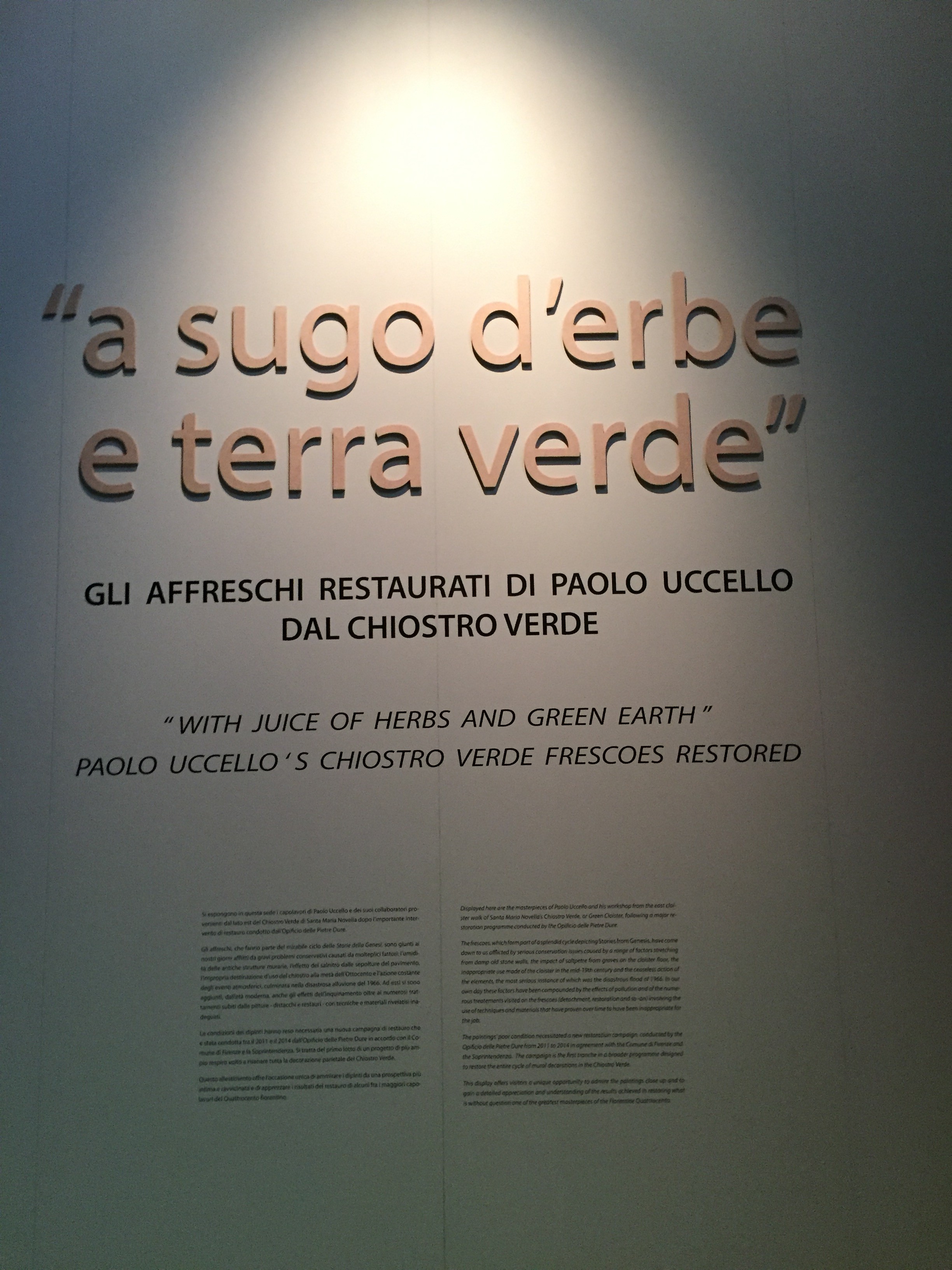
With Juice of Herbs and Green Earth


Paolo Uccello’s Green Cloister Frescoes Restored at Museo di Santa Maria Novella

By Rachyl Grussing (Istituto Lorenzo de’ Medici)


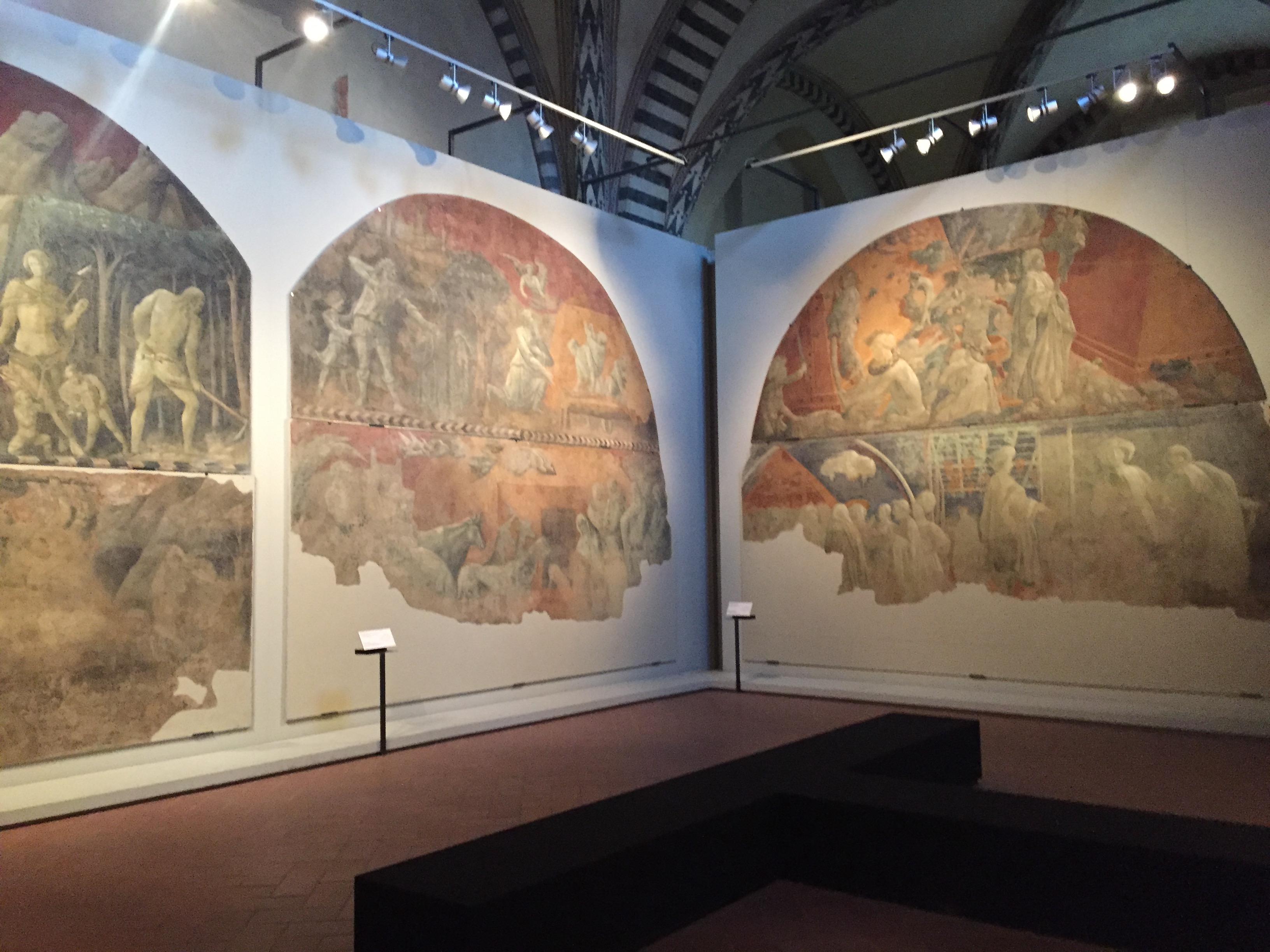
Santa Maria Novella, one of the oldest churches in Florence, hosts works by artists like Filippo Lippi, Ghirlandaio, and Giorgio Vasari. These and other works are displayed inside a three room museum hosted inside the church. The three rooms: The Ubriachi Chapel, the Refectory, and the Chapter House, are original to the Dominican order that began Santa Maria Novella in the late 13th century. It is in the Refectory that the Museum of Santa Maria Novella has placed the newly restored frescoes of Paolo Uccello, done in the late 15th century, which originally hung on the walls of the east cloister walk of the Green Cloister.

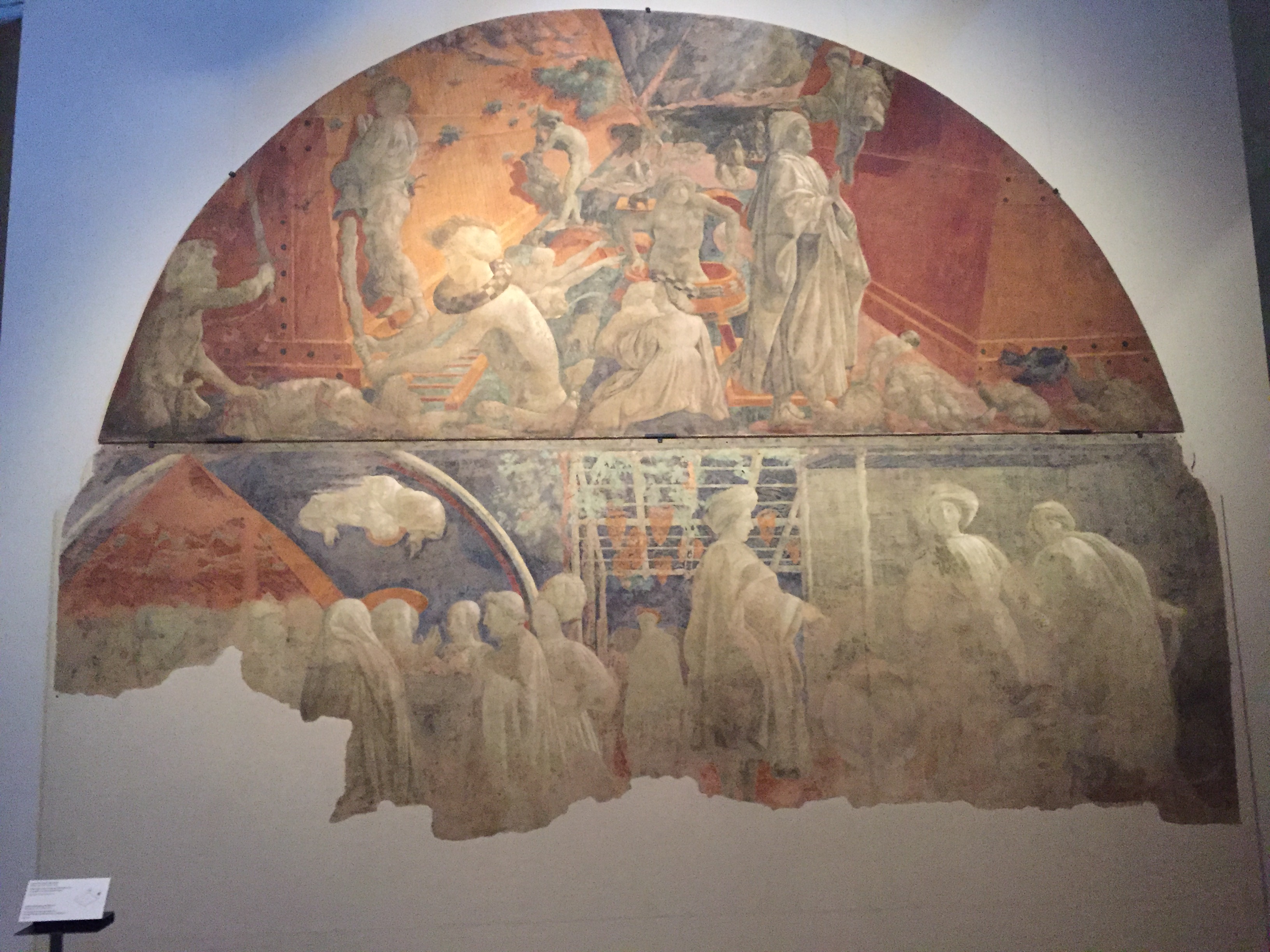
Paolo Uccello, a pioneer of perspective, was born at the end of the 14th century. He is famous for The Battle of San Romano (1440) and the Funerary Monument to Sir John Hawkwood (1436). In the first half of the 15th century Uccello was placed in charge of engineering frescoes for the Green Cloister that represented stories from the book of Genesis. The Cloister receives its name from the monochrome style that places prominence on certain colors used in the works along its walls. The frescoes were severely damaged in the flood of 1966 that also damaged other numerous works in the city as well. It is not until the 1980s that the Superintendent of Florence returns the works to the Church and it is not until 2011 that the full restoration work begins. The work is done by the Opificio della Pietre Dure and is not completed until 2014 and this exhibition did not open until early in 2016.

The sheer scale of Uccello’s works is massive, the frescoes stand almost two meters by five, and they dominate the room. Beautifully restored, the colors are striking against the pale white walls. The reds and blues of the famous ‘Deluge’ are once again vivid, creating an image that easily conveys the sanctity of the cloister and of the church. The works are classic Uccello, as he worked in bold colors and the new art of perspective was essential in his works. In the controlled setting of the Refectory, the restored works convey some sense of how the eastern cloister walk must have looked like in its heyday. The size of the works also allows the visitor to think upon the enormous task of restoration, which has its own timeline wall panel.

Several other wall panels explain the meaning behind the name of the exhibition, what the restored frescoes are depicting, the importance behind Paolo Uccello’s works, and the process of the restoration. The wall panels are conveniently located next to large T-shaped felt covered seating, which allows the visitors to both sit and read the panels, but also turn and contemplate the artworks without strain. With eight frescoes to marvel at, and soft yellow lighting to preserve the art, the seating is strategic on the part of the Museum as it is a way for visitors to linger over Uccello’s work.

The year 2016 is an important one for the city of Florence, as it is the 50 year anniversary of the flood of 1966. This exhibition is one of many over the city displaying the works restored from this devastating event. Masterpiece works are finally on display, cleaned as best the can be of traces of that horrible event, but the exhibitions show the spirit of a city that did not give up on its cultural heritage or leave what was in the past behind.


novella-1     novella-3


Traduzione di Tania Mio Bertolo (Università degli Studi di Firenze)
 

La basilica di Santa Maria Novella, una delle più antiche tra le chiese fiorentine, conserva opere di artisti come Filippino Lippi, Ghirlandaio e Giorgio Vasari. Altre opere ancora sono raccolte nelle tre sale del museo situato all’interno della chiesa. I suddetti tre ambienti, ovvero la Cappella degli Ubriachi, il Refettorio e l’aula capitolare detta Cappellone degli Spagnoli sono ascrivibili all’ordine dei Domenicani che diede avvio alla costruzione del complesso di Santa Maria Novella verso la fine del tredicesimo secolo. Ed è proprio nel Refettorio che sono ora esposti gli affreschi recentemente restaurati di Paolo Uccello, provenienti dal ciclo da lui eseguito nel quindicesimo secolo per il Chiostro Verde.

Paolo Uccello, uno tra i pionieri dell’uso della prospettiva nella pittura, nacque verso la fine del quattordicesimo secolo. Egli è noto soprattutto per le tre tavole raffiguranti la Battaglia di San Romano (1440 circa) ed il Monumento Funebre a Giovanni Acuto (1436). Nella prima metà del Quindicesimo secolo Paolo Uccello fu incaricato di affrescare il Chiostro Verde con le storie della Genesi. L’ambiente riceve il nome dallo stile monocromo che prevale sugli altri colori usati nelle pareti, e purtroppo i suoi affreschi furono gravemente danneggiati dall’alluvione del 1966, che rovinò anche altre opere artistiche cittadine. Fu solo negli anni Ottanta che la Soprintendenza di Firenze ricollocò i capolavori nella chiesa, mentre le opere di restauro furono avviate soltanto nel 2011. Il restauro fu affidato all’Opificio delle Pietre Dure e fu completato nel 2014, ma solo dall’inizio del 2016 il grande pubblico può riammirare questi capolavori.

Imponente è la grande scala usata da Paolo Uccello in questi affreschi i quali, con una dimensione di due metri per cinque, dominano la sala. Le tinte rosse e blu del Diluvio universale sono di nuovo vive e creano un’immagine che lascia chiaramente percepire la sacralità del chiostro e della chiesa. Questi affreschi riassumono le costanti della produzione artistica di Paolo Uccello: il suo uso delle tinte forti e della nuova tecnica della prospettiva, cifra del suo operato. La collocazione delle opere restaurate nell’allestimento del refettorio in qualche modo suggerisce come doveva apparire in origine il chiostro esterno. La grandezza delle opere inoltre invita il visitatore a riflettere circa l’enorme lavoro di restauro, le cui fasi lavorative sono delineate su un pannello murale.

Alcuni altri pannelli testuali spiegano il significato del titolo della mostra, cosa rappresentano le opere, l’importanza dell’arte di Paolo Uccello e il processo di restauro. I pannelli sono convenientemente posizionati di fianco ad un divano a T, che permette al visitatore sia di sedersi e leggere le didascalie, sia di ammirare le opere senza affaticarsi. Con otto affreschi da ammirare e soffuse luci gialle che preservano le opere, la collocazione del divano risulta strategica per offrire al visitatore la possibilità di prendersi tutto il tempo necessario per ammirare le opere.

Il 2016 è un anno importante per Firenze, poiché ricorre il cinquantesimo anniversario dell’alluvione del 1966. Questa mostra rientra in un più ampio programma di eventi ed esposizioni cittadini dedicati alla presentazione al pubblico di quelle opere sottoposte a restauro a seguito dei danni causati dall’alluvione. I capolavori sono di nuovo esposti, e le tracce di quell’episodio disastroso sono state rimosse il più possibile. Ma queste mostre sottolineano anche lo spirito di una città che non sottovaluta il proprio patrimonio culturale e che non lascia alle spalle il proprio passato.


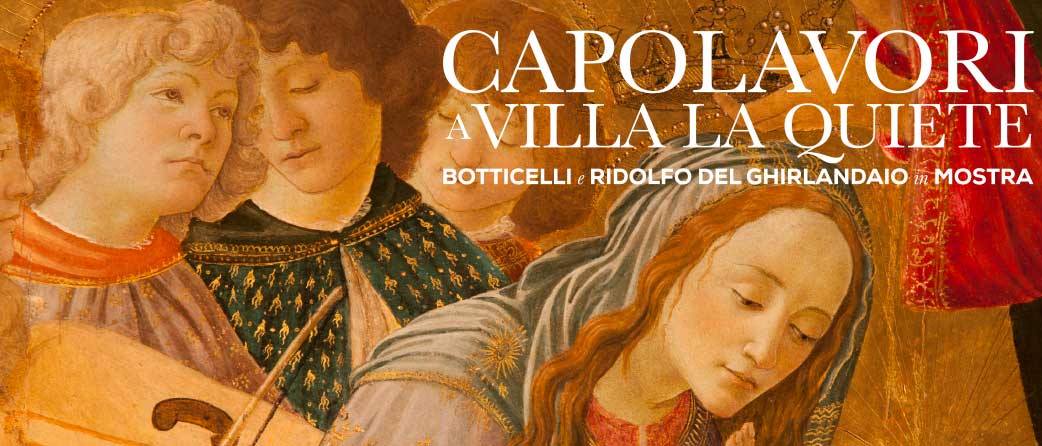
Capolavori a Villa La Quiete. Botticelli e Ridolfo del Ghirlandaio in mostra


Villa La Quiete
Dal 26 luglio al 30 ottobre 2016, prorogata fino al 15 gennaio 2017

Di Tania Mio Bertolo (Università degli Studi di Firenze)


Un cantiere in corso.

Francamente è questa la subitanea impressione che ho avuto quando mi sono unita al capannello di astanti in attesa di entrare. “Capolavori a Villa La Quiete. Botticelli e Ridolfo del Ghirlandaio in mostra”, inaugurata il 25 luglio e prorogata fino ad anno nuovo, non trova spazio in nessuno dei tradizionali ambienti museali della città di Firenze solitamente adibiti ad ospitare esposizioni temporanee, bensì in una storica residenza medicea al di fuori del circuito prettamente cittadino. Per l’occasione Villa La Quiete apre le porte del suo antico refettorio, ambiente che ospita l’esposizione stessa. Le altre sale benchè custodi di preziosi arredi ed affreschi parietali non sono ancora percorribili; ma parlo appunto di cantiere in corso, perchè l’intenzione di renderle accessibili c’è.

L’assenza di una sala d’ingresso accogliente e confortevole, trattandosi di fatto di un sito non ancora del tutto musealizzato, non mi sembra motivo sufficiente per avanzare un giudizio lamentevole e negativo, quando invece il contenuto storico artistico della mostra è pregevole ed efficace.

Del complessivo patrimonio della villa, comprensivo sia degli arredi mobili ed immobili della residenza, sia degli apparati liturgici provenienti dalla chiesa fiorentina di San Jacopo a Ripoli, è esposta poco meno di una decina di pale d’altare. Il criterio di selezione è ben chiaro: le opere in mostra provengono tutte dal complesso di San Jacopo che fu sede cittadina della Congregazione delle Montalve fino al penultimo decennio dell’Ottocento, quando esse furono costrette a lasciare tale sede e raggiungere le altre consorelle che già risiedevano a Villa La Quiete. Fu in tale occasione che il patrimonio della chiesa di via della Scala si unì a quello della villa. Quest’ultima, proprietà della famiglia Medici dalla metà del secolo XV, divenne nel Seicento sede della Congregazione laica delle Ancille Minime della SS. Trinità, protetta dalle donne di casa Medici e da esse incaricata di occuparsi dell’educazione delle giovani fanciulle della nobiltà fiorentina.

Le opere sono dunque esposte nello stesso immobile nel quale da più di un secolo ormai esse stesse sono conservate. Emerge dunque una duplice continuità: sia tra i dipinti e il luogo di provenienza, sia tra gli stessi e il luogo di conservazione ed esposizione. Un ulteriore aspetto concorre a mantenere saldo questo straordinario equilibrio di comunanze: ciascuna delle opere in mostra fu realizzata nella prima metà del Cinquecento, la maggior parte di esse da pittori toscani. È infatti esposto un notevole nucleo di opere realizzate da Ridolfo del Ghirlandaio, una pala del suo allievo Michele Tosini con crocifisso ligneo scolpito da Baccio da Montelupo, una Madonna con Bambino di un pittore fiammingo, un San Domenico della Scuola di San Marco e l’Inconorazione della Vergine e Santi di Sandro Botticelli. Tutti dipinti a soggetto sacro poiché sacro era il luogo al quale essi erano originariamente destinati.

La mostra si snoda, come sopra detto, in un unico ambiente forse troppo angusto per le grandi dimensioni delle opere esposte. Tuttavia un sapiente utilizzo degli strumenti museografici ha saputo valorizzare ciascun dipinto. I pannelli sui quali sono collocate le opere, posizionati diagonalmente rispetto alle pareti del refettorio, creano per ogni dipinto un piccolo spazio raccolto. A sottolineare l’autonomia di questi spazi concorre anche la rete illuministica, dislocata in modo tale da dare risalto singolarmente a ciascuna opera. Pur nella continuità della stesso percorso espositivo e con le similarità sopra menzionate, ogni dipinto riceve magistralmente il proprio spazio nel quale dialoga intimamente con il visitatore.

Risultato di un attento lavoro di ricerca e vera occasione per mettere in mostra opere da tempo non più ammirabili, “Capolavori a Villa La Quiete” si pone in definitiva come esempio di qualità sia museologica che museografica, attenzione scientifica e valorizzazione storico artistica.


Translation by Rachyl Grussing (Istituto Lorenzo de’ Medici)


A construction site in progress.

Frankly this is the sudden impression that I had when I joined the crowd of onlookers waiting at the entrance. “Masterpieces of the Villa La Quiete. Botticelli and Ridolfo Ghirlandaio on Display”, which opened on July 25, and was extended to the new year, is not placed in any traditional museological spaces in the city of Florence that are usually used to host temporary exhibitions, but instead is found in a Medici residence very much outside the boundary of the city. For this occasion Villa La Quiete has opened the door of their ancient refectory, an environment that is itself an exhibition. Although the other rooms of precious furniture and wall frescoes are not passable, but I just spoke of a construction site in progress because the intention is to make them accessible.

The absence of a cozy entrance room, since the site is not yet completely a museum, does not seem reason enough to pass negative and unreasonable judgement, when in fact the historic and artistic content of the show is valuable and effective.

The heritage of the villa includes the moveable and immovable furnishing of the residence, both the liturgical apparatuses of the Florentine Church San Jacopo a Ripoli, has exposed a little less than ten altar pieces. The criteria for selection is clear: the works in the show all originated from the complex of San Jacopo. This was the seat of the Congregation of Montalve until the penultimate decade of the 19th century, when they were forced to leave that seat and go to the other sisters who resided in Villa La Quiete. It was on this occasion that the assets of the Church of the Via della Scala joined to that of the Villa. The latter, owned by the Medici family from the mid-15th century, in the 17th century became the the seat of the secular Congregation of the Ancille Minime of the S.S. Trinity, protected by the women of the Medici and given the task of educating the young girls of the noble families in Florence.

Therefore, the works are displayed in the same building in which they were preserved in for over a century. Thus emerges a dual continuity: both between the paintings and the place of provenance, between the same place of conservation and exposition. Another aspect contributes to keep firm this extraordinary equilibrium of commonalities: each of the works on display was built in the first half of the sixteenth century, most of them by Tuscan painters. In fact, displayed is a remarkable nucleus of works realized by Ridolfo Ghirlandaio: a piece by his student Michele Tosini with a wooden crucifix by Baccio da Montelupo, and a Madonna and Child by a Flemish painter, Saint Dominic by the school of San Marco and a Coronation of the Virgin and Saints by Sandro Botticelli. All the paintings of a religious nature are displayed as they were originally intended.

The show unfolds in an environment perhaps too small for the grand size of the works. However, a wise use of museological tools has capitalized on each painting. The panels on which the works are located, positioned diagonally to the Refectory, create for each painting a small, intimate space. To contribute to the autonomy of these spaces the illumination is positioned in order to give prominence to the individual works.

Despite the continuity of the same exhibition, and the similarities mentioned above, each painting masterfully gets their own space in which intimately interacts with the visitor.

As the result of careful research, and an opportunity to admirably showcase the works for some time, “Masterpieces of the Villa La Quiete” ultimately arises as an example of quality museological practice, scientific attention, and historical artistry.