Museum Labels also Die

By Cole Fiala (Lorenzo de’ Medici)


The reopening of the Center for Contemporary Culture – Strozzina provides an alternative to Florence’s traditional Renaissance art scene. The progressive nature of the venue, however, faces the challenge of advocating for contemporary art in a community reputed for its old masters. While the content of the current exhibition, Sculptures also Die, offers a continuation of 20th century art criticism, the overall execution often isolates the visitor through a lack of accessibility.

The explicit connection to Power and Pathos, the bronzes exhibition on display at the Palazzo Strozzi, initiates a comparative lens in which to view contemporary sculpture. Communication through the different sections of the institution serves to attract a broad audience to both exhibitions, while also encouraging alternative perspectives and an interconnected dialogue. The relationship between Power and Pathos and Sculptures also Die reveals a powerful, yet infrequent, museum practice.

Critical attention to sculptural media recalls a pinnacle of art historical thought. Since the rise of avant-garde art in the mid-twentieth century, theorist began analyzing modern sculpture as it relates to the spectrum of artistic development. Sculptures also Die revitalizes this debate with an emphasis on new sculptural methods in relation to contemporary developments. Specifically, the re-appropriation of traditional media and concurrent technological advancements both resonate throughout the exhibition, yet these features lack transparency for the casual visitor.

A descriptive booklet, available in both Italian and English, replaces traditional wall texts. The ease of access to the brochure, however, causes the audience to rely on the text as a manual to decode contemporary art, and thus spend more time reading than viewing. The handout, although informative, then becomes an accessory to carry throughout the exhibition. This, in turn, elevates the interpretive texts dictated by the curator, Lorenzo Benedetti, and his team.

The pamphlet removes the visitor from the responsibility to directly think and question the works of art. Consultation to the booklet interferes with other potential modes of self discovery, including the formulation of a unique opinion. The absence of certain facets, although inevitable in finite texts, presents an issue for individuals that rely on the direction of the guide. The first room of the exhibition, for example, partially covered in metal tiles as part of an installation by Katinka Bock, A and I, reflects a dimension of ambivalence. With a lack of clarification, the visitor is uncertain as to the aspect of interaction, and if he or she may walk upon the tiles. A majority of people, as a result, congregate around the other half of the already congested space.

This behavior illustrates the reluctance of the public to challenge and discover the meaning behind contemporary art. The booklet, more over, allows and encourages a singular understanding in which visitors may rely. This dependence again becomes an issue with Francisco Tropa’s work titled Gigante. When confronted with this object, the visitor struggles confusedly to find its description in the book. Instead of situating the text adjacent to that of other pieces from the same room, the guide combines the passage for Gigante with a subsequent work by Tropa, Terra platónica, found later in the exhibition. The disruption of a perceived chronological correspondence interferes with expectations and abandons the visitor at a pivotal moment in the pre-course.

Distractions, such as these, cause uncertainty for the average public seeking only a fundamental understanding of contemporary art. The publication of descriptive text in a physical booklet further hinders interpretation through its direct and tangible presentation. Labels placed discretely next to the objects allow for the individual to choose what to read, as opposed to carrying the booklet as a souvenir throughout the exhibition. Visitors would be more aptly provoked if first presented with the quote by Barnett Newman: ‘Sculpture is what you bump into when you back up to see a painting.’ Sculptures also Die presents an adequate context to demystify contemporary art, yet the death of the museum label instead isolates the audience.

Anche Le Sculture Muoiono, Sculptures also Die, is on display at the Centro di Cultura Contemporanea Strozzina, Palazzo Strozzi, until 26 July 2015.


Anche le sculture muoiono

La riapertura del Centro di Cultura Contemporanea della Strozzina fornisce un’alternativa alla tradizionale scena artistica rinascimentale di Firenze.

La natura progressista del luogo, infatti, affronta la sfida di sostenere l’arte contemporanea in una comunità rinomata per i suoi antichi maestri.

Mentre il contenuto della mostra in corso, Anche le sculture muoiono, offre una prosecuzione della critica dell’arte del XX secolo, la realizzazione complessiva dell’esposizione spesso isola il visitatore a causa di una scarsa leggibilità.

L’ esplicito collegamento con Potere e Pathos, la mostra di bronzi che si svolge a Palazzo Strozzi, fornisce una lente comparativa con cui guardare alla scultura contemporanea.

La comunicazione è utilizzata, attraverso le diverse sezioni dell’istituzione, per ottenere un ampio pubblico ad entrambe le mostre e, nello stesso tempo, incoraggia prospettive alternative e un dialogo interconnesso. Il rapporto tra Potere e Pathos e Anche le sculture muoiono rivela una potente, anche se poco frequente, pratica museale. L’attenzione critica ai media scultorea richiama un pinnacolo del pensiero storico sull’arte. Da quando si è sviluppata l’arte delle avanguardie a metà del XX secolo, il teorico ha iniziato ad analizzare la scultura moderna come se fosse lo spettro dello sviluppo artistico. Anche le sculture muoiono da nuova vita a questo dibattito con l’accento su nuove pratiche della scultura in relazione agli sviluppi contemporanei. In particolare, sia la riappropriazione dei mezzi di comunicazione tradizionali che le concorrenti innovazioni tecnologiche, sono evidenziate lungo tutta la mostra, ma questi temi sono poco accessibili ad un visitatore inesperto. Un opuscolo informativo, disponibile sia in italiano che in inglese, sostituisce i tradizionali testi a parete. La facile lettura della brochure, però, fa sì che il pubblico si affidi al testo come ad un manuale per decodificare l’arte contemporanea, e, quindi, passi più tempo a leggere che a guardare le opere. Il libretto, anche se esaustivo, diventa dunque un accessorio da portare con se per tutta la mostra. Ciò, inoltre, sottolinea ulteriormente l’interpretazione del curatore, Lorenzo Benedetti, e del suo team. L’opuscolo allontana il visitatore dalla responsabilità di riflettere da solo e mettere in discussione le opere d’arte. La consultazione di questo materiale informativo interferisce con altri potenziali modi di scoperta personali, tra cui la formulazione di un parere individuale. L’assenza di alcune informazioni, anche se inevitabile in brevi testi, rappresenta un limite per coloro che si basano unicamente sulla decodificazione offerta dalla guida.

La prima sala della mostra, ad esempio, parzialmente rivestita a terra da pannelli metallici che fanno parte dell’installazione di Katinka Bock, A and I, riflette una dimensione di ambivalenza. A causa della mancanza di chiarezza, il visitatore è incerto su come interagire con l’opera non capendo se possa camminare o no sulle placche metalliche. La maggioranza delle persone, di conseguenza, si riuniscono intorno all’altra metà dello spazio già congestionato. Questo comportamento dimostra la riluttanza del pubblico a sfidare e quindi scoprire il significato che sta dietro l’arte contemporanea. Il libretto permette e favorisce, soprattutto, un’ unica interpretazione alla quale i visitatori possano fare affidamento. Questa dipendenza dal testo diventa di nuovo un problema in relazione al lavoro di Francisco Tropa intitolato Gigante. Di fronte a questa opera, il pubblico si sforza confusamente di trovare la sua descrizione nel testo. Invece di situare il testo vicino a quello di altre opere della stanza, la guida mette insieme la parte dedicata a Gigante con quella su un successivo lavoro di Tropa, Terra Platonica, che si trova più avanti nella mostra. L’interruzione di ciò che è percepito come una corrispondenza cronologica interferisce con le aspettative e abbandona il visitatore in un momento cruciale del percorso. Distrazioni come queste sono fonte di incertezza per un pubblico medio e per una comprensione profonda dell’arte contemporanea. La pubblicazione di un testo descrittivo in un libretto fisico ostacola ulteriormente l’interpretazione attraverso la sua presenza diretta e tangibile. Didascalie posizionate discretamente accanto agli oggetti consentirebbero all’individuo di scegliere cosa leggere, invece di portare il libretto come ricordo per tutta la mostra. I visitatori sarebbero maggiormente provocati se prima gli si presentasse la citazione di Barnett Newman «la scultura è il miglior commento che un pittore possa fare sulla pittura».

 Anche le sculture muoiono offre un contesto adeguato per demistificare l’arte contemporanea, ma la morte del marchio museo isola invece il pubblico.

 Anche Le Sculture Muoiono è in mostra presso il Centro di Cultura Contemporanea Strozzina, Palazzo Strozzi, fino al 26 luglio 2015.
Even the Sculptures Die, Center of Contemporary Art Strozzina

By Mackenzie Constantinou (Lorenzo de’ Medici)


The current exhibition at the Center for Contemporary Culture Strozzina, proposes a reflection on the theme of contemporary sculpture that is explored through the works of 13 artists.

Time is understood as an agent on the creative process illustrated through materials and human actions.  This acts as a theme throughout the exhibition.

The visitor can then reflect on the concept of value, even purely monetary, contemporary work of art, the idea of copy, its reproducibility in the modern era, and the work’s connection to tradition.  These topics are expressed especially through the use of materials related to sculpture.

The explanatory text of the exhibition are in the form of a book, both in Italian and English, which acts as a mini guide that explains the curatorial choices and provides information on the works.  This guide addresses the need to provide a proper explanation of the works to the general public.

In addition, the lack of traditional explanatory panels prevents the public from walking before the explanations.  These wall texts could provide greater freedom for the interpretation of these works of art.

Katrina Bock represents the relationship with time, in particular that used in the process of the work of art, in the first room with installations.  These works illustrate the use of traditional materials, such as bronze, in contemporary sculpture.  This room allows the viewer a first glimpse at this topic.

The theme of the precariousness is illustrated in the work by Mark Menders, Fox/Mouse/Belt.  The visitor is invited to enter a space, which is surrounded by scaffolding and cloth, as if there were a “work in progress”.  At the center is a sculpture, which is a fox that appears to be made out of clay, however the work was cast in bronze.  This expresses a sense of transience and creates a contrast between reality and appearance.

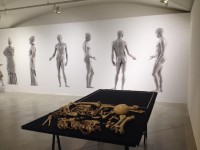
In the next room, the installation Perfect Duty, by Nina Beier that consists of piles of carpets with notes on them.  Furthermore, there are lying sculptures of the early twentieth century on the rugs.  This work investigates the complex concept of the value of art in the contemporary world.

The next room houses the works of Oliver Laric, which offers a reinterpretation of the classic through modern technology, and urges the viewer to juxtapose this with the exhibition on the first floor of the Palazzo Strozzi,Power and Pathos.  Perhaps not coincidentally, in the same room, there is also the work entitled Gigante by Francisco Topa, which suggests the notation that classical art is understood as a “giant” for the cultural history of the west.

In the photographs by N. Dash time becomes null and void, which is related to Giorgio Andreotta Calo’s work, which illustrates the process of erosion.

Finally in Francesco Arena’s work Barra, the time of nature is transformed into a collective time, and therefore in history.  Arena combines his personal story, with that of art and the community.

Until June 26.


Anche le sculture muoiono, Centro di cultura contemporanea Strozzina.

Di Carolina Caverni (Università di Firenze)


La mostra in corso presso il Centro di cultura contemporanea Strozzina, propone una riflessione sul tema della scultura contemporanea che viene indagato attraverso le opere di 13 artisti.

Il tempo, inteso come agente sul processo creativo, sui materiali e sulle azioni umane, fa da filo conduttore durante tutto il percorso espositivo.

Il visitatore può dunque riflettere sul concetto di valore, anche puramente monetario, dell’opera d’arte contemporanea, sull’idea di copia, e sulla sua riproducibilità nell’era moderna, e ancora sul legame con la tradizione, che si concretizza soprattutto attraverso l’uso di materiali ad essa legati.

I testi esplicativi della mostra sono affidati ad un libretto, sia in italiano che in inglese,che funge come mini guida nella quale si spiegano le scelte curatoriali e si forniscono informazioni sulle opere. Questo strumento risponde alla necessità di dare una lettura adeguata a tutte le tipologie di pubblico ed un supporto anche a coloro che trovano poco accessibile l’arte contemporanea.

Inoltre, la mancanza dei tradizionali pannelli esplicativi evita che il pubblico si accalchi davanti alle spiegazioni saturando gli ambienti e consente una maggior libertà interpretativa.

Il rapporto con il tempo, in particolare quello impiegato nel processo di genesi dell’opera d’arte, è rappresentato nella prima sala dalle istallazioni di Katrina Bock in cui la creazione e l’utilizzo di materiali della tradizione, come il bronzo, permettono allo spettatore un primo approccio a questo tema.

L’aspetto legato alla precarietà, è illustrato dall’opera di Mark Menders, Fox/mouse/ belt; il visitatore è invitato ad entrare in uno spazio circondato da impalcature e teli, come se ci fossero dei “lavori in corso”, al centro, la scultura, una volpe che sembra in argilla ma contiene un anima in bronzo, esprime un senso di transitorietà e crea un contrasto tra realtà e apparenza.

Nella sala successiva, l’istallazione Perfect duty, di Nina Beier – pile di tappeti con banconote sui quali sono adagiate delle sculture di inizio novecento – indaga il complesso concetto di valore dell’arte nel mondo contemporaneo.

La sala successiva ospita le opere di Oliver Laric, l’artista propone una reinterpretazione della classicità attraverso la tecnologia moderna e sollecita lo spettatore ad un confronto diretto con la mostra al primo piano di Palazzo Strozzi, Potere e Pathos. Forse non a caso, nello stesso ambiente, vi è anche l’opera intitolata Gigante di Francisco Topa, che potrebbe suggerire l’idea dell’arte classica intesa come un “gigante” culturale per la storia dell’Occidente.

Nelle fotografie di N. Dash il tempo diviene caduco, per poi determinare una serie di processi di erosione nell’opera di Giorgio Andreotta Calò.

Infine il tempo della natura viene trasformato in un tempo collettivo, e dunque in Storia, in Barra, opera di Francesco Arena,  in cui l’artista mette insieme la storia personale, quella dell’arte e quella della collettività.

Fino al 26 Giugno.

Ecomuseo del Casentino

By Mackenzie Constantinou (Lorenzo de Medici)


The Ecomuseo del Casentino aims to preserve and display traditional culture, both tangible and intangible, to the public.  In order for this to become a reality the institution effectively created a museum without walls, or a museum that is deeply integrated in the town rather than isolated within a solitary building.  The Ecomuseo del Casentino was created for and by the community in order to preserve their traditional culture; though this leads to the problem of defining a museum, figuring out how to adequately preserve culture, and sustaining the museum due to a lack of outside visitation.  These characteristic struggles of the Ecomuseo del Casentino are clearly recognizable throughout the visit due to a lack of upkeep, public information, and people within the city.

The Ecomuseo del Casentino is dispersed throughout the city to the point where the town itself is the museum. Therefore, can this be considered a museum?  Since in the case of Casentino, the museum is in effect the city how does the ecomuseum subscribe to the standard qualifications of the title museum?  This institution challenges the way to view and interpret what qualifies as a museum, and it requires visitors to look at and question a museum without walls.  Though when analyzing the International Council of Museums’ (ICOM) definition of a museum it states that an institution should aim to exhibit, research, and communicate the tangible and intangible cultural material to the public for education and academia.  By this definition the Ecomuseo del Casentino would qualify as a museum, though it does challenge the visitor’s preconceived notions of what a museum is and what its function should be within society.

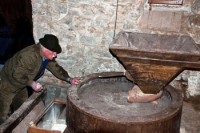
In Italy, with the rather recent unity of the country and many micro cities with their own unique culture and language, it has been seen as a necessity to preserve these traditions, which is the foundation for the Ecomuseo del Casentino.  The guide, who is part of the community, provides background information on the objects, which have no labels or any information about their significance.  These objects are linked to memories, for the guide and presumably the community.  Though if an individual were to visit the museum without a guide they would lack any of the important information on the objects, which was the reason for creating the institution.  Therefore, how can the museum adequately incorporate the oral traditions with the tangible material of the past, without labels or a guide?

This museum is a byproduct of the surrounding community, and is run by these individuals.  This guide emphasized that individuals are actually moving away from Casentino.  Therefore, there is a problem of how to attract outside visitors to a city whose citizens that created the institution are no longer residing within that town.  Could this museum exist without the surrounding community?  Since the museum was created to glorify the past history or culture within a city, then it is necessary for the community as a whole to promote or market their culture and traditions to the public in order to obtain tourists.

Overall, this museum attempts to present intangible and tangible cultural material to the public and display the importance of the community’s unique traditions and identity.  It resides in a beautiful city that is nestled between two rivers, which creates a beautiful scenery to enjoy the museum.  The community is proud of their past, their dialect, and this museum highlights the history and beauty of this town.


Ecomuseo del Casentino

By Carolina Caverni (Università di Firenze)

L’Ecomuseo del Casentino ha lo scopo di conservare e mostrare al pubblico la cultura tradizionale, sia materiale che immateriale, del luogo. Per rendere ciò possibile l’istituzione ha creato nella pratica un museo senza pareti e quindi un museo che è profondamente integrato con la città, piuttosto che isolato all’interno di un edificio solitario.

L’istituzione è stata fondata da e per la comunità al fine di preservare la cultura tradizionale; anche se questo comporta il problema di definire l’entità museo, capire come preservare adeguatamente la cultura e sostenere l’istituzione nonostante la mancanza di visite esterne. Queste lotte, tipiche dell’Ecomuseo del Casentino, sono chiaramente riconoscibili durante la visita a causa della mancanza di manutenzione, informazioni per il pubblico, e scarsa popolazione nella città.

L’Ecomuseo del Casentino è distribuito in tutta la città fino a rendere la città stessa un museo. Pertanto, può davvero essere considerato un museo? Dato che nel caso del Casentino, il museo è a tutti gli effetti la città, come fa l’ecomuseo a sottoscrivere le qualifiche standard per avere tale definizione? Questa istituzione sfida il modo di vedere ed interpretare ciò che si qualifica come museo e richiede ai visitatori di guardare e interrogare un museo senza pareti. La definizione data dall’ international Council of Museums (ICOM) afferma che “Il Museo è un’istituzione permanente senza scopo di lucro, al servizio della società e del suo sviluppo, aperta al pubblico, che effettua ricerche sulle testimonianze materiali e immateriali dell’uomo e del suo ambiente, le acquisisce, le conserva, le comunica e specificamente le espone per scopi di studio, educazione e diletto.”

Con questa definizione l’Ecomuseo del Casentino si qualifica dunque come museo, sebbene lo faccia contestando il preconcetto del visitatore di cosa sia un museo e quale la sua funzione all’interno della società.

In Italia, a causa della piuttosto recente Unità del paese e della presenza di molte piccole realtà con una propria cultura e dialetto, è stata vista come una necessità quella di preservare queste tradizioni, elemento che è alla base dell’Ecomuseo del Casentino.

La guida, che è parte della comunità, fornisce informazioni di base sugli oggetti, che non hanno didascalie o informazioni sul loro significato. Questi oggetti sono legati alla memoria sia della guida stessa che presumibilmente della comunità. Ma se si dovesse visitare il museo senza la guida non si riceverebbe nessuna delle informazioni importanti sugli oggetti, che sarebbero invece la ragione di fondo per la creazione dell’istituzione. Quindi, come può il museo trasmettere adeguatamente le tradizioni orali e la materia tangibile del passato senza didascalie o guida? Questo museo è un sottoprodotto della comunità circostante, ed è gestito da questi individui.

La guida ha sottolineato che la popolazione in realtà si sta allontanando dal Casentino. Pertanto, vi è un problema di come attirare visitatori esterni in una città i cui stessi cittadini, che hanno creato l’istituzione, si stanno allontanando.

Potrebbe questo museo esistere senza la comunità circostante? Dal momento che il museo è stato creato per glorificare la storia o la cultura del passato all’interno di una realtà, è allora necessario che la comunità nel suo insieme si unisca per promuovere al pubblico la propria cultura e le tradizioni al fine di attirare i turisti. Nel complesso, questo museo tenta di presentare la cultura materiale e immateriale al pubblico e mostrare l’importanza delle tradizioni uniche e dell’identità della comunità. Risiede in una bellissima città che si trova tra due fiumi, che crea uno splendido scenario per godere del museo. La comunità è orgogliosa del proprio passato e dialetto, e questo museo mette in evidenza la storia e la bellezza della città.

Human, Forte di Belvedere

By Mackenzie Constantinou (Lorenzo de’ Medici)


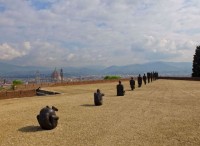
The title of Antony Gormley’s exhibition is highly evocative and intended to make the Forte di Belvedere represent humanity, through the medium of sculpture.  While, it attempts to return the aspects that characterize the works.

Due to this, the Forte did not make a casual selection of works, since it is a place that requires a continuous confrontation with the view of Florence, a city that embodies the humanism, the Renaissance, and then the man himself.

Antony Gormley, an English Artist, was born in 1950.  He also created brochure text.  These pamphlets are handed out to the visitors, which help to explain the concept of the exhibition and provide more information on the main works.

Before entering the Forte, the visitor is presented with two sculptures that appear misplaced.  Once up the stairs the visitor starts the journey of reflecting on man and humanity, while exploring the rooms of the building-in the old gunpowder storage room and upstairs that includes terrace-and throughout the garden.

Within the rooms the tension between the exhibition and the architecture is palpable.  The statues become continuations of the walls.  The works almost merge with the floor or are in the middle of the large windows from which the light filters through grates.

Outside the statues, casted in iron in various positions, echo and emphasize the multiple perspectives that allow the views of the Forte.  In the form recognizably human or unstructured blocks, Blackwork, creates continuous contrasts and dialogues.

The reinterpretation of Critical Mass, a work of 1995, occupying the terrace overlooking the Forte creates a long diagonal where the statues are placed to create linear progression.  In contrast, on the opposite side, the same poses lose their linearity in a set of bodies stacked on each other in an apparently random manner.

Reflection, listening, and prayer are all human actions that the sculptures repeat.  They occupy every corner of the exhibition space, often almost surprising the visitor.

The striking, beautiful, and spectacular views contribute greatly to the reception of the works of Gormley which make the experience interesting and evocative.

Until September 27


Human, Forte di Belvedere.

di Carolina Caverni (Università di Firenze)

Il titolo della mostra è quanto mai evocativo di ciò che Antony Gormley ha inteso fare al Forte di Belvedere, ovvero rappresentare l’umanità, attraverso il medium della scultura, tentando di restituire gli aspetti che la caratterizzano.

Non è dunque casuale la scelta del Forte, luogo che presuppone un continuo confronto con il panorama su Firenze, città che incarna l’umanesimo, il rinascimento e quindi l’uomo stesso.

L’artista, inglese, classe 1950, ha anche realizzato i testi contenuti in una brochure consegnata al visitatore con il concept della mostra e le informazioni sulle principali opere.

Prima di accedere al Forte, ci si imbatte in due sculture che sembrano quasi lasciate li per caso, come abbandonate da qualcuno che debba tornare a prenderle. Una volta salite le scale la riflessione sull’uomo e sull’umanità si snoda attraverso un percorso sia interno agli ambienti dell’edifico – nel vecchio deposito della polvere da sparo e al piano superiore che include le terrazze panoramiche – che in tutto il giardino.

Nelle stanze interne il dialogo con l’architettura si fa serrato, le statue divengono prosecuzioni delle pareti, si fondono quasi con il pavimento, o sono al centro delle grandi finestre da cui filtra la luce attraverso grate.

All’esterno, le statue in ferro con le loro posizioni varie fanno da eco e sottolineano le molteplici prospettive che consente il panorama del Forte, in forma riconoscibilmente umana o destrutturata in blocchi, i Blackwork, creano continui contrasti e dialoghi.

La reinterpretazione di Critical Mass, opera del 1995, occupa la terrazza prospiciente al Forte creando una grande diagonale in cui le statue sono poste come a realizzare una danza in progressione lineare, in contrasto, dalla parte opposta, le stesse pose perdono tale linearità in un insieme di corpi accatastati gli uni sugli altri in maniera apparentemente casuale.

La riflessione, l’ascolto, la preghiera, sono tutti atteggiamenti umani che le sculture ripetono occupando ogni angolo dello spazio espositivo, spesso quasi sorprendendo il visitatore.

Il luogo suggestivo e la spettacolarità della vista contribuiscono notevolmente alla ricezione delle opere di Gormley rendendo l’esperienza molto interessante ed evocativa.

Fino al 27 Settembre