Il Grande Museo del Duomo
“A unique repository of faith, history, and art”
By Isabella Pircio (Istituto Lorenzo de’ Medici)
Museum Hours: 09,00 – 19,00
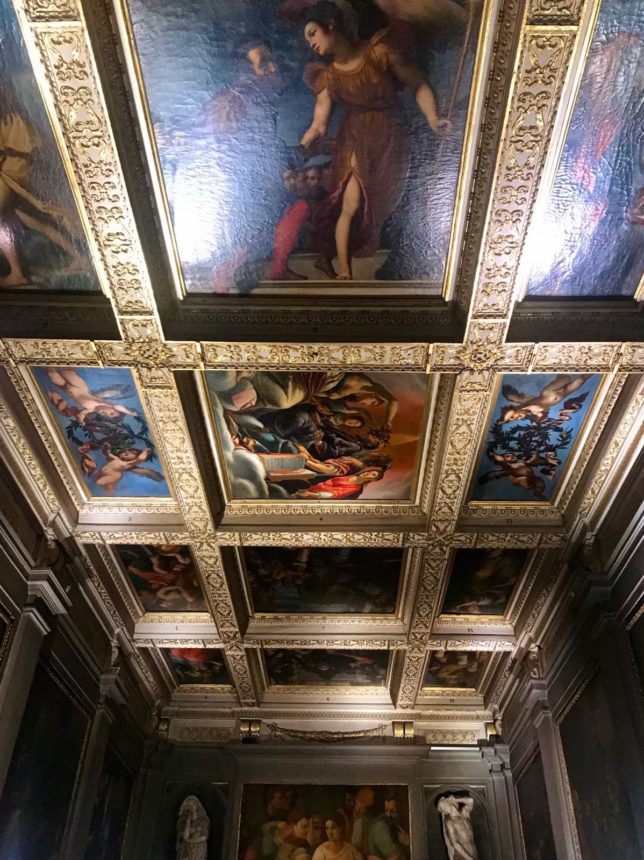
Hiding behind the eastern shadows of The Cattedrale di Santa Maria del Fiore is Il Grande Museo del Duomo, which consists of a newly constructed six thousand sq. meters dedicated to highlighting the architectural and cultural heritage of the city of Florence. Initially founded in 1296, the Opera di Santa Maria del Fiore supervised the construction of the cathedral and bell tower. In 1891, The Opera di Santa Maria del Fiore was formally made responsible for the museum, focusing primarily on the preservation of cultural heritage. In 2013, The Opera introduced a new brand titled Il Grande Museo del Duomo, aiming not only on the preservation but the display of the Florentine spiritual life. The newly renovated space, combined with this new mission, allowed for the groundbreaking way of honoring and exhibiting the Renaissance that visitors see today. Known for its extensive collection of Florentine sculptures, the museum offers visitors an exclusive look into Florence during the Renaissance and the artists that made it so extraordinary. The recently renovated museum is spread across three floors and twenty-five rooms and exhibits over seven hundred works of art in a setting similar that they were commissioned. Because of this, the museum feels much less like a traditional museum and mirrors a devotional space, exuberating a very authentic and intimate experience.
Visitors are greeted at the entrance of the museum with a striking marble wall engraved with thousands of names of architects and artists who, together with the citizens of Florence, are accredited with the monuments we cherish today. Names such as Donatello, Michelangelo, Lorenzo Ghiberti, and Luca della Robbia are shown as a prelude to what they will soon experience. The public is provided with wall texts and object labels throughout the main halls of the museum in both Italian and English.
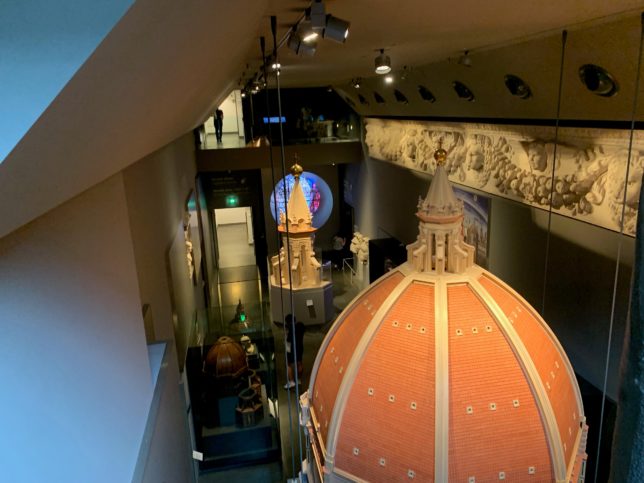
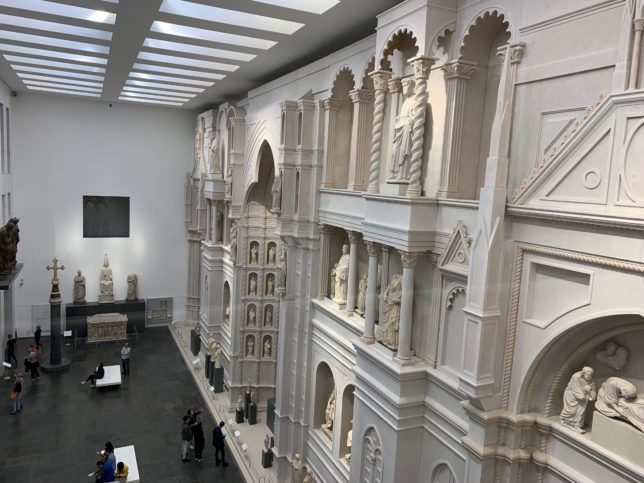
The museum’s main hall leaves a lasting impression, exhibiting a replica of the first façade of Santa Maria del Fiore, accompanied by Lorenzo Ghiberti’s door for the Baptistery of San Giovani known as Gates of Paradise. Presented entirely in glass, the display was explicitly engineered and created during the period of renovation for Ghiberti’s doors. Creating a real-life experience, the museum has constructed very detailed and accurate sixteenth century Piazza del Duomo. Viewers continue within the museum and are provided the unique opportunity to observe the reconstructed piazza from above. The gallery as a whole is handsome and presents an exciting environment for the public to interact with the collection. The Museo del Duomo has created videos and short documentaries displayed throughout the space, providing the public with seated areas to experience it differently.
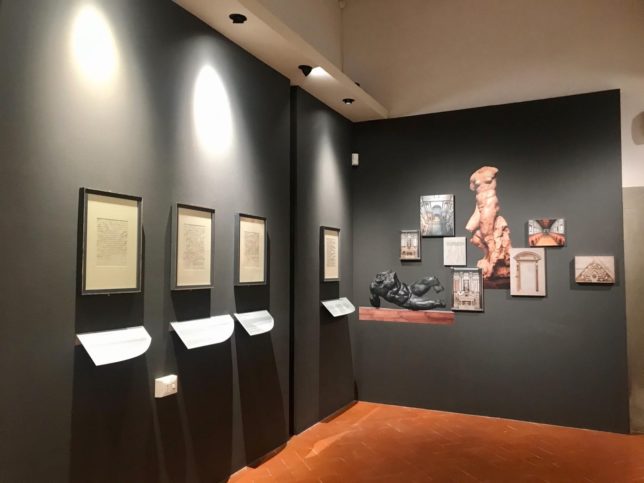
Continuing within the museum space, viewers find themselves standing directly in front of Donatello’s Penitent Magdalene. The masterpiece is centered perfectly within the room and is displayed entirely in glass. The public is therefore presented with the opportunity to experience the sculpture from all angles. Displaying the wooden sculpture in this method allows for an intimate experience while continuing to preserve it. Michelangelo’s The Deposition is displayed similarly, allowing guests to interact with the sculpture from all sides. This is especially interesting because it allows the viewer to observe the sculpture as a work in progress, as well as the marks where Michelangelo himself disfigured the sculpture that was once intended for his tomb.
Il Grande Museo del Duomo continues replicating devotional spaces with the original works of art commissioned for the Cattedrale di Santa Maria del Fiore. The cantorie, or singing galleries, created by Luca della Robbia for Santa Maria del Fiore, are raised and displayed in their appropriate position. There is music accompanying this room dedicated to the church sanctuary; however, viewers may find it a bit distracting while trying to navigate the space.
The purchase of a single ticket grants admission to the museum, as well as, Brunelleschi’s Dome, Giotto’s Bell Tower, the Baptistry of San Giovanni, and the Crypt of Santa Reparata; also included is a unique code to access Wi-Fi. Visitors can download the Museo Duomo App which provides video guides specifically made to be multi-sensory and extremely accessible. The application is also designed to provide information and various interpretations of the art. The museum itself is quite accessible, with ramps elevators and even wheelchairs available. However, problems arrive regarding the other monuments within the complex. Throughout the museum are various touchable replicas of sculptures, providing a tactile experience of the collection without the dependence of sight.
The museum has made an extensive effort to be accessible for all people, focusing on inclusion and active participation. These values are continued and respected within the educational activities, courses, and workshops offered by Il Grande Museo del Duomo. Offering a vast menu of educational programs and activities, the museum explores various teaching strategies such as traditional lectures to hands-on activities and multi-disciplinary approaches. The museum does an incredible job of representing the values within the mission statement, education students, and the public the history of Florence through centuries of religious art.
Since the reopening of Il Grande Museo del Duomo in 2015, there has been a staggering rise in attendance that now averages around 700,000 per year. It seems clear that the institution’s renovation and restructuring have provided the city of Florence and its public a beautiful museum that successfully recounts the history of Florence for all who are willing to listen.
Photo courtesy Isabella Pircio