Opificio delle Pietre Dure

pietra


By Katherine Reaume (Istituto Lorenzo de’Medici)

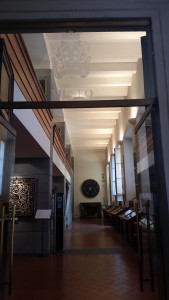
Dedicated to the craftsmanship of Pietre Dure, this gem of a museum is a stone’s throw away from the Accademia, yet it is overlooked by many tourists. Pietre Dure, a technique of cutting stones to assemble a complete image in a “mosaic” like fashion, was brought to Florence by Cosimo I. The “Galleria dei Lavori”,  which this museum occupies, was founded in 1588 by the Grand Duke Ferdinando I de’ Medici.

Though on the smaller side, this museum does not lack in information or displays. In each room, a stand can be found with a collection of information cards in multiple languages including English, Spanish, French, and Dutch. Each card corresponds nicely to the display providing enhanced information about each work, along with a short paragraph on the history of pietre dure or the collection’s connection to history.

This museum is not just made up of fancy tables or cabinets made from stone; it also displays sculptures and paintings. The paintings displayed are done in direct connection with work completed in the pietre dure style, providing an opportunity for visitors to see the inspiration for the work and make their own visual comparisons between the art and the inspiration. The display cases throughout the museum, though well laid out, do cause a bit of a problem. Lit from inside, the beams illuminate the works nicely near the top and bottom of the cases, but tend to leave the middle in shadow and darkness.   

Works are generally grouped together according to similar motifs and styles. The second story, called the laboratory, houses materials such as stones, instruments and work benches from the 17th, 18th and 19th centuries. It is here that visitors can sit and watch a video showing up close images of one of the works that can be found on the first floor. Multiple benches are available to sit and watch, yet this video does not provide much information about the work itself displaying only the name of the scene, and whether it is a detail is shown. Nothing about the process of the creation of this art is shown, unfortunately.

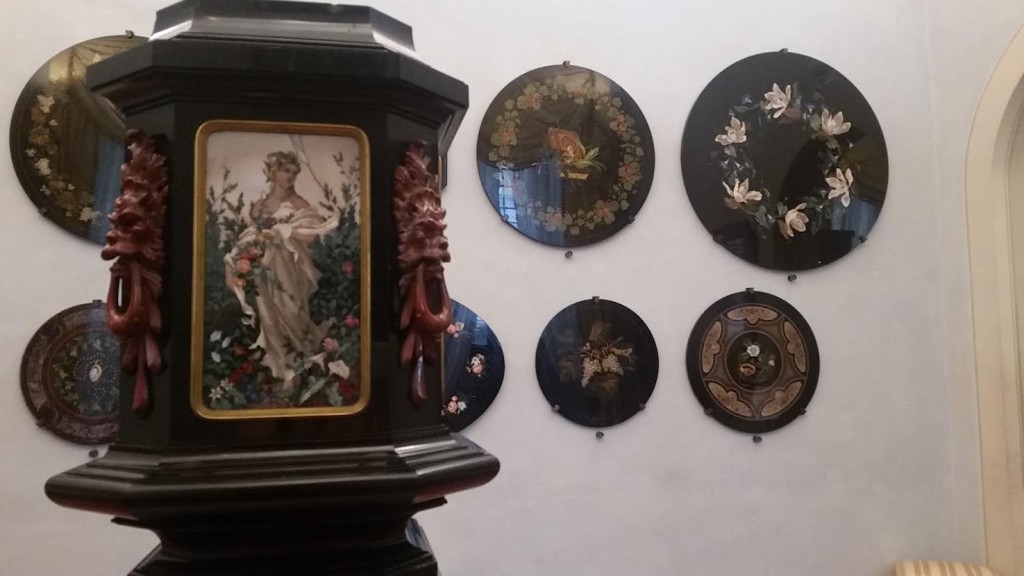
The final section of the museum has a slightly different feel, due to the presence of frescoes in the room. Many tables are displayed in this room, and a change in the motif is recognizable. Many tabletops are mounted to a wall, making it visually appealing, but this does not allow for visitors to get a close look at the works. In order to appreciate it, a visitor must stand almost on the complete opposite side of the room to view them.

Overall, this museum provides a unique opportunity to learn a bit more about the ancient technique of pietre dure and its connection to Florence. It is a sight worth seeing if you like intricate details and want to appreciate true craftsmanship.
 

pietra1

Traduzione di Tania Mio Bertolo (Università degli Studi di Firenze)

Dedicato all’arte manifatturiera del mosaico fiorentino, questo prezioso museo benchè si trovi ad un passo dalla Galleria dell’Accademia spesso sfugge all’attenzione dei turisti. Il commesso in pietre dure, la tecnica di tagliare le pietre in grandi masselli e successivamente assemblarli per creare un’immagine musiva, fu introdotta a Firenze da Cosimo I. Fu poi il Granduca Ferdinando I de’ Medici a fondare nel 1588 la “Galleria dei Lavori” in quegli stessi ambienti nei quali oggi ha sede il museo.

Benchè non grande, questo spazio espositivo non ha alcuna lacuna dal punto di vista della didattica museale e dell’allestimento. Difatti in ogni stanza si possono trovare delle schede informative che, compilate in diverse lingue oltre all’italiano tra le quali inglese, tedesco, spagnolo e francese, corrispondono felicemente all’allestimento fornendo sufficienti informazioni circa ogni opera, e sono inoltre arricchite da un breve paragrafo inerente la storia di tale arte manifatturiera e la creazione della collezione del museo.

L’allestimento mette in mostra sia tavoli da mobilia e stipi decorati e realizzati con la tecnica del commesso lapideo, sia opere scultoree e pittoriche. I dipinti esposti trovano corrispondenza con gli esemplari creati attraverso l’arte della lavorazione delle pietre dure, fornendo pertanto al visitatore l’opportunità di confrontare il manufatto con l’opera pittorica che lo ha ispirato. Benchè l’allestimento sia ben pensato, si può notare un piccolo difetto da un punto di vista museografico: i fasci di luce collocati all’interno delle teche espositive, nonostante illuminino molto bene le estremità superiori ed inferiori di ciascuna opera, tendono purtroppo a lasciare in ombra la parte centrale dei manufatti esposti.

Le opere sono raggruppate seguendo i criteri di similarità decorative e stilistiche. La seconda sezione, dedicata alla fase laboratoriale di questi manufatti, ospita diversi oggetti del mestiere come i tasselli delle pietre, gli strumenti e i banchi da lavoro risalenti ai secoli XVII, XVIII e XIX. È qui che il visitatore si può fermare e osservare un filmato che propone immagini ravvicinate inerenti uno degli esemplari esposti al primo piano. Numerose sono le sedute disponibili per chi voglia sedersi e guardare; tuttavia il filmato non formisce molte informazioni sul manufatto, ma solo la sua intitolazione e la posizione dei dettagli rispetto all’opera stessa: niente sfortunatamente circa il processo di creazione.

La sezione finale del museo è permeata da un’atmosfera diversa, più pacata, forse dovuta dalla presenza di alcuni affreschi nelle pareti della sala. Qui sono esposti numerosi tavoli decorati, ed è nettamente percepibile un cambiamento nella scelta espositiva. Molti di essi sono collocati sulle pareti facilitando il loro godimento da parte del visitatore. Poiché è però vietata una visione ravvicinata di tali manufatti, per poterli completamente apprezzare il visitatore deve soffermarsi nel lato opposto della stanza.

In conclusione, il museo offre una possibilità unica per conoscere qualcosa in più circa l’antica tecnica del commesso in pietre dure e il suo legame storico con la città di Firenze, fornendo inoltre la preziosa opportunità di poter ammirare i laboriosi dettagli musivi esposti e poter apprezzare una vera arte manifatturiera.
Glenn Brown. Piaceri Sconosciuti

bardini1

Museo Stefano Bardini

By Katherine Reaume (Istituto Lorenzo de’ Medici)

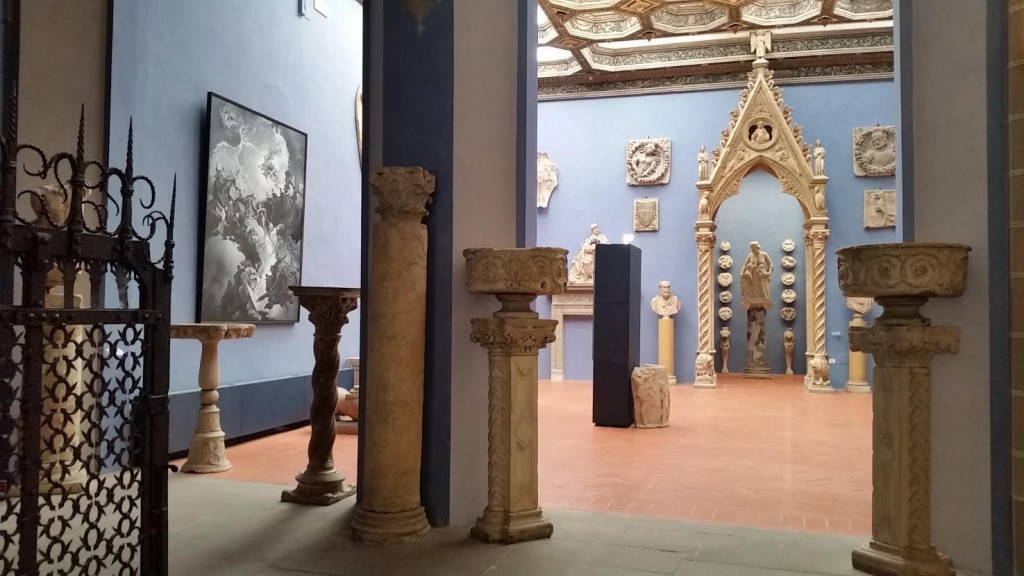
The Museo Stefano Bardini welcomes the artist Glenn Brown into its display within the museum from the 10th of June to the 23rd of October. As a first time visitor, it may seem a bit jarring to suddenly see a work that is contemporary among the ancient, yet the display of Glenn Brown’s work is done in a non-obtrusive way. Artworks are found throughout the museum, including multiple paintings, drawings, and sculptures, which are displayed amongst the collection of antiquities collected by Stefano Bardini.

Recognized internationally as a seller of antiquities at the end of the 19th century, Bardini left his art gallery along with his collections of various Renaissance designed art pieces to the City of Florence. This museum houses his collections in a similar format as they were once displayed during Bardini’s lifetime. Along with its permanent collections, the museum hosts temporary exhibitions throughout the museum.

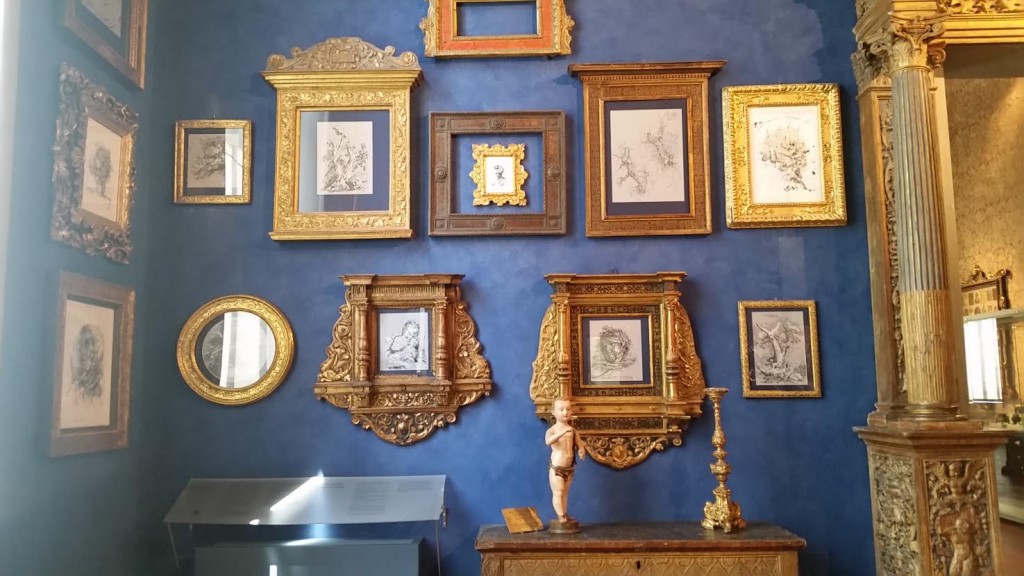
The juxtaposing of Glenn Brown’s work throughout the permanent works of the museum help to draw visitors to stop and look longer, while also creating an interesting atmosphere among the Renaissance works. A majority of the artworks play upon one another within the space. In particular, a strong display can be found in the Sala delle Cornici. The combination of Brown’s work held inside what are usually empty frames from Bardini’s collection breathes new life into the space. Reflecting a more traditional picture gallery style room found in places like the Pitti Palace, some of these works seem to be made especially for the frames in which they are held, while still being contemporary.

Though most of the integration of Brown’s work throughout the gallery is well done, some displays may hinder a visitors’ ability to appreciate them fully. For instance, in the Sala delle Madonne, a room that has a wall full of different sculptures of the Madonna, yet a portrait of a man titled Poor Art is displayed next to them. Though this portrait is hung at a comfortable eye level, the subject matter seems to clash comparatively to another work hanging in the same gallery.  A painting of a female figure is displayed opposite of the wall of Poor Art, leading up the stairs into the next room. The placement of this work is awkward. Seen from the ground it is almost too far away to appreciate it; ascending the stairs, one must stop to gather a closer view of this work, which is still at a head craning angle.

bardini2

Traduzione di Tania Mio Bertolo (Università degli Studi di Firenze)

Dal 10 giugno al 23 ottobre il Museo Stefano Bardini ospita le opere di Glenn Brown, e lo fa distribuendo i lavori dell’artista britannico all’interno del proprio percorso espositivo permanente. Benchè a prima vista potrebbe apparire forzato e contraddittorio l’accostamento delle opere contemporanee con quelle antiche della collezione museale, tuttavia l’allestimento dei lavori di Glenn Brown è ben pensato e non risulta invadente. Opere d’arte contemporanee quali dipinti, disegni e sculture sono rintracciabili nel percorso espositivo permanente del museo, amalgamate all’interno della collezione di antichità raccolta in passato da Stefano Bardini.

Conosciuto a livello internazionale come antiquario attivo sul finire del XIX secolo, Bardini ha lasciato alla città di Firenze sia la sua casa-museo che la sua collezione di opere d’arte di epoca rinascimentale che, ancor oggi, è in massima parte custodita nel museo secondo la disposizione scelta dallo stesso antiquario. Negli stessi spazi espositivi che accolgono la collezione permanente il museo ospita di frequente mostre temporanee.

La giustapposizione delle opere d’arte contemporanee di Glenn Brown all’interno della collezione permanente del museo guida il visitatore nel percorso suggerendogli dove soffermarsi; al contempo crea una nuova ed interessante atmosfera attorno alle opere rinascimentali poichè la maggior parte dei lavori artistici dialogano l’uno con l’altro condividendo gli stessi spazi. Una scelta allestitiva particolarmente forte e d’impatto è quella pensata per la Sala delle Cornici, dove il posizionamento dei disegni di Glenn Brown all’interno degli spazi tradizionalmente vuoti delimitati dalle cornici collezionate da Bardini infonde aria nuova e fresca all’interno della sala: alcuni di tali disegni sembrano esser stati realizzati apposta per le suddette cornici e per questo allestimento, ottenendo così un effetto espositivo stilisticamente simile a quelli delle pinacoteche più tradizionali, come gli esempi visibili a Palazzo Pitti, nonostante si abbia qui a che fare con opere di età contemporanea.

Benchè nel complesso l’inserimento delle opere di Brown nel percorso permanente sia ben pensato, talune scelte espositive potrebbero forse inficiare il pieno godimento della mostra da parte del visitatore. Per fare un esempio: nella Sala delle Madonne, ambiente che ospita una parete nella quale sono in mostra numerose sculture di iconografia mariana, è esposto un ritratto maschile dal titolo Poor Art, collocato di fianco alle Madonne antiche. Nonostante il ritratto sia posizionato ad un’altezza corretta ed adeguata per il visitatore, il soggetto sembra non dialogare con l’altro lavoro artistico di Brown presente in questa sala: una figura femminile esposta nella parete opposta, presso la scala che conduce verso il successivo ambiente. Si tratta di una scelta espositiva rischiosa, poiché la collocazione dell’opera risulta troppo distante affinchè essa possa essere apprezzata dalla Sala delle Madonne, ma al contempo troppo scomoda per poter esser osservata pausatamente dalla scala.

Plautilla Nelli. Arte e devozione in convento sulle orme di Savonarola

nelli2

Firenze, Galleria degli Uffizi
8 marzo – 4 giugno 2017

Di Simona Anna Vespari (Università degli Studi di Firenze)

Plautilla Nelli. Arte e devozione in convento sulle orme di Savonarola è la mostra curata da Fausta Navarro che si è svolta dall’ 8 marzo al 4 giugno alla Galleria degli Uffizi. La data di inaugurazione non è casuale:  si apre con essa una serie di iniziative che il direttore del museo Eike Schmidt propone di rinnovare ogni anno, rendendo omaggio, di volta in volta, ad artiste che per lungo tempo sono rimaste sconosciute o poco considerate. Un’occasione quindi per scoprire nuovi nomi a lungo dimenticati nel panorama artistico.

Va subito detto che, però, per essere la prima monografica sull’artista, la mostra ha la grande pecca di non esporre le sue opere certe: grande mancanza che rischia di dare al visitatore una conoscenza approssimativa dell’artista.

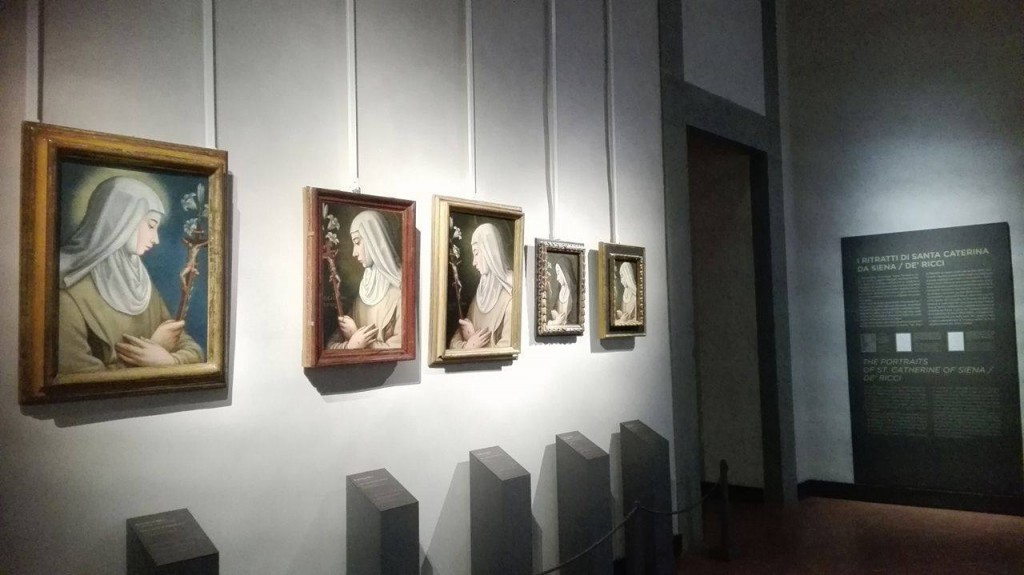
La mostra si compone di quattro sale sulle cui pareti sono disposti pannelli esplicativi in doppia lingua, italiano e inglese, utili per inquadrare la figura di Plautilla Nelli nel suo contesto storico e culturale. Nella prima sono esposti sulla stessa parete i quattro ritratti di Santa Caterina da Siena / De Ricci conservati tra Firenze, Siena, Perugia e Assisi raffiguranti la stessa santa ritratta di profilo, ai quali si aggiunge una copia successiva di altro artista che  dimostra una certa fortuna iconografica del modello ideato da Plautilla. Questo allestimento è utile e accentua la serialità delle opere su cui si vuole puntare l’attenzione: la medesima posizione in cui la santa è ritratta in tutte e quattro le opere è chiaro indice di una produzione seriale basata sull’impiego di uno stesso cartone, dal quale veniva poi trasferito il disegno sul supporto tramite una tecnica detta “spolvero” : anche in questo caso l’ausilio dei pannelli è funzionale al visitatore, il quale può comprendere meglio anche questi dati più tecnici. Non è dato sapere però se la disposizione dei quattro ritratti sulla parete sia avvenuta seguendo una successione cronologica, in quanto nelle relative didascalie non ne viene riportato il riferimento.

Utile al visitatore per una maggiore conoscenza dell’artista è la visione del breve filmato proiettato nello spazio antecedente l’ultima sala:  in inglese, sottotitolato in italiano, vengono spiegate dagli studiosi le ricerche che si sono condotte sull’artista anche attraverso i vari restauri, l’ultimo dei quali vede interessata la grande Ultima Cena. In questa sala troviamo un pannello sul quale sono riportate le varie opere conservate in altri musei a Firenze e non presenti in mostra, pannello che si spera sia da stimolo al visitatore per andarle a visitare.

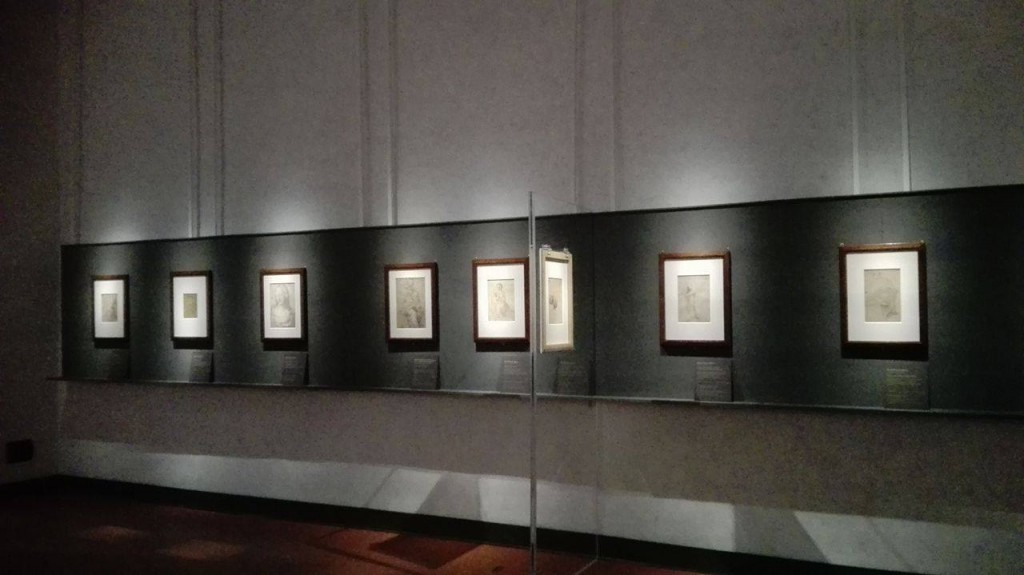
L’ultima sala, infine, è dedicata all’attività grafica dell’artista. I disegni risaltano disposti su uno sfondo grigio e di particolare interesse è il confronto presentato tra un disegno di Fra Bartolomeo e uno di Plautilla Nelli, entrambi raffiguranti una Madonna con Bambino, che dimostra la vicinanza della nostra artista al frate pittore.

L’intento della mostra sembra quello di far entrare il visitatore nel contesto culturale e sociale in cui Plautilla Nelli è vissuta, anche attraverso l’esposizione di testi antichi che si concentrano sulla figura di Girolamo Savonarola e di alcuni manufatti  provenienti dal convento di Prato che quindi mostrano il legame con la forte religiosità dell’artista. Complessivamente l’esposizione è ben curata: le opere  sono ben visibili, ben illuminate ed esposte a un’altezza tale che ne permette la visione ravvicinata e lo studio. A prescindere dalle considerazioni prettamente attributive che si potrebbero fare, si tratta di una mostra che nonostante le evidenti mancanze a cui abbiamo accennato sopra, ha sicuramente il merito di far conoscere al grande pubblico, troppo spesso attratto solo dai grandi nomi del panorama artistico fiorentino, un’artista pressoché dimenticata.


nelli1

Translation by Rachyl Grussing (Istituto Lorenzo de’Medici)

Plautilla Nelli: Art and Devotion to the Convent in the Footsteps of Savonarola is the exhibition curated by Fausta Navarro that takes place from 8 March and 4 June at the Uffizi Gallery. The inauguration date is no accident: it opens with a series of initiatives that the director of the museum, Eike Schmidt, proposes to renew each year, paying tribute to artists who, for a long time, have remained unknown or little considered. This is an occasion to find new, long forgotten, names in the artistic landscape.

It is immediately said that, however, to be the first monograph on the artists, the exhibition has the great fate of not exposing his own works: a great lack that risks giving the visitor an approximate knowledge of the artist.

The exhibition is composed of four rooms, on whose walls are explanatory panels in two languages, Italian and English, which are useful for framing the figure of Plautilla Nelli in its historical and cultural context. In the first room are exposed, on the same wall, the four portraits of Saint Catherine of Siena/ De Ricci, preserved between Florence, Siena, Perugia and Assisi, depicting the same sacred profile portraiture, to which a subsequent copy of another artist showing a certain fortune iconographic model created by Plautilla. This set-up is useful and accentuates the seriality of the works on which the attention is to be drawn: the saint is portrayed in the same position in all four works – a clear indication of a serial production based on the use of the same cardboard from which the design was then transferred to the support by means of a technique known as dusting. In this case, the use of the panels is functional to the visitor, to better understand this technical data. However, it is not known whether the layout of the four portraits on the wall was done following a chronological sequence, since the references are not included in the corresponding captions.

Helpful to the visitors greater knowledge of the artist is the vision of the short film projected in the space before the last room: in English, subtitled in Italian, the scholars explain the research that has been carried out on the artist and the various restorations, the last of which is concerned with the great Last Supper. In this room we find a panel showing the various works preserved in other museums in Florence and not present in the exhibition, hoping to stimulate the visitor to visitor them.

Finally, the last room is dedicated to the artist’s graphic activity. The drawings stand out on a gray background and is of particular interest to the comparison presented between a drawing by Fra Bartolomeo and one by Plautilla Nelli, both depicting a Madonna with Child, which shows the proximity of our artist to the painters brother.

The intent of the show seems to be to bring the visitor into the cultural and social context in which Plautilla Nelli is lived through the exposition of ancient texts that focus on the figure of Girolamo Savonarola and some artefacts from the convent of Prato. They show the strong religiousness of the artist. Overall the exhibition is well-groomed: the works are well visible, well lit and exposed to a height that allows close vision and study. Regardless of the purely attributive considerations that could be made, this is an exhibition that, despite its obvious shortcomings mentioned above, certainly deserves to be known to the general public, too often attracted only to the great names of the Florentine artistic landscape, to know an almost forgotten artist.

La fabbrica della bellezza: la manifattura Ginori e il suo popolo di statue

fabbrica1

Firenze, Museo Nazionale del Bargello
18 maggio – 1 ottobre 2017

Di Maria Eletta Benedetti (Università degli Studi di Firenze)

 
Il più importate museo di scultura rinascimentale, il Bargello, ospita in un lato del maestoso cortile un popolo traslucido e candido, raro e fragile: le porcellane Richard Ginori. Non si tratta di tazzine e piatti, come si è abituati istintivamente a pensare, ma statue settecentesche a grandezza naturale. La scelta di allestire la mostra al Bargello è vincente. Le opere di Doccia dialogano con il museo e si ricollegano con la storia fiorentina non solo perché vi sono conservate sculture del grande Rinascimento ma anche perché è a questa storia che dal 1737 Carlo Ginori attinge per la creazione della sua manifattura. Lo scopo della mostra è chiaro ed è sottolineato dalle parole degli stessi curatori Montanari e Zikos: tenere viva l’attenzione sul patrimonio del Museo a Sesto Fiorentino acquistato di recente dallo Stato permettendo che non rimanga chiuso e che non cada in disuso. Tutti questi aspetti sono palpabili e ben visibili nella mostra grazie ai pannelli esplicativi. Una mostra che può sembrare di primo acchito d’élite è invece per qualsiasi tipo visitatore grazie alla semplicità e alla cura dell’allestimento insieme a un’accurata scelta di opere. Il numero di sculture esposte è inconsueto poiché sono pochissime, solo diciassette, ma sono veramente splendide.

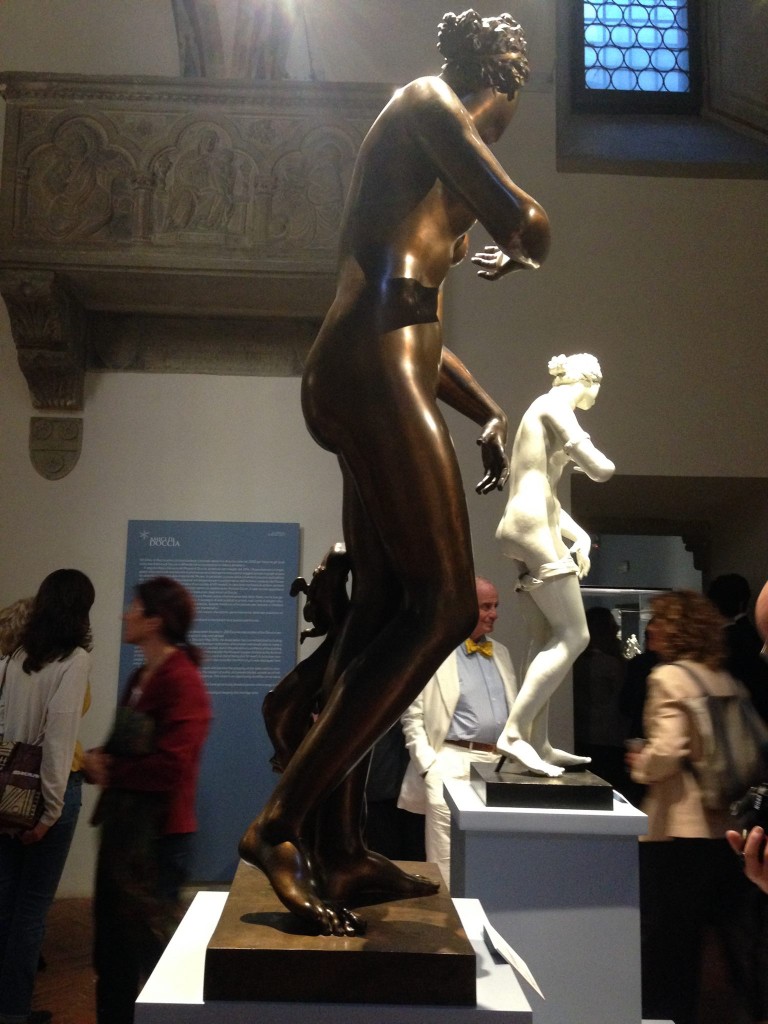
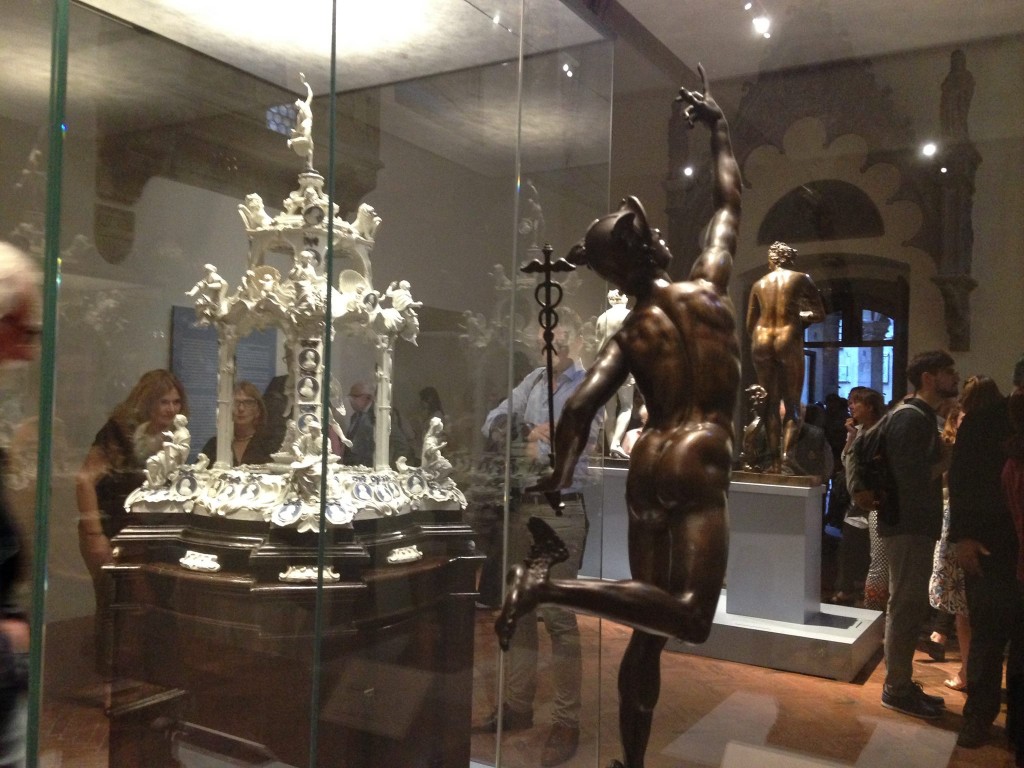
La mostra si articola in due sale attigue. Nella prima sala il visitatore è accolto da due statue in porcellana che hanno il loro prototipo nella Tribuna degli Uffizi: la Venere Medici, restituita anche in bronzo e il Mercurio. Al centro campeggia il magniloquente Tempietto Ginori, carico di dettagli e di storia del suo antico proprietario e di Firenze. Sul fondo, affiancati, il Mercurio tratto dal Giambologna e restituito in piccolo formato in bronzo e in cera. Nella seconda sala due sculture raffiguranti il gruppo della Pietà, in bronzo e in porcellana, quest’ultima proveniente dalla Galleria Corsini. Sul lato destro un’altra coppia di opere questa volta rappresentanti il soggetto biblico di Giuditta e Oleoferne e a salutare il visitatore in grande stile il monumentale Camino, collocato sul fondo della seconda sala. Particolare e buona è la scelta di mettere a confronto le opere con il proprio “doppio”, perché entrano in dialogo le stesse forme realizzate però con materiali diversi che restituiscono una sensazione visiva e tattile differente e quindi anche la totalità della manifattura.

Il breve percorso è ben pensato tenendo a mente in primis la fisicità delle opere: sono disposte in modo tale che il visitatore riesca a girare tutto intorno alle statue, osservandole da ogni angolazione con agio. Le basi su cui sono collocate le sculture sono ad un’altezza giusta e sono di color azzurro carta da zucchero. Questa tonalità è un’altra scelta positiva perché si accompagna benissimo con il materiale delle sculture e predispone ad un clima etereo, come fuori dal tempo. Questo colore è ripreso in tutto il percorso anche nel catalogo e nei pannelli esplicativi. Le spiegazioni nei pannelli toccano vari aspetti, dalla storia alla tecnica, sono semplici ma anche molto dettagliate. Alcune opere necessitano della protezione della teca, che in ogni caso non infierisce in modo particolarmente negativo nella visione delle opere, dato che le luci sono ben sistemate e non c’è un riflesso eccessivo. L’unica pecca è la segnalazione non precisa dell’appendice della mostra al secondo piano del Bargello. Il percorso espositivo prosegue nella sezione delle ceramiche dove, in occasione della mostra, sono conservate alcune piccole perle tra cui un affascinante vaso di Giò Ponti.

Per concludere si sottolinea che il prezzo del biglietto è rimasto quello consueto del museo e non è aumentato a causa della mostra. Un aspetto venale altresì positivo che sollecita a visitare questo piccolo tesoro temporaneo.


The Beauty Factory: The Manufacture of Ginori and his statues of people

fabbrica2

Translation by Rachyl Grussing (Istituto Lorenzo de’ Medici)


The most important museum of Renaissance culture, the Bargello, houses on one side of the majestic courtyard a translucent and candid, rare and fragile population: the porcelain of Richard Ginori. It is not about cups or plates, as they instinctively thought, but the 18th century full sized statues. The choice of staging the show at the Bargello is winning. The works of Doccia converse with the museum and reconnect with the history of Florence, not only because of the great Renaissance but also in this history that since 1737 Carlo Ginori draws from the creation of its manufacturing. The purpose of the exhibition is clear and is underlined by the words of the curators Montanari and Zikos: to keep alive the focus on the patrimony recently purchased by the sixth Florentine Museum from the State, allowing it to remain open and not fall into disuse. All these aspects are palpable and well visible in the show thanks to the explanatory panels. A show that may resemble, at first glance, the elite and instead is for any type of visitor thanks to the simplicity and the care of the setup together with a careful selection of works. A number of exposed sculptures is unusual because they are very few, only seventeen, but they are very splendid.

The exhibition is divided into two adjacent rooms. In the first room visitors is welcomed by two statues in porcelain that have their prototype in the Uffizi Tribuna: the Venus Medici, returned in bronze and Mercury. In the center stands the magnificent Tempietto Ginori, loaded with details and history of his old owner and of Florence. On the bottom, side by side, the Mercury is taken from Giambologna and returned in small size in bronze and wax. In the second room there are two sculptures depicting a group of the PIeta, in bronze and porcelain, the latter from the Corsini Gallery. On the right side another pair of works this time representing the biblical story of Judith and Holofernes, and greet the visitor in grand style in the monumental Camino, located at the bottom of the second room. Particular and good is the choice to compare the works with their own double, because they come into dialogue with the same forms made with different materials that give a different visual and tactile feel and also the totality of the manufacturing.

The short path is well thought out, bearing in mind the first place the physicality of the works: they are arranged in such a way that the visitor can spin around the statues, observing them from every angle with ease. The bases on which the sculptures are placed are at the right height and are blue. This tone is a positive choice because it compliments the material of the sculptures and predisposes to an ethereal climate, like out of time. This color is represented throughout the exhibition course, also in the catalogue and explanatory panels. The explanations in the panels touch on various aspects, from history to technique, and are simple but very detailed. Some works require the protection of the cabinets, which is any case does not stain the vision of the works, as the lights are well arranged and there is no excessive reflection. The only flaw is the inaccurate signaling of the appendix of the exhibition on the second floor of the Bargello. The exhibition continues in the section of ceramics where some small pearls, including a fascinating jar of Gio Ponti, are preserved for the exhibition.

Finally, the ticket price remained the museums usual value, and did not increase because of the exhibition. Another aspect that urges a visit to this temporary treasure.