FIRENZE CAPITALE 1865-2015. I doni e le collezioni del Re Firenze, Galleria d’arte moderna di Palazzo Pitti – Appartamenti della Duchessa d’Aosta 19 novembre 2015 – 3 aprile 2016

I Doni del Re

Di Maria Maddalena Grossi (Università degli studi di Firenze)

Il 2015 è stato in qualche modo l’anno di Firenze. Ovvero l’anno in cui hanno ricorso i 150 anni da quando Firenze fu proclamata capitale d’Italia dopo Torino (1864-1871). Per l’occasione Palazzo Pitti ha dato una “spolverata” agli appartamenti reali della Palazzina della Meridiana e della Duchessa D’Aosta riallestendo i doni che il Re Vittorio Emanuele II fece alla città di Firenze nel breve soggiorno in città. La mostra si estende in delle sale che normalmente sono chiuse al pubblico e che per l’evento hanno piacevolmente subito un operazione di restauro di alcuni oggetti (come le sete da parati, le cornici e alcuni mobili) e di adeguamento impiantistico.

Il Re Vittorio Emanuele II arrivò a Firenze il 3 febbraio 1865, ma non era la prima volta perché già in occasione della prima Esposizione della Nazione italiana del 1861 il Re si era diretto a Firenze mosso dall’interesse verso le arti decorative e dalle novità destinate alla decorazione degli ambienti. All’interno delle sale è infatti possibile ammirare molti degli oggetti che il Re acquisto all’Esposizione e lasciò poi alla città.

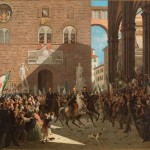
All’ingresso della mostra ci accoglie una statua in marmo di Giuseppe Lazzerini che personifica la Flora che offre a Vittorio Emanuele una ghirlanda di fiori da parte della città, di cui si espone una pianta topografica del 1865. Nella prima sala incontriamo una serie di opere con l’immagine del Re e della sua sposa, Maria Adelaide, che culminano nel dipinto di Enrico Fanfani con l’Arrivo di Re Vittorio a Firenze in Piazza della Signoria. Nella sala del Fiorino, dove prosegue la mostra, troviamo monumentali tele commissionate dal sovrano ai giovani talenti dell’Accademia (Pietro Saltini, Giuseppe Ciaranfi, Francesco Vinea, Egisto Sarri, Raffaello Sorbi e Federico Andreotti).

Partendo quindi da queste importanti commissioni che rimandano al grande salon di memoria francese, la mostra si estende e prende corpo nelle sale della Palazzina della Meridiana, oggi sede del Costume, dove si segnalano tutte quelle opere d’arte, manufatti e arredi che il Re acquistò nel corso delle sue visite come acquirente alla Prima Esposizione Nazionale del 1861.

Tali opere non hanno mai lasciato la loro postazione, l’allestimento infatti è quello originale che è testimone del percorso scenografico realizzato attraverso le scelte di Vittorio Emanuele. Tra gli arredi si segnalano anche i doni che il Re fece alle istituzioni museali della città, come reperti scientifici degli organi umani, un uccello imbalsamato e altri arredi in ferro battuto che in genere si trovavano a villa La Petraia.

Il percorso prosegue dando risalto alle figure femminili di casa Savoia: negli appartamenti della Duchessa D’Aosta sono esposte le presenze scolpite di Margherita di Savoia e delle figlie del Re; sono ambienti declinati al femminile e perciò arredati con oggetti d’uso, ventagli, vestaglie, tazze da colazione su mobili intarsiati e vecchie fotografie.

Una mostra che permette di far rivivere quel periodo storico breve, si tratta di sei anni, ma eccezionale per la città di Firenze che divenne ancora una volta centro della Nazione, quindi unica per il tema trattato, ma anche per l’opportunità di ammirare degli ambienti della Reggia medicea normalmente non visitabili.

Translation by Bethany Hucks (Istituto Lorenzo de’ Medici)

2015 was in many ways the year of Florence. This year was the 150th anniversary of when Florence was proclaimed the capital of Italy, after Turin (1864-1871). For the occasion, the Pitti Palace has given a ‘dusting’ to the royal apartments of the Meridiana Palace and the Duchess d’Aosta, staging the gifts that King Victor Emanuel II made to the city of Florence during his brief sojourn in the city. The exhibition takes place in some rooms that are normally closed to the public and which, for the event, have been lucky enough to have some restoration done on some of their objects (such as the silk wallpaper, the cornices, and some furniture) and some engineering upgrades.

King Victor Emanuel II arrived in Florence February 3, 1865 but it was not his first trip, because for the first Italian National Exposition in 1861 the king had visited Florence moved by his interest in the decorative arts and the novelty of seeing the way the rooms were decorated. In fact, inside the rooms visitors can admire many of the objects that the King acquired at the Exposition and left in the city.

At the entrance to the exhibition, viewers are greeted by a marble statue by Giuseppe Lazzerini that personifies a florist that offers Victor Emmanuel a garland of flowers from the city, which forms a topographical map from 1865. In the first room we encounter a series of works with images of the King of his wife, Maria Adelaide, which culminate in Enrico Fanfani’s panting The Arrival of King Victor in Florence at Piazza della Signoria. Following the visitor route to the Fiorino room, we find monumental paintings by young talent from the Academy of Art commissioned by the King (Peter Saltini, Giuseppe Ciaranfi, Francis Vineo, Egisto Sarri, Rafael Sorbi, and Frederick Andreotti).

Leaving hence these important commissioned works that are located in the great hall dedicated to the memory of the French, the exhibition continues and takes shape in the rooms of the Meridiana Palace. Today this is the seat of the Costume Gallery, where all of the works of art – handicrafts and furniture – that the King acquired during his visit as a buyer during the First National Exhibition in 186 are located.

These works have never been moved from their original location; the furniture arrangement is in fact still the original placement that is a testimony to the scenic route arranged through the choices of Victor Emanuel. Amongst the furnishings are also the gifts that the King made to the museum institutions of the city, including some human organs, a mummified bird, and objects in wrought iron that can be found at Villa La Petraia.

The visitor path continues, arriving at a display of feminine figures from the House of Savoy, in the apartments of the Duchess D’Aosta where works sculpted by Margaret of Savoy and the children of the King. They are environments intended for use by women, therefore they are furnished with objects intended for everyday use such as fans, dressing gowns, and breakfast teacups amongst inlaid furniture and old photographs.
 

La Specola

La Specola

By Bethany Hucks (Istituto Lorenzo De’ Medici)

La Specola, also known as the Museum of Zoology and Natural History, is located Oltrarno just steps from Palazzo Pitti, and is one of the most unusual museums Florence has to offer. Originally designed as an observatory (from whence its name derives), the building now also contains an enormous collection of gemstones, preserved animals, and waxwork models. The visitor path begins on the top floor, where a video introduction describes the museum’s overall history and collection.

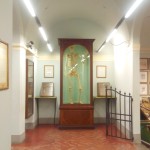
The majority of the exhibition spaces within the museum have not changed since they were first arranged by scientists in the 1700s and 1800s. Almost all of the wooden display cabinets and many of the object labels are original. The objects on display were intended primarily for use as teaching tools for students of science and medicine.

During the 18th and 19th centuries, wax reproductions of the human body were created for medical students to study. These anatomical models are extremely detailed, and there are large rooms full of them on view within La Specola. More than 1400 sculptures stretch from floor to ceiling, and they include cross-sections as well as human bodies without skin so that the internal organs, arteries, and veins can be easily observed. Some are reproductions of actual human remains, such as the cast of the skeleton belonging to the so-called ‘Oltrarno Giant’. In fact, these models are so accurate that many visitors become disturbed. They are not for the squeamish.

While the introductory video provided a nice overview of the collection, it lacked details about individual items on display. The objects contained in the anatomical and zoological portions of the museum also, for the most part, lack labels. The few labels that are present tend simply to state their scientific Latin names. This dearth of information is especially problematic as the visitor enters the waxwork section. Without any context for why these objects were created, the rooms can come across as ghoulish in nature rather than educational. Guided tours that provide this information are generally only offered in Italian, and their website states that tours are only available of the waxworks portion of the museum.

During the 1970s, the museum was retrofitted with new lighting fixtures. Unfortunately these fixtures were designed for government office buildings, and the harsh neon lights are poorly equipped to adequately light the display cabinets. The large metal fixtures are a jarring addition to such a classically designed space.

Given the issues of display, labelling, and lighting, La Specola displays feel more like a museum exhibition on what a museum used to be like, rather than a modern zoological and anatomical museum. With that in mind, visitors can have a unique insight into the thoughts and practices of early science museum curators. Visitors who expect a modern museum of natural history, however, will be disappointed.

La Specola

Via Romana 17, Firenze 50125

Telephone: 055 2756444

Website: http://www.msn.unifi.it/en/visita-2/la-specola-torrino-salone-degli-scheletri/

If booking for a group, ask for a reservation that includes a trip up the observatory tower, which has a spectacular view of the city.

Traduzione di Maria Maddalena Grossi (Università degli Studi di Firenze)

La Specola, conosciuta anche come il Museo di Zoologia e Storia Naturale, si trova in Oltrarno appena pochi passi da Palazzo Pitti, ed è uno dei musei più singolari che offre Firenze. Originariamente progettato come un osservatorio (da cui deriva questo nome) l’edificio adesso contiene anche una enorme collezione di pietre preziose e modelli in cera. Il visitatore inizia il percorso dal piano superiore, dove si trova un video introduttivo che descrive complessivamente la storia del museo e della collezione.

La maggior parte degli spazi espositivi dentro il museo non sono cambiati dal loro primo arrangiamento fatto dagli scienziati nei secoli 1700 e 1800. Quasi tutti gli armadietti espositivi di legno e alcune delle etichette degli oggetti sono originali. Gli oggetti espositivi erano intesi originariamente come strumenti di istruzione per gli studenti di scienze e medicina.

Durante i secoli XVIII e XIX ,le riproduzioni in cera del corpo umano furono creati per lo studio degli studenti di medicina. Questi modelli anatomici sono estremamente dettagliati, e ve ne sono grandi stanze piene in mostra dentro La Specola. Più di 1400 sculture tratte dal pavimento al soffitto, che includono sezioni trasversali nonché corpi umani senza la pelle cosiché gli organi interni, le arterie e le vene possono essere facilmente osservati. Alcuni sono riproduzioni di attuali resti umani, quali la forma dello scheletro appartenente al cosiddetto “Gigante d’Oltrarno”. Infatti questi resti sono talmente accurati che alcuni visitatori rimangono disturbati. Questi non sono adatti per gli schizzinosi.

Mentre un video introduttivo fornisce un accurata panoramica della collezione, scarseggia di dettagli su elementi individuali della mostra. Gli oggetti contenuti nella parte anatomica e zoologica del museo, per la maggior parte, mancano di etichette. Sono presenti alcune didascalie che tendono semplicemente ad affermare il loro nome scientifico latino. Questa scarsità di informazione è soprattutto problematica appena il visitatore entra nella sezione dei lavori in cera. Senza alcun contesto sul perché questi oggetti sono stati creati, le stanze possono giungere attraverso una natura macabra piuttosto che come educative. I tour guidati che provvedono a queste informazioni sono generalmente offerte solo in italiano, e il loro sito afferma che il tour del museo è disponibile solo per la sezione delle cere.

Durante gli anni ’70, il museo è stato modernizzato con nuovi infissi illuminativi. Sfortunatamente questi infissi furono progettati per gli edifici degli uffici governativi, le luci al neon dure sono scarsamente attrezzate per illuminare adeguatamente le vetrine. Gli infissi larghi metallici sono stonati in aggiunta a tale spazio dal design classico.  

Visti i problemi espositivi, le didascalie, le illuminazioni, La Specola si sente più come un esposizione museale sul quale è usata come museo, piuttosto che un museo moderno di zoologia e anatomia. Con quello in mente, i visitatori possono avere un unica comprensione dei pensieri e delle pratiche della scienza dei primi curatori museali. I visitatori che si aspettano un museo moderno di storia naturale rimarranno delusi.