The Illusions of Sciltian: Pictorial Depictions Testing Modernity

Translation by Cole Fiala (Lorenzo de’ Medici)


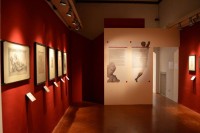
The Gregorio Sciltian monographic exhibition at the Villa Bardini encompasses the artist’s entire oeuvre with more than 100 works.

Born in Russia, Sciltian moved to Italy in the 1920s where he advocated for traditional figurative art during an era in which the Avant Garde, Cubism, and abstraction monopolized the artistic world. To facilitate understanding, the public can benefit from a free docent available on each hour, for a tour of the same duration. Alternatively, the informative material found in each room, however offered only in Italian, is exhaustive.

The exhibition develops around three principle themes that characterize Sciltian’s paintings: illusion, often understood as a deception, which inspires the title of the exhibition, combined with the adherence to the traditional language and themes of painting, particularly from the seventeenth century, and finally, the critical rejection of avant-garde art. Curator Stefano Sbarbaro incorporates a thematic organization in seven distinct sections to better illustrate these elements.

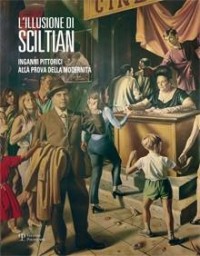
A large painting, The Eternal Illusion, greets visitors in the first room on the first floor while introducing Sciltian’s artistic manner. Essentially, the work serves to represent the assortment of themes that characterize his philosophy. Beyond illusion, Sciltian favors iconography, like the Adoration of the Magi, which reveals a tendency to follow tradition.

Now on the second floor, the next room is consists of still-lives, a subject favored by artists during the 17th century. Perfectly attune to the theme of deception, this playful extent of trickery further proves artistic virtuosity. For example, Table of the Art Critic, 1940, which is dedicated to the Italian academic Roberto Longhi, emphasizes a play on paintings within a painting. The reflective lens thereby evokes a complex relationship between reality and fiction. This occurs again in the subsequent section, which is entirely dedicated to mirrored reflections, thus allowing the visitor to mentally project him or herself into the artwork.

Sciltian’s reputation for portraiture features predominantly in the following room. Famous commissions throughout his career include the renowned collector Galeazzo Ciano. Displayed adjacently, Antonio Donghi’sWomen on the Stairs provides evidence that the Russian master was on par with other major portrait artists of the 1920s. This claim also extends to the realm of theatrical arts with two portraits of the De Filippo brothers.

The central part of the exhibition surrounds a criticism of contemporary art that, according to Sciltian, abandons technical drawing and therefore defies tradition. In light of this, one of Sciltian’s most famous works, Osteria Bacco, 1936, appropriates the setting from Caravaggio’s Calling of St. Matthew while representing modernity through the realism that characterizes his art.

At the end of the exhibition it becomes clear that Sciltian’s art and philosophy reflect the epitaph inscribed on his tomb: “The only true and supreme aim of art has been, and will always be, to achieve the illusion of reality.

L’illusione di Sciltian. Inganni pittorici alla prova della modernità

By Carolina Caverni (University of Florence)

Villa Bardini mette in mostra una monografica su Sciltian con più di un centinaio di opere che coprono tutta la carriera dell’artista.

Nato in Russia, si trasferì in Italia negli anni ’20 e fu un convinto sostenitore dell’arte figurativa tradizionale in anni in cui le avanguardie, il cubismo e l’astrattismo monopolizzavano il panorama artistico.

Il pubblico può usufruire ogni ora della guida che è gratuita e che accompagna per un visita che dura circa un ora. Il materiale informativo che si trova in ogni sala è comunque molto esaustivo, sebbene solo in italiano.

Tutta l’esposizione si sviluppa intorno a tre temi principali che caratterizzano la pittura di Sciltian; l’illusione, intesa spesso come inganno a cui si ispira il titolo della mostra, l’aderenza ad un linguaggio e a temi provenienti dalla pittura tradizionale, in particolare quella seicentesca, e il rifiuto nonché critica dell’arte delle avanguardie. Per meglio evidenziare questi elementi il criterio espositivo scelto dal curatore, Stefano Sbarbaro, è tematico e dunque le opere sono raccolte in sette sezioni distinte.

La grande pittura L’eterna illusione accoglie il visitatore nella prima sala al primo piano e rappresenta un po’ il manifesto dell’arte di Sciltian. L’opera introduce ai temi che caratterizzano la sua poetica, oltre all’illusione, l’iconografia, simile ad un’ adorazione dei magi, evidenzia quanto sia importante per l’artista il legame con la tradizione.

La sala successiva, una volta saliti al secondo piano, è dedicata alle nature morte, soggetto tipico del XVII secolo, che si adatta perfettamente al tema dell’inganno, che è continua finzione, elemento giocoso e prova di virtuosismo. In Tavolo del Critico d’arte, del 1940 dedicata a Roberto Longhi, il gioco dei quadri dentro al quadro e delle lenti che riflettono creano un complesso rapporto tra realtà e finzione.

La sessione successiva è tutta dedicata ai riflessi allo specchio, ed è lo stesso visitatore che può riflettersi in uno specchio al muro.

Sciltian, durante la sua carriera, ebbe molto successo come ritrattista dunque una sezione è dedicata ai suoi ritratti di personaggi anche molto famosi come ad esempio Galeazzo Ciano, suo grande apprezzatore e collezionista. Nella stessa stanza è esposto Donne per le scale di Donghi che mette in evidenza come l’artista russo fosse in linea con la ritrattistica monumentale degli anni 20.

La finzione passa anche attraverso il tema del teatro espresso nei due ritratti dei fratelli De Filippo.

La parte centrale della mostra è dedicata alla critica dell’artista verso le correnti coeve che hanno, secondo Sciltian, perso l’uso del disegno e dunque alla difesa della tradizione; Bacco in Osteria del 1936 è forse una delle sue opere più famose. Qui riprende l’impostazione di La chiamata di San Matteo del Caravaggio e rappresenta la modernità con il realismo che caratterizza la sua arte.

Alla fine del percorso la riflessione sull’arte e sulla poetica “Sciltiana” corrisponde con ciò che egli ha lasciato scritto sulla sua tomba: “L’unico vero e supremo scopo dell’arte della pittura è stato e sarà sempre quello di ottenere l’illusione della realtà”
The Light of Solitude. Gianfranco Ferroni at the Uffizi. Room of Reali Poste.

By Mackenzie Constantinou (Lorenzo de’ Medici)


Since the 5th of May the room of the Reali Poste has had free admission and it exhibits the works of Gianfranco Ferroni, who is a Liovornese artist that naturalized to Milanese.

The visitor is greeted by a basic layout, which is characterized by dark walls and no explanatory panels.  The only informational material is limited to two panels, which are in both Italian and English.  One of the texts describes the general sense of the exhibition, while the other provides a short biography on the artist.

The works are arranged in chronological order, which illustrates the change in the style of Ferroni’s art.  At the center of the exhibition is a large painting entitled Without Resurrection, which is both conceptual and physical.   This was recently donated to the Uffizi.  The work was displayed at the Venice Biennale in 1968.  The central themes of the artist, such as the communist party, are depicted.  The artist is attentive to the social and current affairs and the issues.  These events are blended into the setting of this work. The exhibition highlights the distinction between the language of the artist before and after the sixties.

The works that occupy the right side of the display are mainly nightlife.  The interior depicted is of unrecognizable piles of objects.  Flashes of light fall on these objects, while the representation of the city is a maze of signs in motion.  In seventies Ferroni transitioned to a more formal painterly style, where spaces became essential to the work as instances to diffuse light.  Abandoing the theme of social issues the artist studies a topic more intimate, poetics and himself.

In this second phase, the spaces are empty expressing a sense of abandonment and the light creates a suspended atmosphere.

Ferroni’s art that has always had clear references to the great masters of the past, especially Vermeer and Caravaggio, the latter in particular.  The work, Homage to Caravaggio was dedicated to the master and was clearly inspired by The Calling of Saint Matthew.

Ferroni’s relationship with light culminates in his still life, in which the rapport with the form is expressed in a light painting, almost Morandian, made of simple objects, which often belong to the craft of the artist.


La luce della solitudine. Gianfranco Ferroni agli Uffizi. Sala delle Reali Poste

Nello spazio delle Reali Poste è in corso dal 5 Maggio, con ingresso gratuito, la personale dell’artista livornese, naturalizzato milanese, Gianfranco Ferroni curata da Vincenzo Farinella.

Il visitatore è accolto da un allestimento molto essenziale caratterizzato da pareti scure e privo di pannelli esplicativi. Gli unici materiali informativi sono limitati a due pannelli, sia in inglese che in italiano, uno con il senso generale della mostra e l’altro con una breve biografia dell’artista.

Le opere, disposte secondo un criterio cronologico, documentano il cambiamento stilistico nell’arte di Ferroni. Il centro della mostra, sia concettuale che fisico, è la grande tela intitolata Senza resurrezione, recentemente donata agli Uffizi. In quest’opera, esposta alla Biennale di Venezia del ’68, si sommano le tematiche centrali elaborate dall’artista fino a quel momento; iscritto al partito comunista è molto attento al sociale e all’attualità, tematiche che fonde con un impostazione iconografica ispirata alle grandi pale a soggetto religioso della tradizione. L’ allestimento evidenzia la distinzione tra il linguaggio dell’artista prima degli anni sessanta e ciò che accade dopo.

Le opere che occupano la parte destra della mostra sono soprattutto notturni, gli interni sono ammassi di oggetti irriconoscibili sui quali cadono lampi di luce, così la rappresentazione della città è un groviglio di segni in movimento. Dagli anni settanta Ferroni approda ad una pittura più formale, in cui gli spazi diventano contenitori scarni, essenziali, irrorati da una luce diffusa. Abbandonate le tematiche sociali, vengono espressi temi più intimisti,i protagonisti di questa nuova poetica sono lo studio e l’artista stesso. In questa seconda fase gli spazi si svuotano esprimendo un senso di abbandono e la luce crea atmosfere sospese.

Lo studio diviene il tempio in cui si compie l’arte, un arte che ha sempre chiari i riferimenti ai grandi maestri del passato, soprattutto Vermeer e Caravaggio, a quest’ultimo in particolare dedica Omaggio a Caravaggio chiaramente ispirato a La vocazione di San Matteo.

Il rapporto con la luce, costante nell’arte di Ferroni trova il suo culmine nelle nature morte, in cui il rapporto con la forma si esplica in una pittura chiara, quasi Morandiana, fatta di oggetti semplici, spesso appartenenti al mestiere dell’artista.


The Palace and the City

Florence, Salvatore Ferragamo Museum: “Salvatore Ferragamo, un Palazzo e la Città” Hall #00 ©2015 G.de Micheli per Salvatore Ferragamo
Florence, Salvatore Ferragamo Museum: “Salvatore Ferragamo, un Palazzo e la Città”
Hall #00
©2015 G.de Micheli per Salvatore Ferragamo


by Mackenzie Constantinou (Lorenzo de’ Medici)

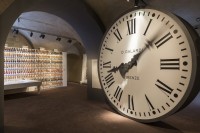
The current temporary exhibition at Museo Ferragamo, The Palace and the City, displays the history of the palace throughout time.  The theme that is evident throughout the exhibition is turning back time, which is conveyed by a floor to ceiling clock that is spinning counterclockwise.  This object is located right next to the ticket counter, so it is the first and last work the public sees when entering and exiting the exhibition.  Throughout the visitor’s journey the public will explore the history of the palace chronologically.

The visitor is presented with a quote from Salvatore Ferragamo detailing his journey back to Florence, which grounds the exhibition’s connection with the city and the past.  The first room is the only part of the exhibition which is dedicated to Salvatore Ferragamo and the company’s works.  The Museo Ferragamo archive holds numerous sketchbooks filled with drawings of Ferragamo’s shoes.  A portion of these sketches are digitalized and placed on tablets on the wall so visitors can zoom, flip, and pan their way through Ferragamo’s creations.  On this same wall there are past Italian advertisements for his shoes.  The perpendicular wall displays dozens of shoes in various colors and styles, which are curated chronologically with the years listed above that range from 1955-1968.  This display presents these shoes as a work of art and as a historic artifact that are necessary to preserve and house within a museum.  These shoes no longer serve their utilitarian purpose, rather they are marveled for their aesthetic quality.  This display symbolizes the opinion of this institution, which is that Ferragamo shoes are much more than a commodity but rather they are something to be revered, similar to the other artifacts and works or art that are displayed in the subsequent rooms.  Can these shoes be held to the same level of importance as these other works?  The Museo Ferragamo believes so.

The subsequent rooms display the history of the Spini family and then the seventeenth century renovations to the palace. The next room is dedicated to Dante and Beatrice.  Henry Holiday depicts Florence in his paintingDante and Beatrice c. 1880, which is located on the Santa Trinta Bridge at the corner of Palazzo Spini Feroni.  Ferragamo decided to move his company to this specific palazzo because of this painting.  The room incorporates digital reproductions of the preliminary sketches and the final completed painting.  The images are projected on a canvas with a large golden frame, which is set on an easel.  Next to which thereis a painter’s stool with brushes, in order to create an illusion that these sketches are presently being created and to further transport the public back in time.

The next room displays the numerous offices, clubs and cultural institutions as well as the Hôtel d’Europe, which were housed at different moments in the nineteenth century.  Continuing, the visitor reaches the video instillation24h which shows a time-lapse of internal and external life present today within the palace.  It is strange that there are no chairs to sit inside of this particular room, which creates an environment where the public does not want to linger.  Therefore the visitors are not watching the film in its entirety, rather only a glimpse then continuing on.

The following room depicts the Gabinetto Vieusseux which was housed at the Palazzo Spini Feroni (1873-1898).  This exhibit only displays a few manuscripts, but it does include several dozen digitized books which the public can peruse.  When entering the room, the visitors are immursed into the environment of the library as there is a recording, in English, of a man reading letters which are presumably from the Gabinetto Vieusseux.

The last room is dedicated to the Luigi Bellini Gallery, which was briefly housed in the palazzo.  The room is filled with modern art, though it is not indicated that every one of these works was part of the Luigi Bellini Gallery, or if they are simply similar to the style of art that would have been present.

The exhibit does a wonderful job at explain its theme and mission to the public by including detailed wall text in each room and panels for every object that are in both Italian and English.  Though the reasons for each thematic choice within the rooms is clear, because of that topic’s influence on the palazzo, the provenance of the objects presented in the rooms is not clear.  It is left to the visitors to presume that the works displayed were previously displayed in the palazzo, as these objects could simply be aesthetically similar.  Furthermore, the museum’s lack of benches throughout the entire exhibition makes it difficult to linger and appreciate the displays, which is an exceeding problem when attempting to view the film installation.  For more information visit the website: http://www.ferragamo.com/museo/it/ita/mostre/


Un palazzo e la città


L’attuale mostra temporanea presso il Museo Ferragamo, Il Palazzo e la città, mette in scena la storia del palazzo nel tempo.

Il tema, evidente lungo tutta la mostra, è quello di tornare indietro nel tempo e viene suggerito da un grande orologio a parete che gira in senso antiorario. Questo si trova proprio accanto alla biglietteria, quindi è sia il primo che l’ultimo elemento che il pubblico vede entrando ed uscendo dalla mostra.

Durante tutto il percorso espositivo il visitatore esplora la storia del palazzo seguendo un criterio cronologico. Il pubblico è accolto da una citazione di Salvatore Ferragamo che racconta il suo viaggio di ritorno a Firenze, che fa da fondo al legame della mostra con la città ed il passato.

La prima stanza è l’unica parte della mostra dedicata a Salvatore Ferragamo e alle creazioni dell’azienda. L’archivio del Museo Ferragamo conserva numerosi quaderni pieni di disegni di scarpe di Ferragamo. Una parte di questi schizzi sono digitalizzati e collocati su schermi a parete così che i visitatori possano ingrandire, capovolgere, e creare il loro percorso attraverso le creazioni di Ferragamo.

Su questo stesso muro ci sono vecchie pubblicità italiane di le scarpe. La parete mostra decine di scarpe, in vari colori e stili, che sono disposte cronologicamente seguendo gli anni che vanno dal 1955 al 1968. Questa disposizione presenta le scarpe come un’opera d’arte e come un manufatto storico da preservare all’interno di un museo. Le calzature non servono più per il loro scopo utilitario ma anzi stupiscono per la loro qualità estetica. Tale disposizione simboleggia l’idea dell’ istituzione, cioè che le creazioni di Ferragamo siano molto più di una merce, ma piuttosto qualcosa da venerare come gli altri manufatti e opere d’arte o che sono esposte nelle sale successive.

Queste scarpe possono essere considerate allo stesso livello delle altre opere esposte? Il Museo Ferragamo crede di sì.

Le sale successive mostrano la storia della famiglia Spini e poi i lavori di ristrutturazione del Seicento nel palazzo.

La stanza seguente è dedicata a Dante e Beatrice. Henry Holiday ritrae Firenze nella sua pittura Dante e Beatrice (1880 ca), dipinto ambientato sul ponte di Santa Trinta, all’angolo di Palazzo Spini Feroni. Ferragamo decise di spostare la sua azienda proprio in questo palazzo ispirato da quest’opera. Nella sala sono esposte riproduzioni digitali dei disegni preliminari e il dipinto finale. Le immagini sono proiettate su una tela con una grande cornice dorata che si trova su un cavalletto, a fianco c’è uno sgabello da pittore con i pennelli, in modo da creare l’illusione che questi schizzi siano attualmente in fase di creazione così da trasportare ulteriormente il pubblico indietro nel tempo.

La stanza successiva mostra i numerosi uffici, circoli e istituzioni culturali, nonché il Hôtel d’Europe, che il palazzo ospitò in momenti diversi nel XIX secolo.

Proseguendo, il visitatore raggiunge la video instillazione 24h che mostra una time-lap di vita presente all’interno e all’esterno del palazzo. É strano che non ci siano sedute all’interno di questa particolare stanza, poiché si crea un ambiente in cui il pubblico non vuole soffermarsi. Pertanto i visitatori non stanno a guardare il film nella sua interezza, ma ne prendono piuttosto un assaggio per poi proseguire.

La seguente stanza riproduce il Gabinetto Vieusseux che venne ospitato a Palazzo Spini Feroni (1873-1898). In questo ambiente sono esposti solo alcuni manoscritti, ma sono esposte anche diverse decine di libri digitalizzati che il pubblico può sfogliare.

Entrando nella stanza, i visitatori sono immersi nell’ambiente della biblioteca in quanto vi è una registrazione, in inglese, di un uomo che legge le lettere che sono presumibilmente dal Gabinetto Vieusseux.

L’ultima sala è dedicata alla Galleria Luigi Bellini, che è stata per breve tempo ospitata nel palazzo. La stanza è piena di opere d’arte moderna ma non è chiaro se ognuna di queste sia appartenuta alla Galleria Luigi Bellini, o sia semplicemente simile allo stile di quelle che ci furono.

La mostra fa un ottimo lavoro nel spiegare il suo tema e la missione al pubblico, inserendo dettagliati testi al muro in ogni sala e didascalie per ogni oggetto esposto sia in italiano che in inglese. Anche se le ragioni di ogni scelta tematica all’interno delle sale sono chiare, a causa dell’influenza di quel tema sul palazzo, la provenienza degli oggetti presentati nelle stanze non è chiara. I visitatori restano con il dubbio che gli oggetti esposti siano stati davvero presenti nel palazzo oppure siano semplicemente esteticamente simili. Inoltre, la mancanza di sedute rende difficile soffermarsi e apprezzare le opere, soprattutto quando si tenta di guardare l’installazione video.

Per maggiori informazioni visitare il sito: http://www.ferragamo.com/museo/it/ita/mostre/

Mortal Veil. Michelangelo and Depictions of the Human Body.

By Mackenzie Constantinou (Lorenzo de’ Medici)


The exhibition Mortal Veil. Michelangelo and Depictions of the Human Body explores different components of Michelangelo’s studies of the human form.  The students in the Master’s in Museum Studies program at the Lorenzo de’ Medici Institute and Marist College had the opportunity to organize and curate this temporary exhibition at Museo della Casa Buonarroti.  ‘Mortal Veil’ was selected for the title of this exhibition, because the major interest of Michelangelo was the life of the soul, as expressed in the beautiful structure and movement of the human body, which he referred to as the mortal veil of divine intentions.  Due to the artist’s great interest in depicting the complex human form, this theme was conveyed throughout the entire exhibition.  The exhibition focuses on three motifs evident in Michelangelo’s figure studies: anatomy, movement, and classical antiquity.

Although Michelangelo considered the flesh simply a shell for the divine, he still frequently studied human anatomy.  While complete anatomical depiction in a medical sense was not Michelangelo’s intent when studying the human form, he continuously devoted himself to the biological study of the body.  Michelangelo’s depictions demonstrate his understanding of how muscles move together.  His studies reveal that the body is more than bones, muscles, veins, and nerves and that its representation is capable of creating a wide range of emotions and actions.  Michelangelo constantly drew figures repeatedly in different poses, or depicted bodies in contorted or realistically uncomfortable positions. These studies helped the artist understand the complicated series of movements that the body can perform.  These sketches and one sonnet are displayed within one room and set against Pompeii red walls.  As the visitor enters the museum they can instantly see a 3-d photographic collage of different figures from this exhibition, and this didactic appears to be jumping through the doorway.

The exhibition provides an entire room dedicated to educational didactic elements, which was also designed by students in the Lorenzo de’ Medici Institute Museum Studies Master’s program.  This room seems detached and does not seem to stylistically correlate with the other part of the exhibition.  Though the different educational tools are extremely helpful and engaging for different groups and age ranges, the presentation does not entice visitors.  Furthermore, the wall texts, brochures, and informational panels, which are in Italian and English, provide the necessary background for visitors to understand the theme of the exhibition.  Also, there is a visitor questionnaire available for the public to convey their thoughts concerting this show.

The temporary exhibition provides a unique opportunity for the Master’s course to work with the Museo della Casa Buonarroti and apply the numerous different concepts they have learned throughout their course work.  The show conveys a unique theme and presents interesting sketches, such as Cleopatra which has not been displayed to the public in over a decade.  For more information in regards to this exhibition please visit the website:  http://www.casabuonarroti.it/it/2015/04/09/velo-mortale-michelangelo-e-la-rappresentazione-del-corpo-umano/


Velo mortale. Michelangelo e la rappresentazione del corpo umano

La mostra Velo mortale. Michelangelo e la rappresentazione del corpo umano esplora diverse componenti degli studi di Michelangelo sulla forma umana.

Gli studenti del Master in Museum Studies presso l’Istituto Lorenzo de ‘Medici e Marist College hanno avuto la possibilità di organizzare e curare questa mostra temporanea al Museo di Casa Buonarroti.

Il velo mortale è stato scelto come titolo della mostra, perché il maggior interesse di Michelangelo è stata la vita dell’anima, espressa nella bella struttura e nel movimento del corpo umano, al quale si riferisce come il “velo mortale” delle intenzioni divine . A causa del grande interesse dell’artista nel rappresentare la complessità della forma umana, si è potuto trasmettere questo tema in tutta la mostra.

L’esposizione si concentra su tre elementi evidenti negli studi di figura di Michelangelo: l’anatomia, il movimento e l’antichità classica. Nonostante Michelangelo considerasse la carne semplicemente come un guscio per il divino, studiò a lungo l’anatomia umana. Se da un lato la completa raffigurazione anatomica, in senso medico, non era l’intento principale di Michelangelo mentre analizzava la forma umana, dall’altro, egli si dedicava continuamente allo studio biologico del corpo. Le raffigurazioni di Michelangelo dimostrano la sua comprensione di come i muscoli si muovono insieme. I suoi studi rivelano che il corpo è più di ossa, muscoli, vene e nervi, e che la sua rappresentazione è in grado di creare una vasta gamma di emozioni e azioni. Michelangelo ritrae costantemente e ripetutamente figure in diverse pose, o dipinge figure raffigurate in posizioni contorte o in realistiche posizioni di disagio. Questi studi hanno aiutato l’artista a capire la complicata serie di movimenti che il corpo può eseguire.

I disegni ed un sonetto sono esposti all’interno di una stanza disposti contro le pareti rosso Pompei. Quando il visitatore entra nel museo  può vedere immediatamente un collage fotografico 3D di diverse figure presenti in mostra, questa didattica sembra essere il salto oltre la soglia.

La mostra offre inoltre un’ intera sala dedicata agli elementi didattici ed educativi, anche questo spazio è stato progettato dagli studenti che seguono il master in Museum Studies della Lorenzo de ‘Medici. La sala sembra distaccata e appare non legata stilisticamente all’altra parte della mostra. Anche se i diversi strumenti educativi sono estremamente utili e coinvolgenti per diversi gruppi e fasce di età, la presentazione non invoglia i visitatori.

Inoltre, i testi alla parete, brochure e pannelli informativi, che sono in italiano e inglese, forniscono il background necessario ai visitatori per capire il tema della mostra. Vi è anche un questionario a disposizione del pubblico per trasmettere i loro pensieri sulla mostra.

L’esposizione rappresenta un’occasione unica per il Master di lavorare con il Museo della Casa Buonarroti e applicare i numerosi diversi concetti appresi durante il lavoro del corso. La mostra trasmette un tema unico e presenta disegni interessanti, come Cleopatra, che non è stata mostrata al pubblico in oltre un decennio.

 Per ulteriori informazioni in riferimento a questa mostra si prega di visitare il sito:http://www.casabuonarroti.it/it/2015/04/09/velo-mortale-michelangelo-e-la-rappresentazione-del-corpo-umano/