La Stanza del Guardaroba, Palazzo Vecchio


By Nicole Corbin (Lorenzo de’ Medici)


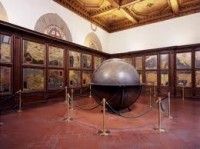
The Stanza del Guardaroba, also known as the Hall of Geographical Maps, on the second floor of the Palazzo Vecchio is perhaps one of the most striking and fascinating rooms within the massive palace.  The cabinet doors within the Guardaroba are painted with 53 different maps, the work of Fra Ignazio Danti.  Because of the Hall of Geographical Maps simultaneously displays beautiful artistry, scientific geographical information, and history, this room of Palazzo Vecchio is sure to please visitors of all different interests.

The maps will attract visitors for several different reasons.  The visitor is first struck by the sheet quantity of maps that line the walls of the room.  Maps surround the visitor on all four walls, with a massive and impressive globe, which is directly in the center of the room.  Because the room is rather large and does not contain any furniture, the maps do not overwhelm visitors.  Secondly, the detail of each map is quite extensive, showing various areas of interest during sixteenth century.  These maps were important for not just scientific reasons, but political ones as well as they helped show areas that were of political concern, either as threats or as conquests.  Thirdly, the maps are intriguing because of their historical significance, as they show the geographic knowledge of people of the sixteenth century.

Palazzo Vecchio has not extensively changed the Guardaroba’s original context, although the furniture and portraits, which historically lined the top of the cabinets, have been removed.  The furniture and portraits are now in the Uffizi Gallery.  The lack of seating in the Guardaroba enables visitors to look at every map in detail without being hindered by furniture, which is especially important, as the maps are the focus of the room.  The circular traffic flow of the room is also open and comfortable.  Visitors can be free to look at the maps in any sequence they choose.  There is also plenty of room between the maps on the walls and the globe in the center of the room, so that there is enough space for both visitors looking at the maps and visitors looking at the globe.

While there are no specific museological labels in the room, the objects are not necessarily hindered without them.  This is because the objects themselves are maps, which inherently have labels of their own because of the place labels, thus making them essentially self-explanatory.  However, there is one general label in the center of the room by the globe, which enumerates a brief explanation of the historical use of room.  The brief label is sufficient for the museum setting, as most visitors tend to dislike too much didactic information. The lack of specific labels also allows visitors to more greatly appreciate the maps and the globe from a more aesthetic perspective.

The Guardaroba is flooded with natural light from a large window to the right of the entrance.  The natural light is helpful for making the room feel more open and less overwhelmed with the dark colors from the wood and the maps.  However, the natural light poses conservation risks to the maps because natural light can deteriorate the paper material and fade the original colors.  The Stanza del Guadaroba within Palazzo Vecchip helps visitors to imagine what the room originally looked like and the geography that Cosimo de Medici knew of and was interested in.  The room will please those interested in science, history, and aesthetics.


La Stanza del Guardaroba, Palazzo Vecchio

La  Stanza del Guardaroba, conosciuta anche come Sala delle Carte geografiche, al secondo piano di  Palazzo Vecchio, è forse una delle sale  più suggestive e affascinanti all’interno del palazzo.  Le ante degli armadi della Guardaroba sono dipinte con 53 mappe differenti grazie all’opera di Fra Ignazio Danti. Grazie alla Sala delle Mappe Geografiche, che nello stesso tempo contiene un arte raffinata, informazioni scientifiche, geografiche e storiche, tutti i visitatori con interessi diversi verranno soddisfatti.

Le mappe attrarranno i visitatori per parecchi motivi differenti. Lo spettatore è in primo luogo impressionato dalla quantità di mappe che rivestono le pareti della stanza. Le carte geografiche circondano lo spettatore in tutte e quattro le pareti, con un mappamondo enorme ed impressionante che si trova al centro della stanza. Poiché la sala è abbastanza grande e non contiene mobilio le mappe non travolgono i visitatori. In secondo luogo, il dettaglio di ogni carta è piuttosto esteso e mostra varie aree di interesse nel corso del XVI secolo.

Queste mappe erano importanti non solo per ragioni scientifiche ma anche politiche poiché aiutavano a riconoscere le aree che erano di interesse strategico, sia come possibile minaccia che  come future conquiste. In terzo luogo le carte sono interessanti per la loro rilevanza storica poiché mostrano la conoscenza geografica delle persone del sedicesimo secolo. 

Palazzo Vecchio non ha cambiato di molto il contesto originale  della Guardaroba anche se l’arredamento e i ritratti allineati in cima agli armadi sono stati rimossi. Questi arredi e ritratti sono ora nella Galleria degli Uffizi.  La mancanza di posti a sedere nella Guardaroba non permette ai visitatori di vedere tutta la mappa in dettaglio senza essere ostacolati dal mobilio che è specificamente importante come le mappe sono il focus della stanza.  Anche il flusso circolare dei visitatori intono alla sala è libero e confortevole.  I visitatori sono liberi di guardare le carte in qualsiasi sequenza vogliano. Nella stanza c’è inoltre molto spazio tra le mappe sulle pareti ed il globo al centro quindi c’è abbastanza posto sia per gli spettatori che guardano le mappe che per quelli interessati al globo.

Anche se nella sala non ci sono specifici pannelli museologici la comprensione degli oggetti non è necessariamente ostacolata da questa mancanza. Questo perché trattandosi di carte geografiche, che di per se hanno indicazioni dei luoghi, sono auto-esplicative. Comunque c’è un pannello generale al centro della sala, vicino al mappamondo che spiega brevemente l’uso storico della Guardaroba. Il pannello esplicativo è sufficiente per l’impostazione del museo dato che la maggior parte dei visitatori tende a non apprezzare spiegazioni troppo didattiche. La mancanza di pannelli inoltre  consente di apprezzare maggiormente le mappe ed il mappamondo da una prospettiva più estetica.

La Guardaroba è illuminata dalla luce naturale che entra dall’ampia finestra alla destra dell’entrata.  La luce naturale aiuta a far percepire la sala più aperta e meno appesantita dai colori scuri del legno e dalle mappe. Tuttavia la luce naturale porta dei rischi conservativi alle mappe poiché può deteriorare la carta e alterare i colori originali.  La  Stanza del Guardaroba all’interno di Palazzo Vecchio porta i visitatori ad immaginare come fosse originariamente la sala e quale fosse la geografia che conosceva e alla quale era interessato Cosimo dei Medici. La sala soddisferà sia gli appassionati di scienza, che di storia che d’arte.
Francesco Gennari, Museo Marino Marini

By Mackenzie Constantinou (Lorenzo de’ Medici)


The staff dedicated to Francesco Gennari, an artist born in Pesaro in 1973 and among the most important in Italy of his generation, closes the exhibition program ‘Late on Morning’ curated by Alberto Salvadori.

The exhibit recalls the works, which express the will of the artist to represent not only the sensible world but also that, which is not visible, and in particular, through the great amount of self-portraits, Gennari tries to satisfy the desire to represent interiority.

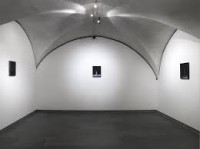
The first sculpture that the visitor meets on the descent into the crypt is titled ‘I want to be myself, but only in the light of the sun’, and is displayed in the center of the room, isolated, and made more focal thanks to overhead lights that is itself an integral part of the work.

The artist expresses the same through transparent glass that maybe refers precisely to the impossibly of representing that which cannot be seen and that which is changing.

The glass switches to the strong valence material of marble, in the ‘Self-Portrait in the Study’ Gennari divided one smooth marble block of essential form.  Immediately the visitors were attracted by the successive works, which changes the register and returns the declined transparency to a bright yellow.

The last work in that first space, ‘Degeneration of Parsifal’, underlines though the continuous change of language in the art of artists creates a Persaro explosion of material.

The exhibition has explanatory sheets that are in both English and Italian which continue with another self-portrait.  A dark compact structure but with an octagonal form and therefore complex and multifaceted still returns a different artist.

Continuing to go to the second series of works, ‘Having themselves as the only reference point’ the subject of the photography is a sail that makes explicit the title of works.  This refers to the symbolism of a shell and the concept of the centrality of the viewpoint.  The same animal is also the protagonist of the next sculpture titled ‘Ascension’, and it is not surprising that the viewers must climb three steps to enter the chapel of the crypt where it is preserved, here the fragile shells of four snails support the heavy black material.

The last group of works, all photographic self-portraits hung on the walls of the room, shows the figure of the artist as soon as the visitor feels that emerge from the darkness.

Gennari represented same emersion into darkens in his coat the Universe, now transcends the origin of it, symbolizing by a blue panel, now different parts of night of the universe that is both internal and external.

The last work ‘The earth turns its back to the sun’ displayed in the Renaissance chapel Rucellani is again a reference to the universe, and to the concept of centrality and of life that results in the egg in the center of the sculpture.


Francesco Gennari, Museo Marino Marini

By  Carolina Caverni (University of Florence)

La personale dedicata a Francesco Gennari, artista nato a Pesaro nel 1973 e tra i più importanti in Italia della sua generazione, chiude il programma espositivo “Late on morning” curato da Alberto Salvadori.

La mostra raccoglie le opere che più esprimono la volontà dell’artista di rappresentare non solo il mondo sensibile ma anche ciò che non è visibile, e in particolare, attraverso la grande quantità di autoritratti, Gennari tenta di soddisfare l’anelito di raffigurare la propria interiorità.

La prima scultura che si incontra scendendo nella cripta, intitolata “Vorrei essere me stesso ma solo alla luce del sole”, è esposta al centro della stanza, isolata, e resa ancor più focale grazie alla luce zenitale che fa essa stessa parte integrante dell’opera.

L’artista qui esprime se stesso attraverso la trasparenza del vetro che rimanda forse proprio a quell’impossibilità di rappresentare ciò che non si vede e che è mutevole.

Dal verto si passa alla forte valenza materica del marmo, in “Autoritratto nello studio” Gennari diviene un blocco marmoreo dalla forma essenziale e liscia, ma subito lo spettatore viene attratto dall’opera successiva in cui si cambia registro e si torna alla trasparenza declinata in un giallo brillante.

Ultima opera in questo primo spazio, “La degenerazione di Parsifal”, sottolinea ancora il continuo cambio di linguaggio nell’arte dell’artista pesarese che crea un’ esplosione di materia.

Il percorso espositivo, segnalato in fogli esplicativi volanti sia in inglese che in italiano, prosegue con un altro autoritratto; una struttura scura compatta ma con la forma dell’ottagono e dunque anche complessa e sfaccettata restituisce una natura ancora diversa dell’artista.

Proseguendo si passa alla seconda serie di opere, in “Avendo se stessi come unico punto di riferimento” il soggetto della fotografia è una lumaca che rende esplicito il titolo dell’opera rimandando al simbolismo del guscio e al concetto della centralità del punto di vista. Lo stesso animale è protagonista anche della scultura successiva intitolata “Ascensione”, e non a caso lo spettatore deve salire tre scalini per accedere al sacello della cripta dove è conservata, qui i fragili gusci di 4 lumache sorreggono la pesante materia nera.

Ultimo nucleo di opere, tutti autoritratti fotografici appesi alle pareti della sala, mostrano la figura dell’artista che appena si intuisce mentre affiora dalle tenebre.

Gennari rappresenta se stesso immerso nel buio ora ospitando nel suo cappotto l’Universo, ora  trascinando l’origine di esso, simboleggiato da un panno blu, ora diventando parte stessa della notte e di nuovo di un universo che è nello stesso tempo interiore ed esteriore.

L’ultima opera “ La terra gira le spalle al sole” è esposta nella rinascimentale cappella Rucellai e di nuovo è un rimando all’universo, al concetto di centralità e di vita che si concretizzano nell’uovo al centro della scultura.   


The Colors of Shadows, Palazzo Pitti, Andito degli Angiolini

By Mackenzie Constantinou (Istituto Lorenzo de’ Medici)


The little exhibition hosted in the passage by Angiolini in Palazzo Pitti completes and enriches the exhibition ‘Luci sul ‘900’.

The goal is to propose, as part of the centenary of the Gallery of Modern Art, building a series of graphic works, around a hundred, that were acquired as part of the gallery itself and as part of the Cabinet of Design and Press of the Uffizi.  The works, were of both foreign artists and Italian, were selected on the occasion of the first international exhibition of graphics, entitled ‘Exhibition of White and of Black’, which took place in Florence in the spring of 1914 on the initiative of the Society of Beautiful Art.  The exhibition has woodcuts, etchings, and lithographs of other drawings.  These artistic techniques favor nature and the use of white and black, but the curatorial objective is to express the tile ‘The Colors of Shadows”, which is expressive of these offered techniques.

The expressive modality are uniform within the all the rooms, the works are subdivided in sections following common sense, by type and subject, and they are displayed on blue panels that cover the walls of the rooms and the display cases.

In the introductory room there are eleven explanatory panels, that are in Italian and English, the first explains proves a general sense of the exhibition, the second tells of the imagination, techniques, and instruments that were utilized for realizing the woodcuts, etchings, and lithographs.

Passing the first two works in the exhibit, designed by Gaetrano Previati ‘The Hostages of Crema’ is one lithograph by Gerard Spencer Pryse, entering the second room which exhibits the first primary work assembled under the genre ‘Portraits and Artists’.  Among the many works by Adolfo de Carlois included the cover of the catalogue of the Exhibition of White and Black, which was preserved in a glass case.  Self-portraits and portraits of artist are hung on the walls, which the viewer can admire lithographs by Eugène Carrière with portraits of Rodin.

The layout is characterized by the panel for each wall, which reminds the visitors the title of the section of the works and it refers and informs on single paintings that are reproduced in a small image.

In the second room displays a different two sections of works, the first dedicated to ‘Nightmares and Dreams’ in which displays minks vision of Francesco Chiappelli as ‘Caravelle’.  The second is titled ‘Presence’, which is characterized by the female subjects such as the nudes of Théophilde Steinlen and of Desligènre André.  This section also presents the unique works in color for example ‘Letters cut off’ of Jean Emile Laboreur.  In the successive room the ‘Views, a typical genre represents the graphic techniques such as etching, which is represented by various artists Carlo Cressini or Antonio Fontanesi.  After, the visitor goes through to ‘The Passage of Water’ with the etching ‘Pine Trees by the Sea’ by Carlo Strauss.

The exhibition continues with four other sections dedicated to architecture ‘The Urban Passage’ and ‘The Cathedrals’.  The last, a very substantial work, titled ‘Work” among which are the works ‘The Tuscan Landowner’ by Moses Levy and ‘The Tanners’ by George Gob.

Through the diversity of techniques with which they are made, woodcuts, etchings, lithographs, and drawings the viewers can contribute to the genre, graphics, less popular respect to painting and sculpture, but that enriches the vision of expressive possibility of artists who often in this medium come across more spontaneous and therefore free.


 “Il colore dell’ombra”, Palazzo Pitti, Andito degli Angiolini

By Carolina Caverni (University of Florence)

La piccola esposizione ospitata nell’Andito degli Angiolini a palazzo Pitti completa e arricchisce la mostra “Luci sul ‘900”.

L’obiettivo è quello di proporre nell’ambito del centenario della Galleria d’arte moderna del palazzo una serie di opere di grafica, un centinaio circa, che vennero acquisite in parte dalla Galleria stessa ed in parte dal Gabinetto dei Disegni e Stampe degli Uffizi. Le opere, sia di artisti stranieri che italiani, vennero scelte in occasione della prima Esposizione internazionale di grafica, intitolata  “Esposizione del Bianco e del Nero”, che si svolse a Firenze nella primavera del 1914 su iniziativa della Società delle Belle Arti.

La mostra ospita dunque soprattutto xilografie, acqueforti e litografie oltre che disegni, queste tecniche artistiche privilegiano per loro stessa natura l’uso del bianco e del nero ma l’obiettivo curatoriale, espresso esemplarmente dal titolo “Il colore dell’ombra” , è quello di restituire allo spettatore il senso del colore grazie alle molteplici  possibilità espressive che offrono queste tecniche.

Le modalità espositive sono uniformi per tutte le sale, le opere sono suddivise in sezioni seguendo un criterio per generi e soggetti e sono esposte su pannelli azzurri che ricoprono le pareti delle stanze ed in teche.

Nella sala  introduttiva si trovano gli unici pannelli esplicativi, sia in italiano che in inglese,  il primo spiega il senso generale dell’esposizione, il secondo riporta, anche attraverso delle immagini, le tecniche e gli strumenti che vengono utilizzati per realizzare xilografie,  acqueforti e litografie.

Superate le prime due opere in mostra, il disegno di Gaetano Previati “Gli ostaggi di Crema” e una litografia di Gerard Spencer Pryse, si accede alla seconda stanza nella quale è esposto il primo nucleo di opere raggruppato sotto il genere “Ritratti e artisti”. Tra queste molte appartengono a Adolfo de Carolis come ad esempio la copertina del catalogo dell’Esposizione del Bianco e del Nero conservata in una teca, alla pareti sono appesi autoritratti e ritratti di artisti tra i quali si può ammirare la litografia di Eugène Carrière con il ritratto di Rodin.

L’allestimento è caratterizzato da un pannello per ogni parete che ricorda al visitatore il titolo della sezione di opere a cui fa riferimento e le informazioni sui singoli quadri che sono riprodotti in piccole immagini.

Nella seconda sala altre due sezioni di opere, la prima dedicata a “Incubi e sogni”  in cui sono esposte visoni oniriche di Francesco Chiappelli come “Caravelle”, la seconda, intitolata“presenze”, è caratterizzata soprattutto da soggetti femminili come i nudi di Théophile Steinlen e di Deslignères André. In questa sezione sono presenti anche le uniche opere a colori tra cui ad esempio  “Lettura interrotta” di Jean Emile Laboreur.

Nella stanza successiva le “Vedute”, genere tipicamente rappresentato da tecniche grafiche come l’acquaforte, sono rappresentate da vari autori come Carlo Cressini o Antonio Fontanesi, si passa poi   a “paesaggi d’acqua” con l’acquaforte “Pini sul mare” di Carlo Strauss.

L’esposizione prosegue con altre quattro sezioni due dedicate all’architettura “paesaggi urbani” e  “cattedrali” e l’ultima, la più sostanziosa, intitolata “Lavoro” tra cui si trovano le opere “Il possidente toscano” di Moses Levy” e “I conciatori” di Georges Gobò.

Attraverso la diversità delle tecniche con cui sono realizzate le xilografie, le acqueforti, le litografie ed i disegni lo spettatore è reso partecipe di un genere, quello della grafica, forse meno popolare rispetto a pittura e scultura ma che arricchisce la visione sulle possibilità espressive dall’artista che spesso proprio in questo mezzo trova maggior spontaneità e quindi libertà.

Stage Garden at Villa la Pietra

By Emma Montross (Lorenzo de’ Medici)


Villa la Pietra came into New York University (NYU) possession in 1994, bequeathed by Sir Harold Acton upon his death. Since then, the University has dedicated the five historic villas on the fifty-seven acres of the property to housing and academic study for NYU students studying abroad in Florence.

A place to call home and study, however, are not the only areas dedicated to space interaction on the property. Located directly behind the main house is the exquisite La Pietra Garden, a previously 19th century English garden reconstructed to 16th century Italian style with a couple of modern twists. In addition to having over 180 sculptures in the garden and a stunning view of Florence, the garden also has a man-made natural stage.

Upon entering this room of the garden (Italian gardens are intended to be considered extensions of the house), one can tell that this space was created for the specific use of theatrical entertainment. A flat grassy area for seating is sectioned off by a stonewall. Small bushes that could easily be interpreted as opera floor lights line the stage. Four tall hedges line each side of the area to simulate curtain wings.  In the back there is a staircase leading up to another level of the garden creating depth, perspective, and undoubtedly an ideal spot for a monologue. The space perfectly provides a stage for a show, nature blending into art. However, and most unfortunately, the main draw back with this wonderful and inventive space is the lack of public access.

A private academic institution owns Villa la Pietra, and it is within the school’s right to monitor and maintain the flow of people that come in and out of the property. To go through the garden an appointment must be made in advance unless it is one of the few times in the year that the compound opens its doors to the public. To witness a show on the garden stage, one must be invited onto the property. For such an innovative Italian Renaissance-style garden with a unique installation, it seems a shame that select people are able to witness a garden show. The space is ripe with potential to create a truly unreal experience.

It may be that exclusivity is part of the Villa’s main goal and appeal for the garden. Gardens by nature are meant to invite and envelop the visitor into a different kind of world than usual. La Pietra Garden achieves this wonder through a strict maintenance regime and a respect for Acton’s original intentional use for the garden. Like any worthwhile Italian garden, La Pietra’s architectural landscape design follows that set by the house itself. Inside the main house, one room blends into the next with a natural progression of rooms obviously thought out. In the garden itself this is done through the blending of strict lines (perfectly cut path ways and manicured bush arches) with the irregularity and uncontrollable aspect of nature (not every flower or stone is specifically set). There is a sense of theatricality in this garden, but not present through any one specific detail. The air of the garden, like any kind of Italian Renaissance garden, cannot be simply explained. Hopefully in the future Villa la Pietra will open its doors more frequently to allow others to experience an excitement that not many associate with topography.

To make a reservation to visit Villa la Pietra’s garden, please visit the NYU website:

http://www.nyu.edu/global/lapietra/visitor.information


 Il teatro verzura di Villa la Pietra

Villa la Pietra è diventata proprietà della New York University (NYU) nel 1994, grazie al lascito a seguito della morte di Sir Harold Acton.

Da quel momento l’Università ha dedicato la storica villa cinquecentesca con i suoi 56 acri di proprietà ad ospitare e agli studi accademici degli studenti della NYU che vivono a Firenze.

 Un posto da chiamare casa e dove studiare non è l’unico scopo a cui sono dedicati gli spazi della proprietà.

Localizzato subito dietro l’edificio principale c’è il raffinato giardino di Villa la Pietra, inizialmente parco all’inglese del XIX secolo, è stato modificato in un giardino all’italiana del XVI secolo con un paio di spirali moderne. Oltre alla presenza di più di 180 sculture e una vista mozzafiato su Firenze il giardino presenta un palcoscenico naturale realizzato dall’uomo.

Entrando in questa parte del giardino (i giardini italiani vengono intesi come se fossero un estensione della casa) si può credere che questo spazio sia stato creato appositamente per gli spettacoli teatrali.

Una zona erbosa e pianeggiante per le sedute è ricavata da un muro di pietra. Piccoli cespugli  possono essere facilmente interpretati come le luci a terra che illuminano il palcoscenico. Quattro alte siepi allineate su ogni parte simulano le quinte. Sul retro  c’è una scalinata che porta ad un altro livello del giardino creando la profondità e la prospettiva e un luogo idealmente perfetto per un monologo. Lo spazio fornisce un perfetto palcoscenico per uno spettacolo, la natura che diventa arte. Tuttavia, anzi sfortunatamente, il più grande svantaggio è che questo meraviglioso e ingegnoso spazio è vietato all’accesso del pubblico.

Una istituzione accademica privata possiede Villa la Pietra, ed è proprio all’interno della scuola per monitorare e gestire il flusso di persone che fluiscono dentro e fuori dalla proprietà. Per visitare il giardino è necessario prendere appuntamento in anticipo a meno che non sia una delle rare volte l’anno che il giardino apre le sue porte al pubblico. Per assistere ad uno spettacolo sul palcoscenico del giardino si deve essere invitati nella proprietà. Per un così innovativo giardino in stile italiano-rinascimentale con un installazione unica è un peccato che solo persone selezionate possano assistere allo spettacolo del giardino. Il posto ha le potenzialità per creare una esperienza davvero surreale.

Questa esclusività fa parte del principale obiettivo della Villa e decreta  il fascino per il giardino.

I giardini per natura sono destinati ad invitare ed avvolgere il visitatore in un mondo diverso rispetto al solito. Il giardino di Villa la Pietra raggiunge questa meraviglia attraverso un regime di controllo rigoroso ed  il rispetto per l’uso originale del giardino di Sir Acton.

Come ogni giardino italiano, la progettazione del paesaggio architettonico di La Pietra va di pari passo con quella della casa stessa.

Nella casa principale una stanza si fonde nella successiva con una naturale progressione di sale ovviamente ragionata.

Nel giardino questo stesso elemento viene ripreso attraverso la fusione di linee rigorose ( i percorsi    sono perfettamente curati e delineati con cespugli ad arco) con l’irregolarità e l’incontrollabile aspetto della natura ( non tutti i fiori o le pietre sono posizionate perfettamente).

In questo giardino c’è un senso di teatralità ma che non è riscontrabile attraverso una qualsiasi dettaglio. L’atmosfera del giardino, come in un qualsiasi giardino italiano rinascimentale non può essere  facilmente spiegata.

Fortunatamente in futuro Villa la Pietra aprirà le sue porte più frequentemente per consentire ad altri di provare un’ emozione che non molti assoceranno alla topografia.

Per prenotare una visita al giardino di  Villa la Pietra visitate il sito della  NYU:

http://www.nyu.edu/global/lapietra/visitor.information