Sacrario della Basilica di Santa Croce
16 dicembre 2017 – 24 marzo 2018
Di Simona Anna Vespari (Università degli Studi di Firenze)
Come ben noto, nel 2019 Matera sarà la Capitale Europea della Cultura e inizia già ad inviare i propri ambasciatori per farsi conoscere: sembra questo lo scopo della mostra che si è aperta a Firenze il 16 dicembre scorso e sarà visibile fino al 24 marzo. L’esposizione Maternità divine. Sculture lignee della Basilicata dal Medioevo al Settecento è stata allestita nel Sacrario della Basilica di Santa Croce, in collaborazione con la Soprintendenza Archeologica Belle Arti e Paesaggio della Basilicata e con il Patrocino del Comune di Firenze – Ufficio UNESCO e dell’Opera di Santa Croce, e può essere visitata gratuitamente in quanto il complesso è staccato dal circuito di visita della Basilica.
Le opere esposte sono sedici e la visione d’insieme che si presenta al visitatore, al primo sguardo, è di forte impatto: in un luogo sobrio e suggestivo come appunto quello del Sacrario, caratterizzato da un’architettura voltata e da pareti bianche, trovano posto le bellissime sculture lignee, il cui tema ruota unicamente intorno alla figura della Vergine col Bambino, fatta eccezione per una Sacra Famiglia. Si tratta nella maggior parte dei casi di opere ancora inedite, studiate appositamente per l’evento espositivo, che varcano per la prima volta i confini regionali: opere, perciò, poco conosciute e che necessitano della giusta valorizzazione.
All’ingresso il visitatore è portato ad entrare in sintonia con il luogo d’origine di queste opere, per quanto possibile in un luogo totalmente estraneo alla cultura lucana; sono state perciò affisse fotografie di grande formato che rappresentano eventi tradizionali religiosi della Basilicata e che si legano bene comunque al tema sviluppato nell’esposizione.
A prescindere dalle perplessità che rimangono per l’utilizzo di Firenze come vetrina pubblicitaria, presentando opere totalmente decontestualizzate dal luogo d’origine, l’evento è assolutamente consigliato; viene infatti offerta una panoramica della statuaria lignea della Basilicata in un arco cronologico che va dal Medioevo fino al Settecento: un’occasione abbastanza unica sia per le qualità artistiche delle opere presenti che per il progetto scientifico. Questa serietà è rappresentata in maniera chiara dalle didascalie: tutt’altro che scarne, informano il visitatore sulle questioni relative alla storia dell’opera, agli interventi di restauro, alla tecnica utilizzata, illustrando il tutto con fotografie o confronti. Tutto ciò dimostra che l’evento è un reale tentativo non solo di richiamare turisti nel territorio lucano in vista dell’evento europeo, ma un’occasione di conoscenza e di arricchimento culturale su un determinato linguaggio artistico regionale.
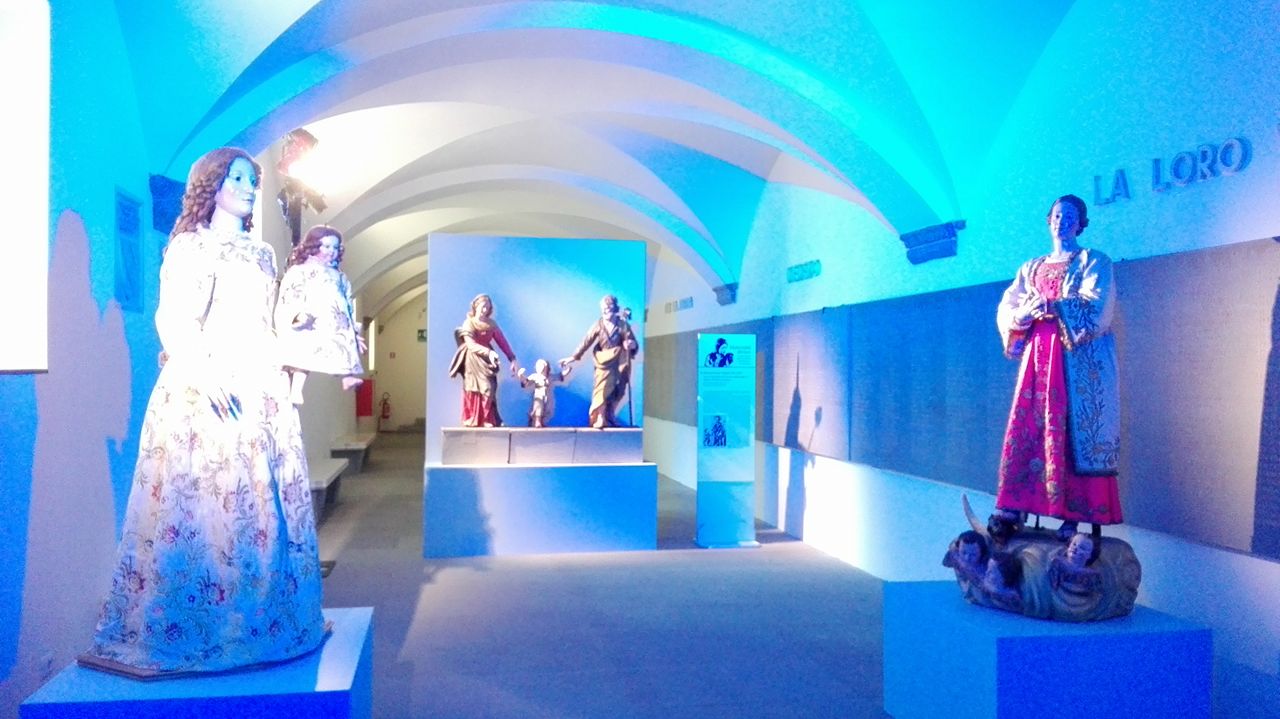
Le opere sono collocate ad un’altezza che non crea problemi ad una visione ravvicinata, in alcuni casi potendo osservarle a 360 gradi, ammirandone anche i minimi dettagli e permettendo il godimento di questi “legni sacri” davvero di altissima qualità. Entrando nella sala colpisce la luce blu che dà un’aria più suggestiva all’ambiente, colorando il bianco freddo delle pareti, immergendo le figure in un ambiente quasi surreale: la luce, che a prima vista può sembrare fin troppo forte, non crea in realtà nessun disturbo alla visione dell’opera.
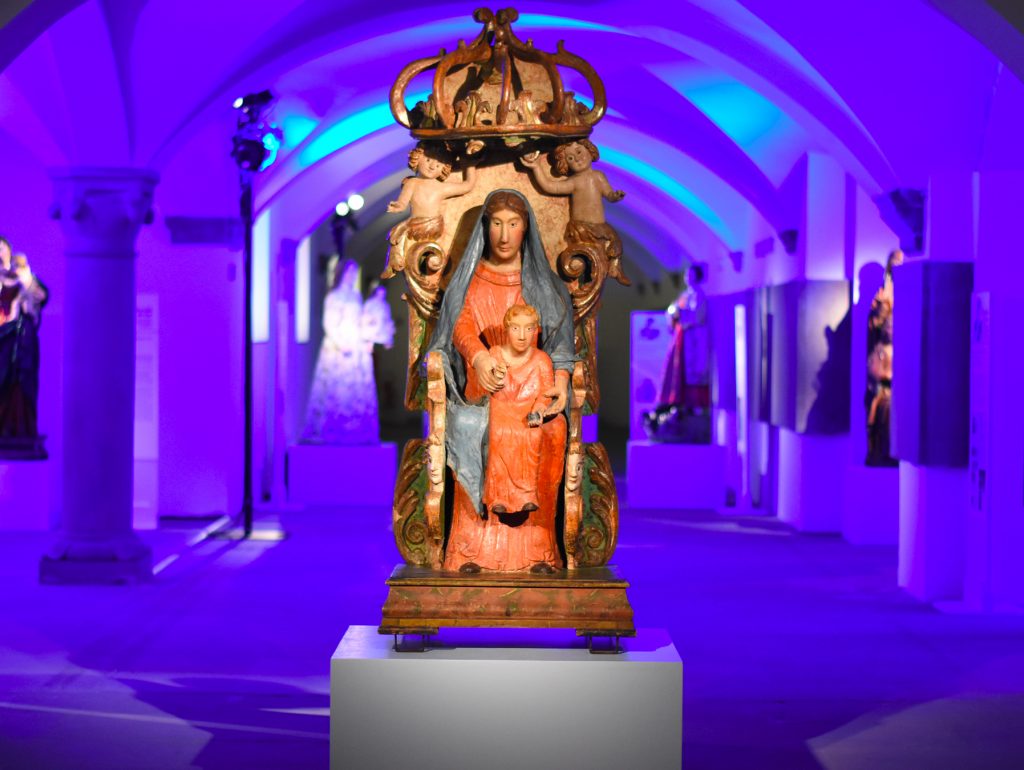
Il percorso sembra seguire un andamento cronologico anche se a volte si fa difficoltà a seguire con ordine, per via anche della disposizione obbligata delle opere che non permette un percorso lineare. Ad aprire la mostra è una Madonna col Bambino in trono, di epoca medievale, e si prosegue così con una cronologia crescente, passando per gli influssi catalani e i goticismi francesi, alle opere che testimoniano il linguaggio degli scultori meridionali e di area napoletana del Sei e Settecento, opere sicuramente più vicine a noi, vive nella mente dei visitatori perché spesso ancora utilizzate per le tradizionali processioni religiose. A chiudere la mostra due Madonne col Bambino, in realtà manichini vestiti con preziose vesti, testimonianza di un genere molto diffuso, soprattutto in area meridionale, e infine un grazioso gruppo ligneo con la Sacra Famiglia di ritorno dalla fuga in Egitto.
Divine Motherhood. Wooden sculptures of Basilicata from the Middle Ages to the Eighteenth Century
Shrine of the Basilica of Santa Croce
16 December 2017 – 24 March 2018
Translated by Nona Debenham (Istituto Lorenzo de’ Medici)
As is widely known, in 2019 Matera will be the European Capital of Culture and already starts to send its ambassadors to be known: this seems the purpose of the exhibition that opened in Florence on December 16th and will be visible until March 24th. The exhibition, Divine Motherhood. Wooden sculptures of Basilicata from the Middle Ages to the Eighteenth Century was staged in the Shrine of the Basilica of Santa Croce, in collaboration with the Archaeological Superintendence of Fine Arts and Landscape of Basilicata and with the Patronage of the City of Florence – UNESCO Office and the Opera of Santa Croce. The exhibition can be visited free of charge as the complex is detached from the entrance to the basilica.
There are sixteen works on display and the overall vision that presents itself to the visitor at the first glance has a strong impact: in a sober and suggestive place, characterized by vaulted architecture and white walls. They have placed the beautiful wooden sculptures, whose theme revolves around the figure of the Virgin with the Child, except for one Holy Family, throughout the shrine. In most cases, they are still unpublished works, specifically designed for this exhibition, which cross regional boundaries for the first time: works that are therefore little known.
At the entrance the visitor is brought into harmony with the place of origin of these works which is a place totally foreign to the culture of Basilicata; therefore, large format photographs have been posted which represent traditional religious events in Basilicata and which are well linked to the theme developed in the exhibition.
Regardless of the perplexities that remain for the use of Florence as an advertising window, presenting works totally decontextualized from the place of origin, the event is absolutely recommended. In fact, an overview of the wooden statuary of Basilica is offered in a chronological period from the Middle Ages to the eighteenth century: a rather unique occasion both for the artistic qualities of the works present and for the scientific project. This seriousness is clearly represented by the captions: which are abundant, they inform the visitor about issues related to the history of the works, restoration interventions, the techniques used, and illustrate everything with photographs or comparisons. All this shows that the event is a real attempt not only to attract tourists to the Lucan territory to view the European event, but an opportunity for knowledge and cultural enrichment on a specific regional artistic language.
The works are placed at a height that does not create problems to see them up close and personal, in some cases allowing the visitor to observe them at 360 degrees, so they are able to admire even the smallest details and allowing the enjoyment of high quality of these ‘sacred woods’. Entering the room the blue light immediately gives a more suggestive atmosphere to the environment, coloring the cold white of the walls, plunging the figures in an almost surreal environment: the light, which at first sight may seem too strong, actually does not create any disturbance to the view of the work.
The path seems to follow a chronological trend even if at times it is difficult to follow the order, which is due to the obligatory disposition of the works that does not allow a linear path. Opening the exhibition is a Madonna and Child enthroned, from the Middle Ages, and then continues chronologically, passing through the Catalan influences and French Gothicism, to works that testify the language of the southern and Neapolitan area sculptors of the seventeenth and eighteenth centuries, works certainly closer to us, on the minds of visitors because they are often still used for traditional religious processions. To close the exhibition are two Madonna’s with Child, in reality, mannequins dressed in precious garments, testimony of a widespread genre, especially in the southern area, and finally a gracious wooden group with the Holy Family returning from the flight into Egypt.