Gucci Museum – Gucci Garden Galleria
By Nora V. Zamora (Istituto Lorenzo de’ Medici)
Edited by Isabella Pircio (Istituto Lorenzo de’ Medici)
Hours: Monday – Sunday (9 am – 10 pm)
Florence, a living museum rich in history and proud in the quality in craftsmanship and beauty of its architecture, sculptures, paintings, and drawings does not exclude its citizens; who through fashion become living artwork. There is a direct relationship between a fashion house and the person wearing the pieces and becoming expressions of art.
“The art we wear and live with is the art we become. Art—fashion and otherwise
— reflects who we are and who we aspire to be.” – Georges Berges
Art and fashion, as social, financial, academic, and political status symbols is Florentine at heart. While it is undoubtedly true today, it traces back hundreds of years to the prominent and influential Florentine families, specifically, the Medici’s. Through their commissions of paintings, architecture, and sculpture, they proclaimed their social and political status among the townspeople. The fashion they wore was no exception. They wore brightly colored garments which were expensive to produce and almost impossible to afford. Hence, making a clear statement on their status, wealth, and exclusivity.
It is then no surprise that Florence is host to many museums, including the Gucci Museum. The brand, through its evolution, has become a symbol of quality, elegance, and craftsmanship and has become distinctive and an expression of “made in Italy”.
The Gucci Museum is in the Palazzo della Mercanzia (Palace of the Merchandise) in Piazza della Signoria.
Even if not immediately recognizable as a museum, it is a hidden gem that encapsulates the elegance, style, craftsmanship, uniqueness, and exclusivity of the House. A must-see for a fair in price.
Visitors must enter the store to access the museum — a smart business move. As visitors walk in, the store embodies the Gucci Garden experience. The items displayed in a way that leaves the visitor wondering if they are on exhibit as a collection or if they are for sale. The visitor becomes part of the experience.
Consisting of a variety of exhibits, the museum features “Gucci Garden Galleria: A New Chapter“. Curated especially to recount the various stories of the Gucci brand, the room is supported by various media and arts; a video series displayed in a dark viewing room reminds visitors of a cinema or a nightclub lounge.
All the rooms highlight not only the fashion and the items themselves, but it tells the story of the Gucci woman and the Gucci man. Through these rooms, we begin to see characters come to life, and maybe we see ourselves in the collection.
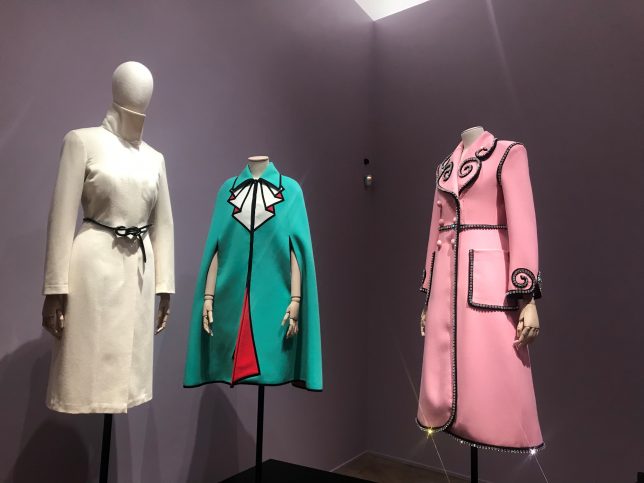
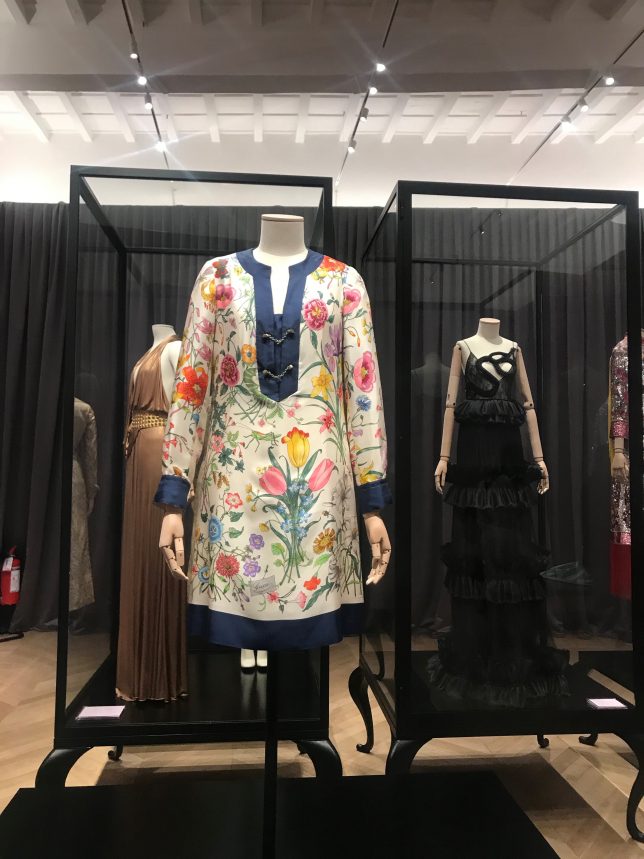
One of the rooms is: Détournement, which in French conceptually means rerouting, refers to the reuse of pre-existing artistic elements in a new ensemble. The room features a wall by contemporary artist Yuko Higuchi who created a mythical creature and incorporated many of the Gucci House motifs. The collection includes ready-to-wear pieces with the Gucci logo displayed in diverse forms and fabrics including a dress from 1969 and a leather jacket with embroidered Donald Duck Disney appliqué.
In the Jardin d’hiver room, the collection is delicate and exquisite. The curator uses technology elegantly and delicately to enhance the user experience, yet it does not overpower the exhibit. The use is purposeful. The room has flowers illustrated on the walls, enhanced by projected birds and butterflies flying. It is all brought together by delicate bird songs playing in the background. Giving the room an ethereal feel, the items embody the Gucci essence.
While walking through the displays, visitors will directly engage with garments, travel trunks, and accessories that each tell their story. Visitors can interact with the quality, craftsmanship, and exclusivity of the Gucci brand and the Gucci client. This museum has just the right mix of history, storytelling, and feeling.
The museum generates a sensation, a nostalgia a longing, desire, and appreciation. The Gucci museum takes this to the next level by allowing the visitor an opportunity to take that feeling home via the items for sale at their store, which presents as delicately as the exhibits themselves.