Orsanmichele Museum


By Rachyl Grussing ( Istituto Lorenzo de’ Medici)


Sparse and to the point, the Orsanmichele Museum is located in the heart of picturesque downtown Florence. Dating back to the 8th century, the building was used as an open air grain market. The original loggia burnt down several times, and the building there today, including the second and third floors was designed by Arnolfo di Cambia around 1300. Astute observers will notice that the loggia is extremely similar to the famous Porcellino market, located a stone’s throw away from the Arno River, which was built after the Orsanmichele became a church. The modern facade of the building was finished in the 15th century, and in the niches around the loggia the principle guilds of the time commissioned statues of their patron saints from famous Florentine artists.

The original marble and bronze statues from the facade are now displayed in the museum on the second floor. Statues include the famous Christ and Doubting Thomas by Verrocchio, who represented the guild of Merchants, Saint Peter by Donatello representing the guild of Butchers, and Saint Luke by Giambologna, who represented the guild of Magistrates and Notaries, and includes others by Nanni di Banco, and Ghiberti. A total of fourteen statues stood on the outside of the church. On the inside, and forming a square, each statue corresponds to where it would have originally stood on the facade.

Mimicking the loggia below, the beautiful, tall, vaulted ceilings and large windows of the second floor give the impression of expansive space, which is filled with the presence of these larger than life statues. However, the casual visitor is given next to nothing in the way of information. There are wall panels for each of the statues, but they simply state the name of the saint which is depicted, the year it was made, and the artist who made the artwork. Diagrams on the label show both where the statue is within the museum and where the statue would have originally stood on the facade. More information comes in the form of laminated sheets that are attached to the wall labels by chain, but they are all in Italian which is frustrating for those who don’t speak the language.

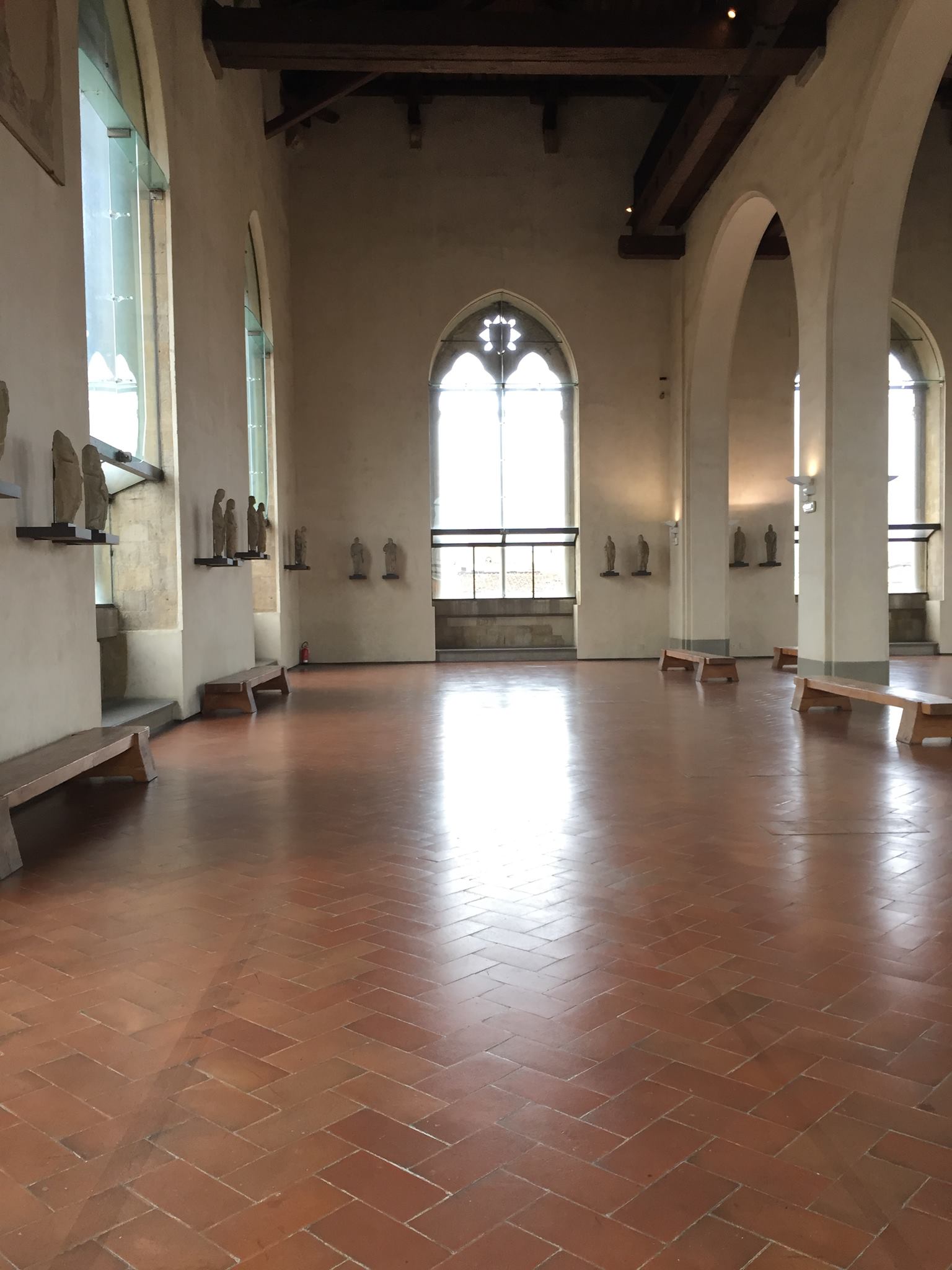
The third floor holds forty, original pietra grigia and pietra forte statues of the patron saints of the medium sized guilds in Florence during the time the Orsanmichele was completed. These would have surrounded the original entryways of the loggia. However, there is only one smaller wall text, in Italian, that explains what these statues represent and information about them. These statues also feel as though they are in limbo, creating a still, expectant atmosphere in the space. The room itself is cavernous; tall ceilings and windows make the room feel bigger than it actual is. A gorgeous view of Florence distracts visitors from the one meter tall statues along the walls.

Beautiful, and filled with objects pertinent to the Orsanmichele Church, it is a shame that the objects are simply placed with no context. With texts only in Italian, it is necessary for foreign visitors to come with a guide, which is an extra cost, or to simply admire the statues for their aesthetic appeal. It feels as if the statues are just there, simply waiting until they are moved to their permanent space. This museum does not feel as though it lives up to the title museum, rather, it seems as though these beautiful works of art are place holders until something else arrives.


Traduzione di Tania Mio Bertolo (Università degli Studi di Firenze)


Sparso e concentrato, il Museo di Orsanmichele è situato nel cuore della pittoresca Firenze. L’edificio che risale all’ottavo secolo ospitava in passato un grande mercato all’aperto. La loggia originaria prese fuoco diverso tempo fa, e la struttura visibile oggigiorno, che include il secondo ed il terzo livello, fu progettata da Arnolfio di Cambio nel ‘300. I visitatori più attenti noteranno la forte similarità del loggiato con il noto Mercato del Porcellino, edificato a pochi passi di distanza dall’Arno quando il sito di Orsanmichele fu adibito a chiesa. La moderna facciata dell’antico mercato, ultimata nel quindicesimo secolo, presenta delle nicchie attorno alla loggia per le quali le principali corporazioni del tempo commissionarono a diversi artisti fiorentini sculture dedicate ai loro Santi patroni.

Le originali sculture in marmo e bronzo della facciata sono attualmente visibili nel museo interno sito al secondo piano; tra di esse vi è il noto gruppo dell’Incredulità di San Tommaso realizzato da Verrocchio per il Tribunale della Mercanzia, il San Pietro di Donatello per l’Arte dei Beccai, il San Luca del Gianbologna per quella dei Giudici e Notai, ed altre opere scultoree di Nanni di Banco e Ghiberti, per un totale di quattordici statue situate anticamente nella facciata esterna. All’interno, allestito per ricreare una piazza, la collocazione di ognuna di esse corrisponde a quella originaria esterna.

Il bel secondo piano, che con il suo alto soffitto voltato e le grandi finestre ricorda la loggia, dà l’impressione di uno spazio dilatato colmato dalla presenza di queste sculture a grande scala. Tuttavia al visitatore non è fornita nessuna informazione: vi sono cartellini esplicativi per ciascuna statua, ma in essi sono riportati soltanto il nome del Santo raffigurato, l’anno di realizzazione e l’artista. Alcuni diagrammi spiegano le collocazioni attuali e antiche delle opere scultoree. Fogli laminati appesi con catene ai pannelli murali forniscono ulteriori informazioni, ma solo in lingua italiana, scelta che non facilita la comprensione da parte di chi non conosce questo idioma.

Il terzo piano ospita sculture di Santi patroni in pietra grigia e in pietra forte, commissionate da corporazioni fiorentine di minor statura quando Orsanimichele fu completato. Esse avrebbero dovuto circondare le originali aperture della loggia. Tuttavia vi è soltanto un piccolo testo al muro, scritto in italiano, che spiega cosa rappresentano queste statue e fornisce informazioni su di esse. Queste sculture inoltre sembrano ferme in un limbo, già create ma ancora in attesa di un loro posto nello spazio. La stanza di per sé è cavernosa, gli alti soffitti e le grandi finestre la rendono più grande di quello che in realtà è, ed una meravigliosa panoramica di Firenze distrae il visitatore dalle sculture alte un metro disposte lungo le pareti. L’edificio è bello, ed il museo è allestito con oggetti legati alla chiesa di Orsanmichele, ma è un peccato che le opere esposte non siano state contestualizzate. Poiché nei pannelli esplicativi e nelle didascalie l’unica lingua usata è l’italiano, per un visitatore straniero risulta necessario l’accompagnamento di una guida che richiede un sovrapprezzo, o arrendersi ed ammirare le opere solo per la loro bellezza esteriore. Sembra che le sculture siano lasciate lì in attesa di essere spostate in uno spazio permanente. Benchè intitolato come museo, Orsanmichele si allontana dal concetto stesso di museo: esso sembra semplicemente uno spazio che ospita momentaneamente dei lavori artistici, nell’attesa che qualcosa accada.


In Collezione. Un percorso d’arte dal XIII al XX secolo.


Ente Cassa di Risparmio di Firenze.
Dal 1 ottobre 2016 al 15 gennaio 2017, prorogata fino al 26 febbraio
Di Maria Eletta Benedetti (Università degli Studi di Firenze)


La bellissima vetrata d’ingresso dell’antica residenza della famiglia Pucci, divenuta la sede della Fondazione Cassa di Risparmio di Firenze, viene aperta come uno scrigno al pubblico per gustare un percorso d’arte che va dal XIII al XX secolo, come suggerisce il sottotitolo della mostra.

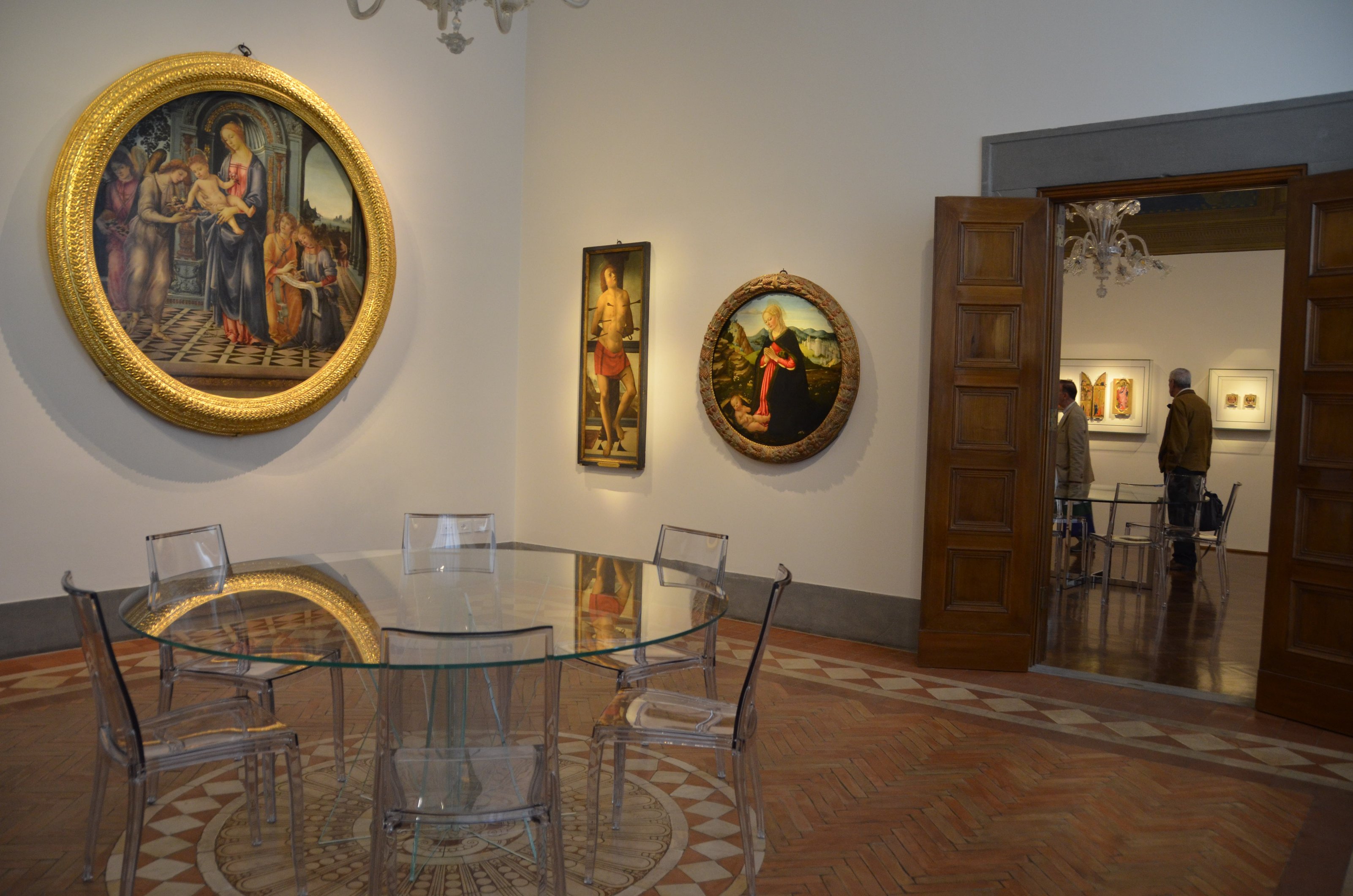
Il percorso espositivo curato da Carlo Sisi, è un percorso sui generis. Non vi è un consueto o innovativo allestimento, non è predisposta un’apposita illuminazione né ci sono pannelli espositivi o didascalie: “solo” opere, giovani guide e sale d’ufficio. La particolarità e l’eccezionalità della mostra “In collezione” infatti è proprio quella di essere sistemata negli ambienti che quotidianamente ospitano le attività bancarie della Fondazione e per questo motivo la mostra è visitabile gratuitamente solo nei giorni festivi su prenotazione. Vengono esposte le opere più belle che l’Ente cassa ha collezionato principalmente nel corso del Novecento. Il percorso non segue un ordine cronologico sia perché la mostra è dislocata nei vari ambienti d’ufficio e forse non sarebbe stata una scelta molto funzionale né efficace; sia perché rende ancora più evidente l’intento della mostra, che non è didattico (disponendo le opere dalla più antica alla più recenti possedute dall’Ente Cassa) e nemmeno narrativo della storia collezionistica (quindi posizionando le opere in ordine di acquisizione).

Lo scopo è quello di “mostrare”, di rendere fruibili opere rare e di grande valore, di entrare appunto dentro una collezione. Di per sé il semplice “mostrarsi” della collezione, come un’eco di un’antica camera delle meraviglie può apparire anacronistico o mera ostentazione, tuttavia è risultato estremamente affascinante e formativo. Nel primo caso perché ogni stanza d’ufficio è una piccola scoperta e una sorpresa, con la possibilità di osservare e gustare opere preziose. Formativo grazie al ruolo delle guide e all’accordo evidente tra vari fattori quali il contenuto e i valori trasmessi dalle opere, la relazione tra le opere possedute dalla Fondazione e la relazione con il territorio e infine la scelta di esporre semplicemente le opere alle pareti negli ambienti lavorativi e di rappresentanza.

Dopo una introduzione sulla nascita della Fondazione al piano terra la guida accompagna i gruppi di visitatori al piano superiore, accolti dapprima da tre ritratti, in particolare quello di Lord Cowper realizzato da Mengs, una delle più recenti acquisizioni. Si accede successivamente ai vari uffici, da quello del Presidente della Fondazione con appese alle pareti varie vedute di Firenze tra Settecento e Ottocento, alle Sale riunioni e d’attesa, passando dalle grandi tele dei Macchiaioli alle tavole di Giotto. Del maestro trecentesco l’Ente possiede due preziosi frammenti tanto piccoli da suggerire allo studioso Bellosi l’associazione con la forma delle fette biscottate. Come per contrasto è stupefacente il grandissimo tondo di Filippino Lippi; intrigante è la sala d’attesa con la serie delle Vedute di Firenze antica di Borbottoni. In un’altra stanza di rappresentanza campeggia il grande encausto a freddo di Colacicchi che un tempo decorava lo storico caffè fiorentino Gambrinus.

Le opere non sono quindi una ricchezza solo dell’Ente Cassa che possiede la collezione ma anche del territorio perché a questo sono strettamente legate tramite le provenienze e tramite le raffigurazioni di spaccati di città o di santi a cui Firenze è devota, realizzati da artisti eterogenei nello stile e nei secoli. Ogni stanza racconta un pezzetto di storia dell’arte toscana, in particolare quella fiorentina.

A rendere tutto ancora più singolare è la possibilità di vedere, come in una matrioska, opere di una collezione all’interno di uffici dislocati e adibiti a questa funzione in un’opera d’arte architettonica. L’edificio infatti è stata riorganizzato negli anni Cinquanta del Novecento da Michelucci e percorrendo la sua grande scalinata termina il percorso della mostra “In collezione”. Il luogo è un ulteriore collante tra le opere e lo scopo della mostra, perché viene data la possibilità di mostrare un’opera d’arte e di percorrerla rispettando quindi il carattere peculiare di una creazione architettonica che è appunto quello di essere praticabile, come lo è quotidianamente dal personale della Fondazione.

Il percorso espositivo è strutturato ad anello. Attiguamente alla sala d’accesso, che funge anche da uscita, è interessante lo spazio predisposto come sala multimediale, in cui è stata predisposta una camera immersiva per mostrare attraverso un filmato sia le opere esposte sia alcune conservate nei depositi. Il video viene proiettato in sette schermi verticali disposti a semicerchio con una musica dolce di violino e flauto in uno spazio completamente buio. Qui le opere prendono vita, sollecitando l’immaginazione e il desiderio di tornare un po’ bambini. Un invito a guardare le opere con uno sguardo innocente, puro e fantasioso aiutati dall’animazione multimediale, perché nel video gli scialli contadini raffigurati dai macchiaioli si sollevano al soffio del vento, i carri e i personaggi delle vedute si muovono in una Firenze fuori dal tempo che non esiste più, gli angeli cantano e i garibaldini combattono la loro battaglia. Si vede la vita dietro al quadro in un accenno di movimento per tornare poi di nuovo disegno, un dettaglio e una storia fermata sulla tela. Un invito ad entrare oltre che “in collezione” anche “in opera”, come suggerisce per l’appunto la videoinstallazione.

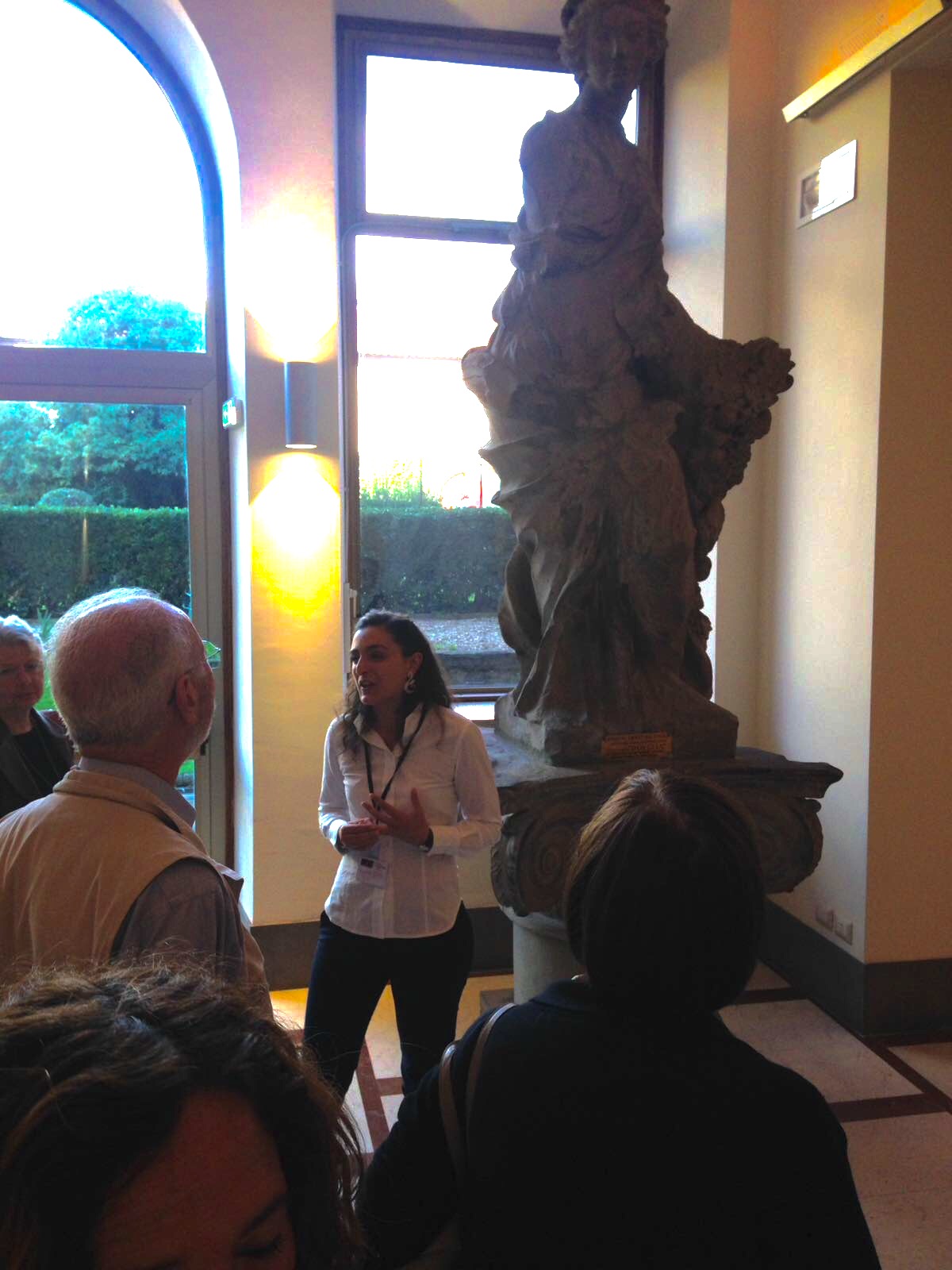
Nella mostra l’arte si diffonde nell’ambiente e si fonde con esso, non già musealizzata o messa in vetrina ma collocata nella quotidianità di un luogo di lavoro. Essenziali ad aiutare la scoperta e la conoscenza delle opere, degli artisti e della Fondazione, sono le guide, che danno voce alla collezione.


Translation by Rachyl Grussing


The beautiful glass entrance to the old residence of the Pucci family, which became the headquarters of the Fondazione Cassa di Risparmio di Firenze, opens as a casket to the public to enjoy a journey through art that goes from the thirteenth through the twentieth centuries, which is the subtitle of the exhibition.

The exhibition is curated by Carlo Sisi, and is a path sui generis. There is no usual or innovative option, there is not any special lighting, neither are there exhibition panels or captions: there are ‘single’ works, young guides. and office rooms. In fact, the particularity and uniqueness of the exhibition ‘in the collection’ is precisely the display in the environments that are home to the bank’s daily activities, and for this reason the show is only available on holidays by appointment. Exhibited are the most beautiful works that the Foundation has collected over the course of the 19th century. The path does not follow chronological order because the exhibition is located in various office spaces and perhaps would not be a very practical nor effective choice; it also makes even more evident the intentions of the show, which are not teaching (by placing the oldest to the most recent works collected by the Foundation) and not telling the story of the collection (by placing the works in order of acquisition).

The purpose is to ‘show’, to render available, the rare works and the works of great value, to simply enter inside the collection. For itself, the simple ‘showing’ of the collection, like an echo of an ancient chamber of wonders, can appear anachronistic or merely ostentatious, however the result here is extremely fascinating and formative. Each office room is a small discovery and surprise, with the possibility to observe and enjoy precious works; thanks to the role of the guides, clear agreement between the various factors, content, and values transmitted by the works, the relationship between the Foundation and the relationship with the territory, and finally the choice of exposing the works on the walls of the environments which they represent.

After an introduction to the birth of the Foundation on the ground floor, a guide accompanies the group of visitors to the upper floors. Initially they are greeted by three paintings, notably that of Lord Cowper, made by Mengs, one of the most recent acquisitions. The tour then enters the various offices, from that of the President of the Foundation with wall-hangings of the various views of Florence from the 17th and 18th centuries, to the Meeting and Waiting room, passing the large canvases of Macchiaioli and the table of Giotto. The fourteenth century master of the body has two precious fragments so small suggesting he studied under Bellosi, with the association with the shape of biscuits. For amazing contrast is the great round painting of Filippino Lippi; intriguing is the waiting room with the series Views of Ancient Florence by Borbottoni. In another room stands the representation of the encaustic and cold Colacicchi that at one time adorned the historic Florentine Cafe Gambrinus.

The works are not only the wealth of the Foundation, who own the collection, but also the territory, because they are closely linked with the origins, through the depictions of different cities and saints that Florence worshipped, made my heterogenous artisans in the style of the century. Every room contains a priceless piece of the history of Tuscany, in particular that of Florence.

To make it even more unique is the possibility to see everything, like in a Russian doll, the works of the collections in the offices displayed and used in this function operate as architectural art. In fact the building was reorganized in the 1950s by Michelucci and travelling along the grand staircase is the route of the show ‘in collection’. The site is a further bond between the works and the purpose of the show, because it is given the possibility to show a work of art and follow it, thus retaining the particular character of the architectural creation that is intended to be workable, as it is every day from the personnel of the Foundation.

Adjoining the hall of access, which also acts as an exit, it is interesting space dedicated to multimedia, an immersive film was prepared to show both the works on display and some kept in storage. The video is projected in six vertical screens displayed in a semicircle, with sweet violin and flute music in a completely dark space. Here the works come to life, urging the imagination and desire to return to that of a small child. It is an invitation to see the works with an innocent look, helped with the pure and fantastic multimedia animation, because in the video the shawls of the farmers from Macchiaioli are raised by the blowing of the wind, the wagons and views of the people move in a Florence out of a time that no longer exists, the angels sing and the partisans fight their battle. You see the life behind the picture in a hint of drawn movement, and return again to a detail of the history which stops of the canvas. An invitation to enter ‘in collection’ as well as ‘in work’, precisely as suggested by the video installation.

In this exhibition the art spreads into the environment and merges with it, not in a museum or on display, but placed in the everyday life of a workplace. Essential to helping with the discovery of the works are the artists of the Foundation, the ones with all the knowledge of the artworks, who are the voice of the collection.


Donatello e Verrocchio. Capolavori riscoperti

Museo dell’Opera del Duomo, dal 21 ottobre 2016 al 26 febbraio 2017

Di Caterina Zaru (Università degli Studi di Firenze)


Il nuovo Museo dell’Opera del Duomo di Firenze ospita fino al 26 febbraio 2017 Donatello e Verrocchio. Capolavori riscoperti.

La mostra presenta, infatti, due grandi capolavori di due altrettanto grandi artisti del Quattrocento fiorentino: il busto in terracotta raffigurante San Lorenzo, attribuito a Donatello, e un rilievo, sempre in terracotta, che ha come soggetto della figurazione la Decollazione di San Giovanni Battista. Quest’ultimo ha stesso soggetto, dimensioni, composizione e costruzione prospettico-architettonica della scena commissionata ad Andrea del Verrocchio per lo straordinario Altare d’argento, un pezzo simbolo del patrimonio del Museo dell’Opera del Duomo, realizzato tra il 1366-1483 per il Battistero di Firenze, da più artisti, tra cui il Verrocchio stesso e Antonio del Pollaiolo, massimi esponenti della scultura fiorentina dell’epoca. Il rilievo esposto in mostra, quindi, sarebbe stato realizzato proprio nella bottega del Verrocchio.

A Francesco Caglioti, studioso ed esperto di Donatello, si deve la “riscoperta” (da qui il titolo della mostra) del busto di San Lorenzo. Risalente al 1440 circa, esso era destinato al timpano della porta maggiore della pieve a lui intitolata a Borgo San Lorenzo, nel Mugello, dove, infatti, rimase fino al 1888, quando l’antiquario Stefano Bardini (a cui oggi è dedicato l’omonimo museo di Firenze) lo acquistò, lasciando alla comunità “defraudata” una copia tuttora in situ. Questo per poi rivenderlo l’anno seguente al Principe Giovanni II di Liechtenstein. Nel 2003 gli eredi del principe misero in asta il San Lorenzo come opera ottocentesca e furono i coniugi Silverman, noti collezionisti di disegni, sculture e dipinti, ad aggiudicarsi l’opera. Negli anni successivi, rimossa la ridipintura ottocentesca, fu possibile ricostruire l’attribuzione a Donatello.

Comune anche all’altra opera esposta è una storia passata dalle vicissitudini piuttosto movimentate: essa venne trafugata dai nazisti durante la Seconda guerra mondiale, quale bottino di guerra che doveva poi andare a costituire il museo di Hitler a Linz.

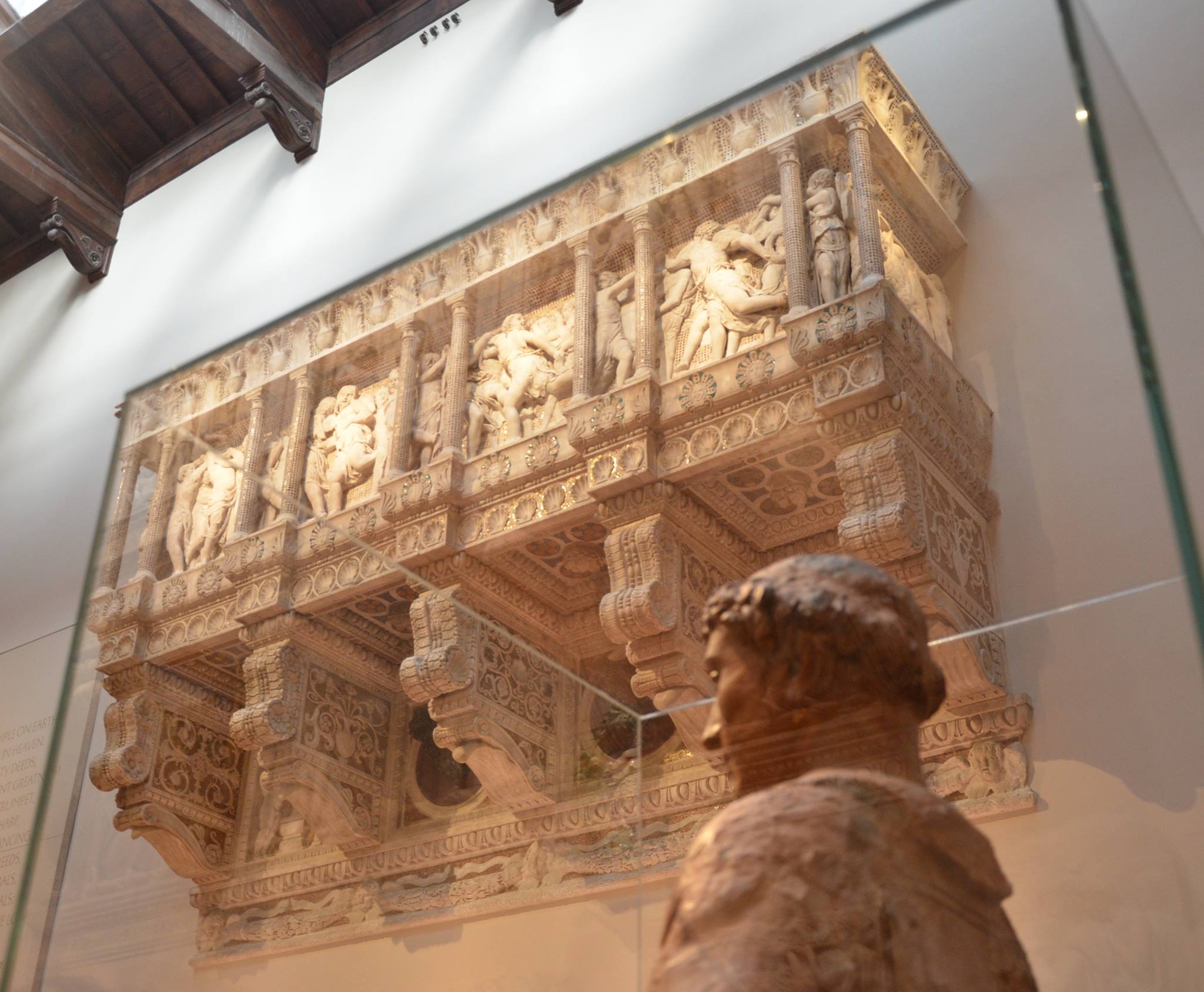
Entrambe le opere, appartengono adesso alla Collezione Peter Silverman e Kathleen Onorato, informazione facilmente reperibile dalle didascalie che le accompagnano. Meno esplicito è invece l’intento della mostra, cioè quello di mettere in rapporto i due capolavori riscoperti con altre opere dei due artisti loro autori presenti all’interno del consueto percorso museale. Se, infatti, diretto è il rapporto tra il rilievo in terracotta con Decollazione del Battista e la stessa scena nell’Altare d’argento, perché le due opere sono state poste fisicamente l’una di fronte all’altra, molto meno chiaro risulta il collegamento tra il San Lorenzo e le altre opere di Donatello che con esso idealmente dialogano. La collocazione, pur prestigiosa ai piedi delle due Cantorie, realizzate da Donatello stesso l’una e da Luca della Robbia l’altra, non permette un confronto diretto con quelle figure realizzate da Donatello per la facciata del Duomo o per il Campanile, di cui il busto del Santo Lorenzo sarebbe il modello e che si trovano esposte nelle prime sale del museo, al piano terra. Donatello manifesta nell’opera in mostra quel misurato classicismo che ritroviamo, ad esempio, nel Profetino, o nel volto di Isacco del gruppo del Sacrificio o ancora nel giovane Profeta tradizionalmente riconosciuto come San Giovanni Battista. Evidente, però, è il rapporto con Luca della Robbia, proprio per i rimandi alla figurazione classica, rapporto che giustificherebbe la collocazione in mostra proprio tra le due Cantorie. Il bel disegno della bocca del San Lorenzo esprime tutta la forza interiore del Santo. I volti di Donatello, basti pensare ai simili tratti somatici del San Ludovico da Tolosa, del Gattamelata, del David marmoreo del Bargello, sono veri e propri specchi dell’anima. Qui un’anima pura e forte della fede religiosa che la guida, è incarnata in un busto tanto giovane e di una bellezza idealizzata, quanto orribilmente corrotta ma straordinariamente vera è l’anima e la figura della Maddalena che dal piano inferiore del museo sembra dialogare col San Lorenzo in questo evidente contrasto plastico-ideologico. Al contrario quindi, l’esposizione della Decollazione di fronte all’Altare d’ argento, permette, in un confronto ravvicinato, di capire se, effettivamente, il rilievo Silverman sia uno dei modelli preparatori della stessa scena poi realizzata nell’Altare dal Verrocchio e se, come è stato ipotizzato, vi si possa ravvisare l’intervento di Leonardo da Vinci, allora attivo nella bottega verrocchiana.

Purtroppo la mancanza di pannelli che mettano in evidenza i capolavori in mostra (le due opere si differenziano dal resto della collezione permanente solo per il colore, blu, delle loro didascalie, diverse dalle usuali, di colore bianco) e spieghino l’interessante e scientificamente rilevante intento della mostra, riduce la comprensione di esso alla sola “classe” privilegiata degli “addetti ai lavori”. L’unico strumento per comprendere a pieno la mostra è il bel catalogo edito da Mandragora con testi di Timothy Verdon, direttore del Museo dell’Opera del Duomo, e di Alessandro Vezzosi, direttore del Museo Ideale Leonardo Da Vinci.


Translation by: Rachyl Grussing
 
The new Works of the Duomo Museum hosts until 26 February 2017 Donatello and Verrocchio, Rediscovered Masterpieces.

Indeed, the show presents two grand rediscoveries of the two of the great artists of 14th century Florence: the terracotta bust representing Saint Lawrence, attributed to Donatello, and a relief by Verrocchio, also in terracotta, that has as the subject the figuration The Beheading of Saint Giovanni Battista. The latter has the same subjects, dimensions, composition and architectural perspective construction of the scene commissioned by Andrea Verrocchio for the extraordinary Silver Altar, a symbol of the heritage of the Works of the Duomo Museum, realized between 1366 – 1483 for the Florentine Baptistry, with more artists, including Verrocchio and Antonio del Pollaiolo, leading proponents of Florentine sculpture of the age.

Francesco Caglioti, a scholar and expert on Donatello, was responsible for the ‘rediscovery’ (hence the title of the show) of the bust of Saint Lawrence. Dating back to around 1440, it was intended for the lintel of the main door of the church of the neighborhood that bears his name, Saint Lawrence, in Mugello, where it remained until 1888, when the antiquarian Stefano Bardini (to whom today has a Florentine museum dedicated to his namesake) acquired, leaving the community ‘defrauded’ and a copy in its place. This then to sell it the following year to Prince John II of Liechtenstein. In 2003, the heirs of the Prince put in auction Saint Lawrence as a work of the 19th century and the Silvermans, known collectors of drawings, sculptures, and paintings, were the ones to win the work. In the next years, they removed the 19th century paint, to make possible a reconstruction of the work attributed to Donatello.

Also common in other works on display is a story of rather lively vicissitudes: it was stolen by the Nazi’s during the Second World War as spoils of war that was then going to be the Museum of Hitler and Linz.

Both of the works belong to the collection of Peter Silverman and Kathleen Onorato and information is readily available on them on the accompanying labels. Less explicit is the intention of the exhibition, that is, to put in context the two rediscovered works with other works by the artists already present within the usual museum tour. The relationship is direct between the reliefs in terracotta with the Beheading of Battista and the same scene in the Silver Altar, because the two works have been physically placed one in front of the other, much less clear is the connection between Saint Lawrence and the other works by Donatello that would ideally dialogue with it. The arrangement, while at the foot of the two prestigious Cantorie, one made by Donatello himself and the other by Luca della Robbia, does not allow a direct comparison with the figures by Donatello for the facade of the Duomo or for the Campanile, of which the bust of Saint Lawrence would be the model for and which guests find are displayed on the first floor, the ground floor, of the museum. Donatello manifested in the work of the show the measured classicism that we find, for example, in the Prophets, or in the face of Isaac in the group of the Sacrifice, or even in the young Prophet traditionally acknowledged as Saint Giovanni Battista. Clear, however, is the connection with Luca della Robbia, because of the references to classical figures, the relationship would justify the placement of the works in the exhibition between the two Cantorie. The beautiful design of the mouth of Saint Lawrence expresses all the Holy inner force. The face of Donatello, thinking of the similar physical features of Saint Ludovic of Toulouse, of Gattamelata, of the marble David in the Bargello, are true mirrors of the soul. Here the pure and strong soul of the religious faith is the guide, incarnated in the very young bust of an idealized beauty, how horribly corrupt but extraordinarily true is the soul of the figure of Mary Magdalene that from the lower floors appears to converse with Saint Lawrence in this evidently plastic ideology. Conversely then, the exhibition of the ‘Beheading’ in front of the Silver Altar permits a close conversation to actually understand that the Silverman relief is one of the preparatory models for the same scene realized in the Altar of Verrocchio, and if, as has been suggested, the intervention of Leonardo da Vinci can be recognized, then the activity happened in the shop of Verrocchio.

Unfortunately, the lack of panels highlight the evidence of the works on display (the two works are different from the rest of the permanent collection only for the color, blue, and their captions, different than the usual white color) and explain the interesting and considerable scientific intention of the exhibition, decreases the idea that it is only for the ‘privileged class’ of ‘experts’. The only tool for understanding fully the exhibition is the beautifully edited catalogue of Mandragora by Timothy Verdon, the director of the Works of the Duomo Museum, and Alessandro Vezzosi, the director of the Museo Ideale Leonardo da Vinci.

Tales of the Whale

“Tales of the Whale” at the University of Florence Natural History Museum Paleontology

By Rachyl Grussing (Istituto Lorenzo de’ Medici)


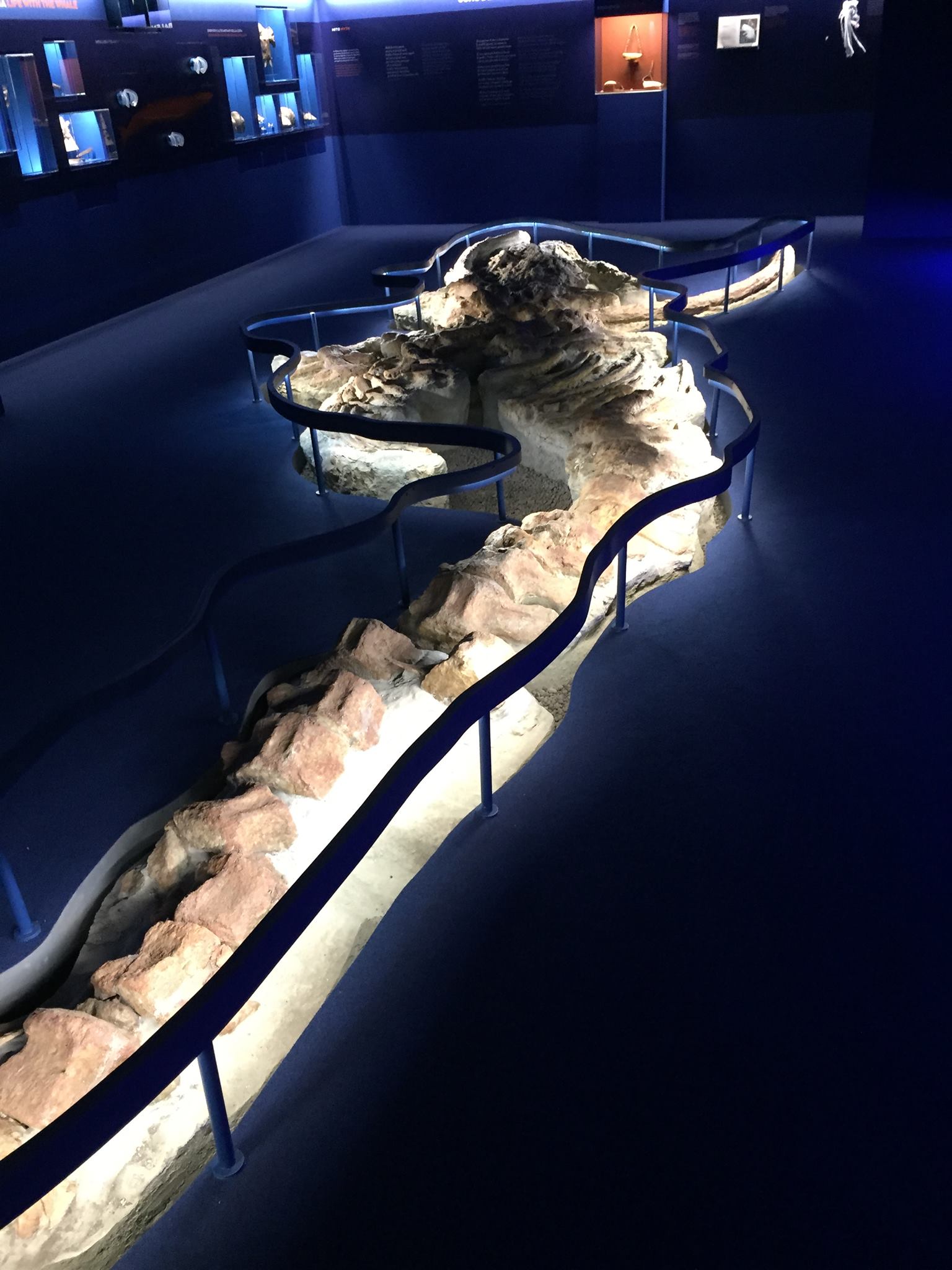
In May of 2016 the University of Florence Museum of Natural History Paleontology department unveiled a new permanent exhibit. ‘Tales of a Whale’ is dedicated to one of the most important specimens in their collection, a three million year old Pliocene fossilized whale skeleton that was found in a field near Orciano Pisano, a small town in the foothills of Tuscany. The museum uses the specimen to illustrate life at the bottom of the sea floor during the time of the whale, and makes connections to things that are still alive today.

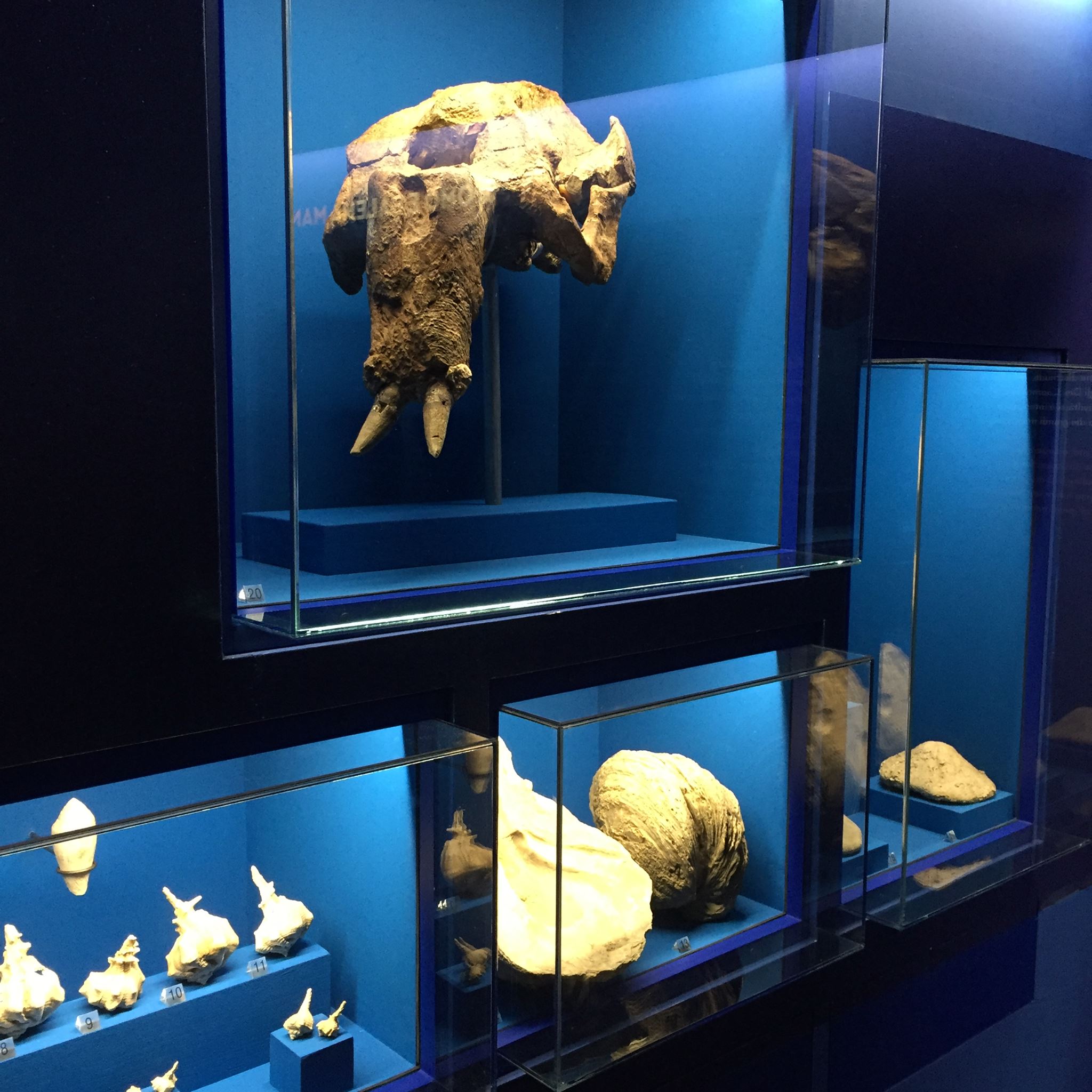
As the main attraction, the three million year old skeleton enjoys a place of honor directly in the center of the room. Guard rails act as lights, both outlining the skeleton and informing visitors of where not to step. Three walls act as context for the whale, holding shells, smaller fossilized fish, crustaceans, and plant life that would have surrounded the body of the whale on the seafloor and also details what species of these animals are still alive today.

A film projected onto the walls above the display cases details the discovery of the whale skeleton and the different cultures that would have hunted the whale in ancient times, featuring interviews from different professionals from sections of the Natural History Museum. The museum has also reached out to other sections of the Natural History Museum, namely La Specola and the Anthropology section, to borrow different species of taxidermied birds that would have flown with the whale, and different Inuit tribal items, spears and clothing, from cultures that hunted the whale. The exhibit details how the whale was hunted and how it was killed, and what the tribe would have done with the whale carcass.

The fourth wall of the room holds two levels of plush seating for visitors to sit and enjoy a short documentary on the finding of the whale, or simply enjoy the atmosphere. There are also interactive elements on the walls in the form of push drawers and goggles that allow the visitor to immerse themselves fully into the experience.  At a pillar bisecting the seats are headphones for the curious visitor to listen to the video. If all six headsets are taken, the two screens display both English and Italian subtitles. The seats allow the visitor to either watch the video or simply suspend belief and fully engage in the underwater experience.

The exhibit is an experience in the best way; with deep blue colors, soft lighting, and brightly colored label text, it is designed to mimic the sea floor as it would have been several million years ago, and instead of feeling claustrophobic, the room feels expansive. The visitor is tossed into the world of the whale, and it engages them in an atmosphere that gives the impression of living and swimming deep underwater with the creatures on display.

Lights, sounds, and projections enhance the experience, allowing the visitor to learn more about what life would have been like at the bottom of the ocean long ago. All in all, this exhibition is extremely well done. The two-person staff of the Natural History Museum Paleontology should be commended for their excellent use of technology to create atmosphere and their impressive, detailed knowledge of all things whale-related.


Traduzione di Tania Mio Bertolo (Università degli Studi di Firenze)


Nel maggio 2016 la sezione Geologia e Panteologia del Museo di Storia Naturale dell’Università di Firenze ha inaugurato Storie di una balena, la nuova esposizione permanente dedicata ad uno dei più importanti esemplari della collezione: un fossile pliocenico di uno scheletro di balena risalente a tre miliardi di anni fa, ritrovato nei pressi del comune di Orciano Pisano nella pedemontana toscana. La musealizzazione di quest’esemplare ha fornito al Museo l’occasione per illustrare la vita nei fondali marini al tempo della balena, e ricercarne connessioni con la situazione attuale.

Come principale attrazione, lo scheletro occupa un posto d’onore direttamente al centro della stanza. Alcune transenne divisorie fungono da monito, utili sia a delimitare lo spazio occupato dallo scheletro sia a suggerire al visitatore la distanza di sicurezza. Ospitando gusci, piccoli pesci fossilizzati, crostacei e piante che probabilmente circondavano il corpo della balena nel fondale marino, tre pareti circostanti la carcassa ricreano il contesto acquatico originale, chiarendo anche quali tra queste specie sopravvivono ancor oggi.

Un video proiettato nelle pareti retrostanti gli esemplari esposti spiega il ritrovamento dello scheletro e, attraverso interviste ai diversi specialisti del Museo, avanza ipotesi circa le diverse civiltà che potrebbero aver anticamente cacciato la balena. Coinvolgendo anche altre sezioni del Museo come la Specola e la sezione di Antropolgia, la mostra espone diverse specie di uccelli tossidermizzati che potrebbero aver volato con la balena, e svariati simboli tribali, lance e vestiti appartenenti a civiltà passate che praticavano la caccia alle balene. La mostra chiarisce come la balena fu cacciata e uccisa, e cosa potrebbe essere avvenuto alla sua carcassa.

La quarta parete della stanza ospita due livelli di morbide poltrone, che invitano il visitatore ad accomodarsi per guardare il breve documentario inerente la caccia della balena, o semplicemente per godersi l’atmosfera. Ci sono inoltre elementi interattivi nelle pareti come pulsanti e occhiali che permettono al visitatore di immergersi completamente nell’esperienza. In alcune colonne collocate di fianco alle poltrone vi sono degli auricolari per quei visitatori che desiderano ascoltare l’audio del filmato. Se tuttavia i sei auricolari disponibili sono tutti in uso, due schermi mostrano sottotitoli sia in italiano che in inglese. Le poltrone permettono al visitatore sia di guardare il video sia di sospendere la mente e lasciarsi coinvolgere totalmente dall’esperienza subacquea.

La mostra è un’esperienza a tutti gli effetti: attraverso l’uso di colori come il blu profondo, luci soffuse e testi scorrevoli di toni accesi, essa è pensata per ricreare il sottofondo marino così come probabilmente era diversi milioni di anni fa, dando inoltre l’impressione di una dilatazione dello spazio piuttosto che di un ambiente claustrofobico. Il visitatore è catapultato nel mondo della balena, quasi invitato a vivere e nuotare sotto il livello dell’acqua con le specie riprodotte. Luci, suoni e proiezioni arricchiscono l’esperienza, permettendo al visitatore di imparare di più circa la vita negli antichi fondali marini. In conclusione questa mostra è veramente ben fatta, e lo staff della sezione Panteologia del Museo di Storia Naturale, composto da solo due persone, dovrebbe essere lodato per l’impressionante e dettagliata conoscenza di tutti gli aspetti della mostra.